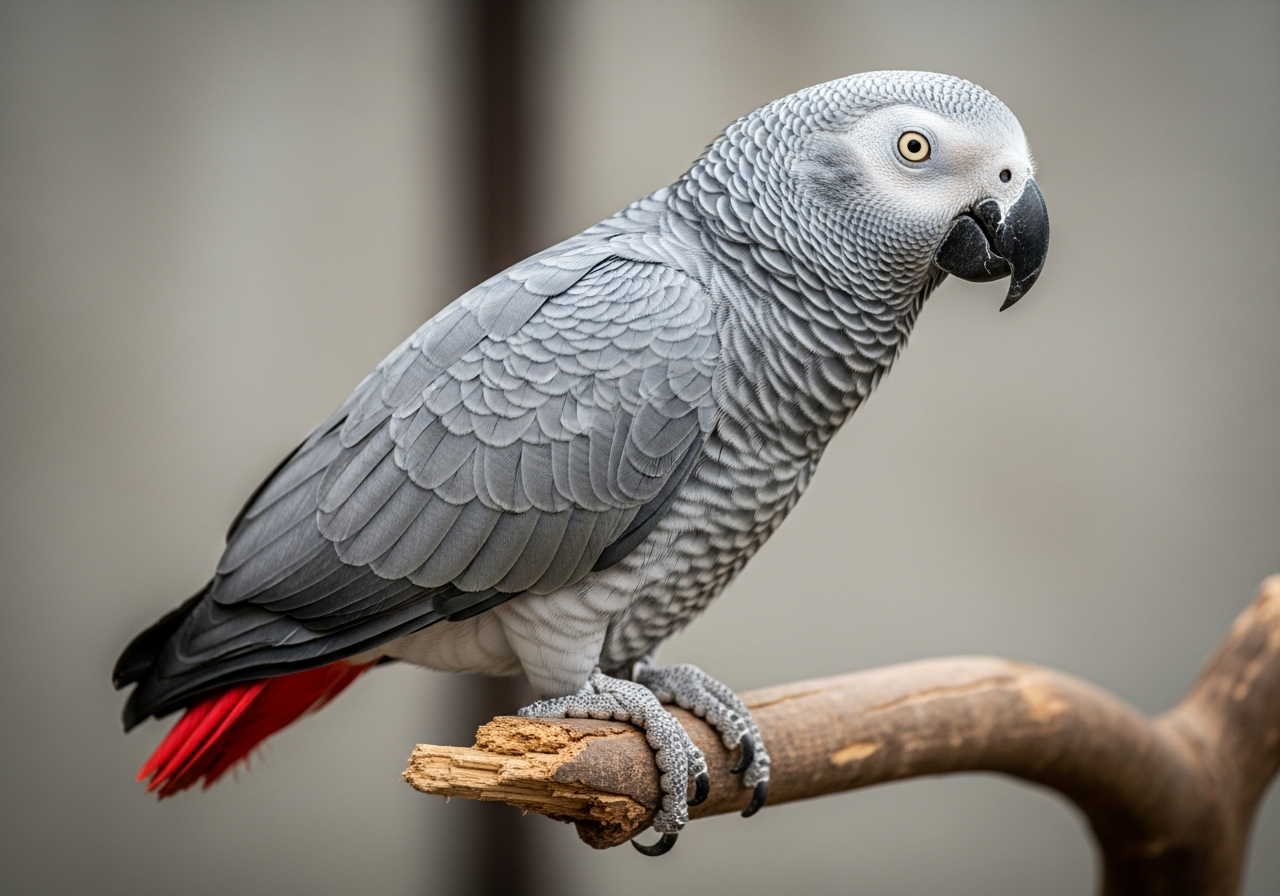
African Grey Parrot
Quick answer
The African grey parrot is famous as one of the most intelligent and talkative birds, able to learn large vocabularies and mimic sounds with striking accuracy. It is sensitive and demanding, so it suits experienced owners who can offer years of attention and mental stimulation.
African Grey Parrot at a glance
| Origin | Central and West Africa |
|---|---|
| Size | Large (about 33 cm) |
| Weight | 400–500 g |
| Lifespan | 40–60 years |
| Plumage | Soft grey plumage with a pale-edged scalloped look and a bright red tail; produces feather dust, so it benefits from regular bathing |
| Temperament | Highly intelligent, sensitive, talkative |
| Good with | Experienced owners, dedicated homes, quiet stable households |
History of the African Grey Parrot
The African grey comes from the rainforests of Central and West Africa, where it lives in large, vocal flocks. Long admired for its intelligence and talking ability, it has been kept by people for centuries and studied extensively for its cognitive skills. There are two main types, the larger Congo and the smaller Timneh grey. Because of its complex needs and high intelligence, it is considered a bird for dedicated, experienced keepers rather than casual owners.
Interesting facts about the African Grey Parrot
- African greys are considered among the most intelligent of all birds.
- Some learn vocabularies of hundreds of words and use them in context.
- The bright red tail stands out against their soft grey feathers.
- They can live for many decades, sometimes outliving other family pets by years.
Common health issues in the African Grey Parrot and how to help
Like all bird breeds, the African Grey Parrot can be more prone to a few specific health conditions. Knowing the early signs helps you act quickly — always consult a qualified vet for diagnosis and treatment.
Feather plucking
What it is: Sensitive and easily bored, African greys are especially prone to feather plucking when stressed, lonely, or under-stimulated.
How to help: Rich enrichment, routine, and daily interaction help prevent it, and an avian vet should investigate medical and behavioral causes early.
Calcium deficiency
What it is: African greys can be prone to low blood calcium, which may cause weakness, tremors, or seizures if severe.
How to help: A balanced diet and proper lighting support calcium levels, and an avian vet can test for and manage any deficiency.
Respiratory problems
What it is: Greys produce fine feather dust and are sensitive to fumes and poor air, which can lead to breathing difficulties.
How to help: Keep the air clean and free of smoke and aerosols, and see an avian vet promptly if breathing changes or wheezing appears.
This is general information for owners, not veterinary advice. If you are worried about your bird's health, contact your vet.
Frequently asked questions about the African Grey Parrot
Are African grey parrots the smartest birds?
African greys are widely regarded as among the most intelligent birds, capable of large vocabularies and problem-solving. Individual ability varies, but the species is known for remarkable cognitive skills.
Are African greys good for first-time bird owners?
African greys are generally not recommended for first-time owners because they are highly sensitive and demanding. They need an experienced keeper who can commit to years of attention and mental stimulation.
How long do African grey parrots live?
African greys can live 40 to 60 years or more with excellent care. Their very long lifespan makes them a lifelong commitment that may require planning for their future.