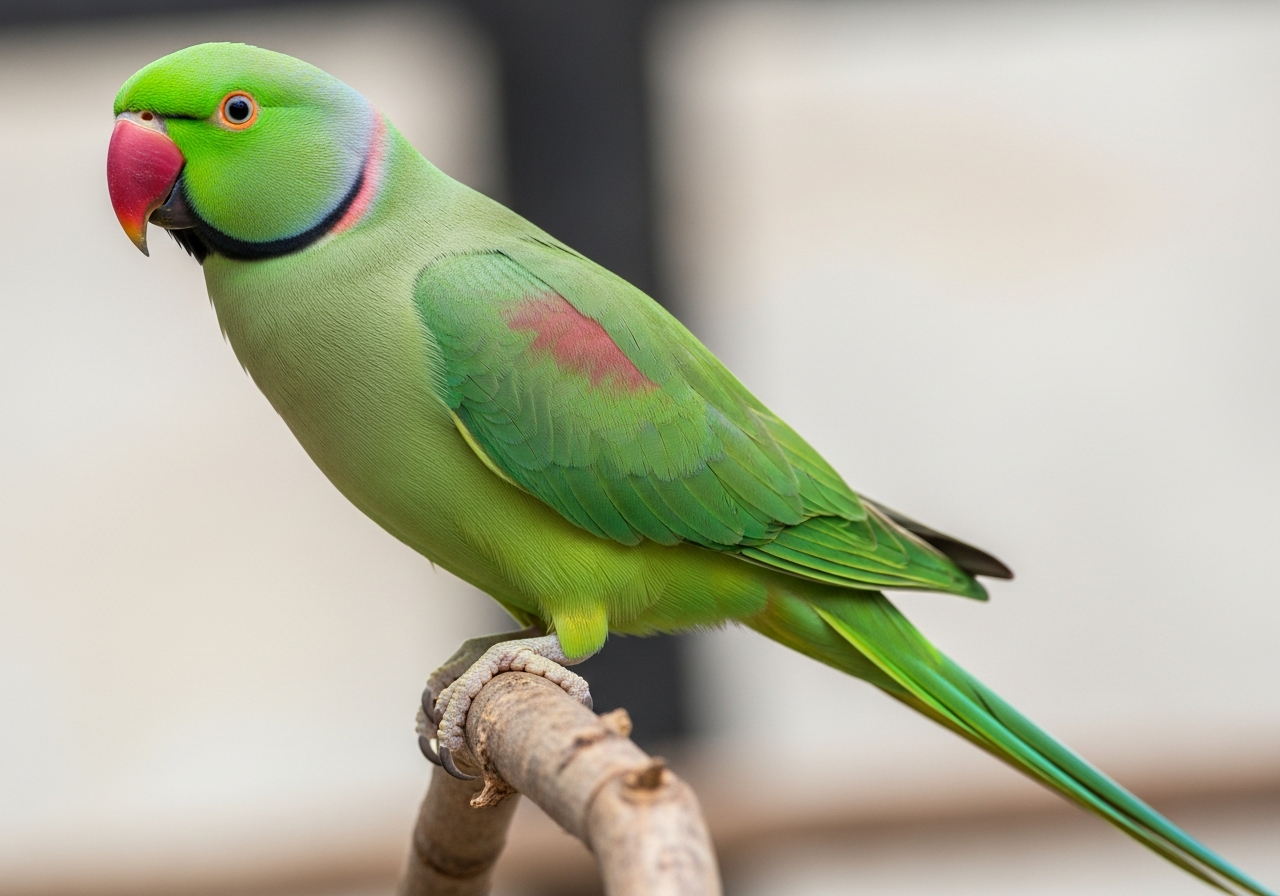
Indian Ringneck Parakeet
Quick answer
The Indian ringneck parakeet is a long-tailed parrot famous for its clear speaking ability and bright colors. It is intelligent and striking but needs consistent daily handling, as it can become nippy or aloof if neglected.
Indian Ringneck Parakeet at a glance
| Origin | Asia and Africa |
|---|---|
| Size | Medium (about 40 cm including tail) |
| Weight | 100–130 g |
| Lifespan | 20–30 years |
| Plumage | Bright green plumage with a long tail and, in males, a black-and-rose neck ring; bred mutations include blue, lutino, and grey; benefits from regular bathing |
| Temperament | Intelligent, talkative, independent |
| Good with | Committed owners, experienced keepers, training-minded homes |
History of the Indian Ringneck Parakeet
The Indian ringneck, a form of the rose-ringed parakeet, ranges naturally across parts of Asia and Africa and has established feral populations in many cities worldwide. It has been kept by people for centuries and was historically admired in South Asia for its talking ability. Breeders have produced many color mutations, including blue, lutino, and grey, from the wild green form. Intelligent and long-lived, it rewards owners who commit to regular interaction and training.
Interesting facts about the Indian Ringneck Parakeet
- Indian ringnecks are renowned for their clear, articulate speech.
- Mature males develop the colorful neck ring that gives the bird its name.
- Feral flocks now thrive in many cities far from their native range.
- They are intelligent and enjoy puzzles and training games.
Common health issues in the Indian Ringneck Parakeet and how to help
Like all bird breeds, the Indian Ringneck Parakeet can be more prone to a few specific health conditions. Knowing the early signs helps you act quickly — always consult a qualified vet for diagnosis and treatment.
Feather plucking
What it is: Ringnecks can pluck their feathers when bored or stressed, especially without enough interaction or enrichment.
How to help: Regular handling, foraging toys, and routine help prevent it, and an avian vet should rule out medical causes if it begins.
Beak and feather disease
What it is: Like other parrots, ringnecks can be affected by a viral disease that damages the feathers and beak over time.
How to help: An avian vet can test for it and advise on supportive care, and sourcing birds responsibly reduces the risk.
Aspergillosis
What it is: This fungal respiratory infection can affect parrots kept in damp or poorly ventilated conditions, causing labored breathing and lethargy.
How to help: Keep housing clean, dry, and well aired, and see an avian vet promptly if breathing problems or low energy appear.
This is general information for owners, not veterinary advice. If you are worried about your bird's health, contact your vet.
Frequently asked questions about the Indian Ringneck Parakeet
Are Indian ringnecks good talkers?
Yes, Indian ringnecks are among the better-known talking parrots and can learn clear words and phrases. Patient, consistent training brings out their best speech.
Are Indian ringnecks good for beginners?
Indian ringnecks are better suited to committed or experienced owners than absolute beginners. They are intelligent and can become nippy or distant without daily handling and structure.
Do Indian ringnecks go through a bluffing stage?
Many ringnecks pass through a nippy, independent phase, often called bluffing, especially as young birds. Calm, consistent handling usually helps them settle through it.