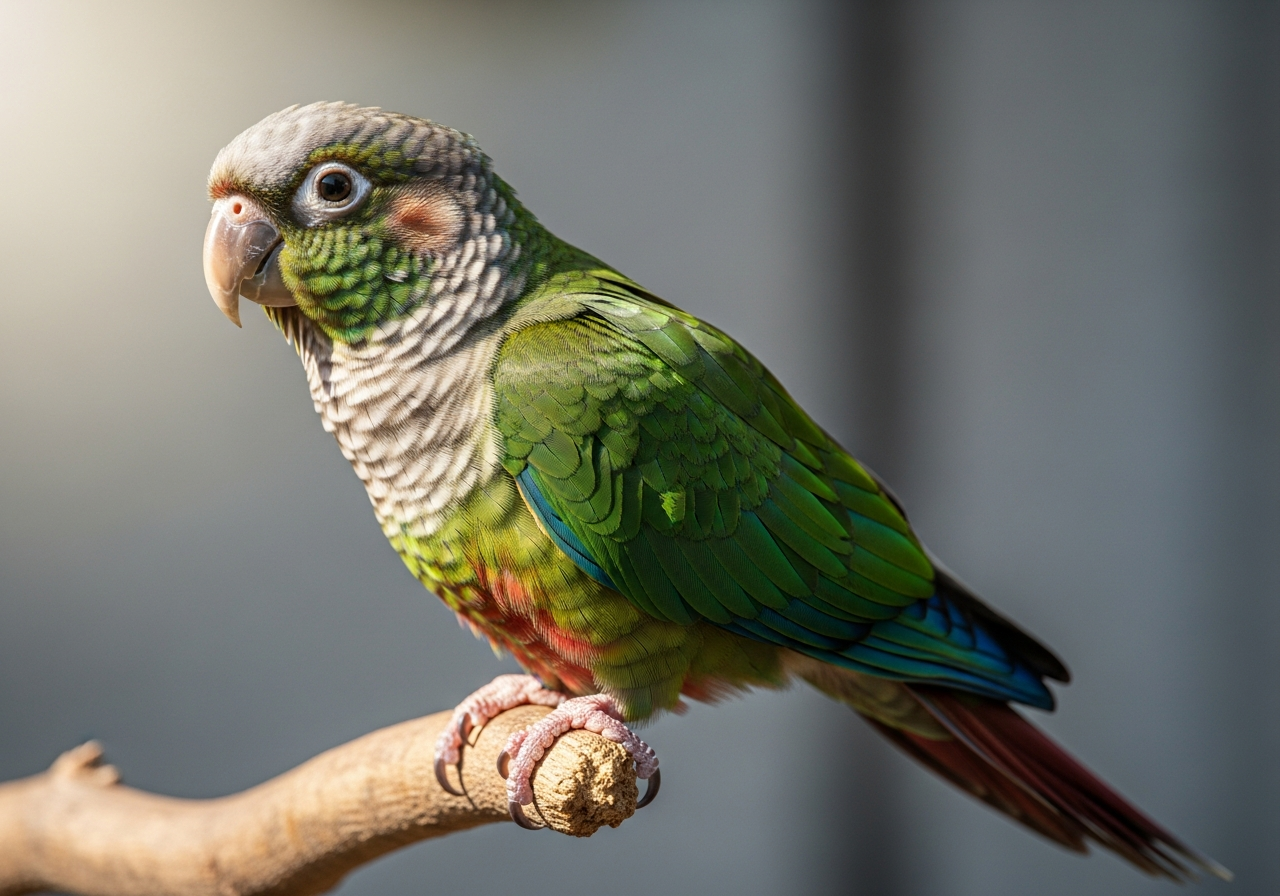
Green-Cheeked Conure
Quick answer
The green-cheeked conure is a small, affectionate parrot known for being playful and quieter than many other conures. It bonds closely with its owner and loves to cuddle and play, making it a popular mid-sized companion bird.
Green-Cheeked Conure at a glance
| Origin | South America |
|---|---|
| Size | Medium-small (about 26 cm) |
| Weight | 60–80 g |
| Lifespan | 20–30 years |
| Plumage | Green plumage with grey breast barring, maroon tail, and green cheeks; bred mutations include pineapple and turquoise; enjoys regular bathing |
| Temperament | Playful, cuddly, mischievous |
| Good with | Dedicated owners, families with older children, playful homes |
History of the Green-Cheeked Conure
The green-cheeked conure comes from the forests of South America, including parts of Brazil, Bolivia, Argentina, and Paraguay, where it lives in noisy flocks. It became a popular pet thanks to its small size, charming antics, and relatively quiet voice for a conure. Breeders have developed several color mutations such as the yellow-sided, cinnamon, pineapple, and turquoise varieties. Affectionate and clever, it offers much of the personality of a larger parrot in a more manageable package.
Interesting facts about the Green-Cheeked Conure
- Green-cheeked conures are quieter than most other conure species.
- They are known for playful antics, including lying on their backs.
- Color mutations have created striking pineapple and turquoise varieties.
- Many enjoy snuggling under a shirt collar or in a hand.
Common health issues in the Green-Cheeked Conure and how to help
Like all bird breeds, the Green-Cheeked Conure can be more prone to a few specific health conditions. Knowing the early signs helps you act quickly — always consult a qualified vet for diagnosis and treatment.
Feather plucking
What it is: Conures can pluck their feathers when bored, lonely, or stressed, leaving bare patches that may become a lasting habit.
How to help: Lots of toys, foraging, and daily attention help prevent it, and an avian vet should check for medical causes if plucking appears.
Beak and feather disease
What it is: Conures can be affected by a viral disease that damages feathers and the beak, causing abnormal growth and feather loss.
How to help: An avian vet can test for the disease and advise on care, and buying from reputable sources lowers the risk of exposure.
Nutritional deficiencies
What it is: A seed-only diet can leave conures low on key nutrients, leading to dull feathers, weak immunity, and other problems.
How to help: Feed a balanced diet of pellets, vegetables, and some fruit, and ask an avian vet for guidance on a complete diet.
This is general information for owners, not veterinary advice. If you are worried about your bird's health, contact your vet.
Frequently asked questions about the Green-Cheeked Conure
Are green-cheeked conures loud?
Green-cheeked conures are among the quieter conures, though they still call and chatter and are not silent. They are a better fit for noise-sensitive homes than louder conure species.
Can green-cheeked conures talk?
Some green-cheeked conures learn a few words in a small, gravelly voice, but they are not strong talkers. They are loved more for their playful, affectionate personalities.
How long do green-cheeked conures live?
With good care, green-cheeked conures often live 20 to 30 years. Their long lifespan makes adopting one a serious, long-term commitment.