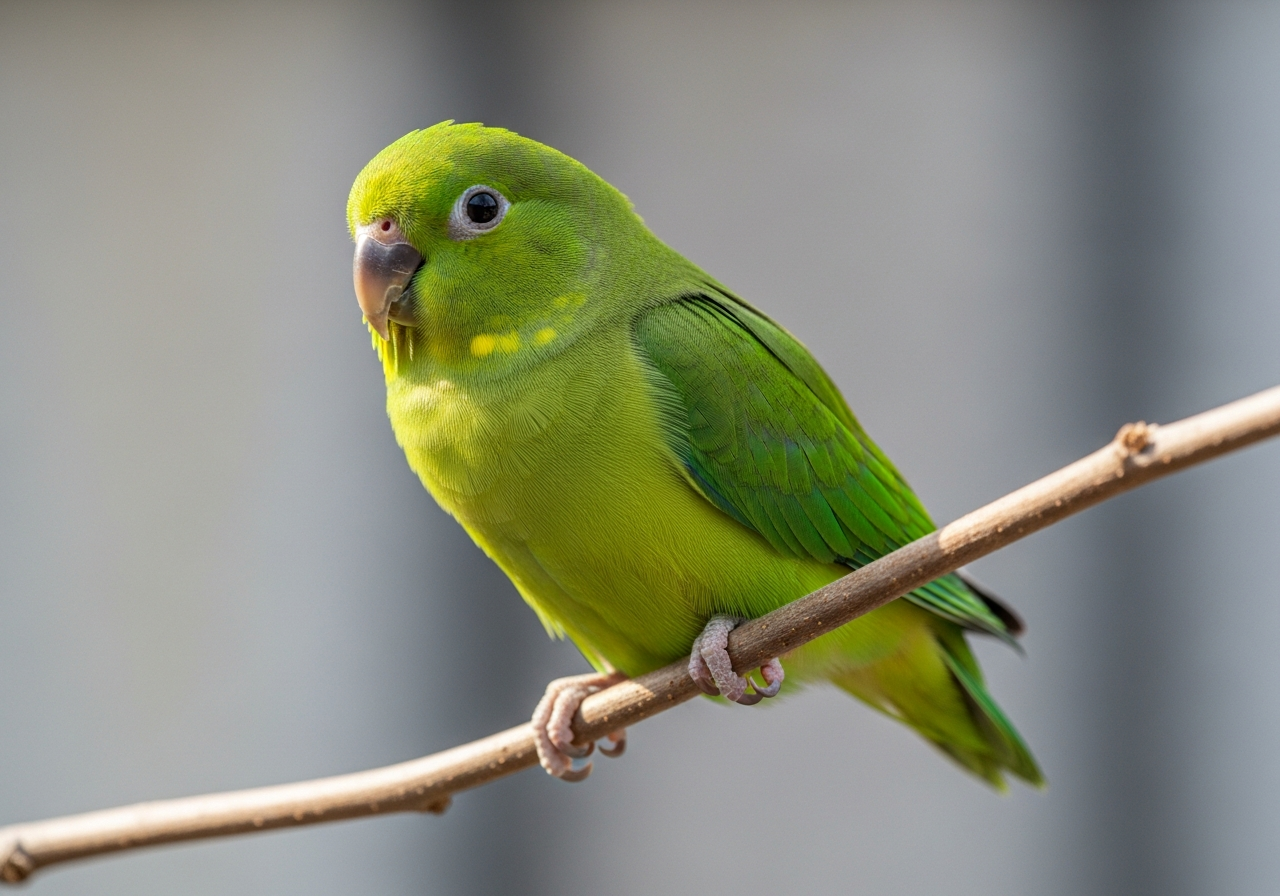
Parrotlet
Quick answer
The parrotlet is one of the smallest true parrots, nicknamed the pocket parrot for its tiny size and big attitude. It is intelligent and affectionate but feisty, so it suits patient owners willing to handle it daily to keep it tame.
Parrotlet at a glance
| Origin | Central and South America |
|---|---|
| Size | Very small (about 12–13 cm) |
| Weight | 25–35 g |
| Lifespan | 15–20 years |
| Plumage | Mostly green plumage, often with blue markings on males; bred varieties include blue and yellow; sleek and easy to keep with bathing access |
| Temperament | Bold, confident, affectionate |
| Good with | Patient owners, experienced beginners, attentive single-bird homes |
History of the Parrotlet
Parrotlets come from the forests and scrub of Central and South America, where several small species live in active flocks. They entered the pet trade more recently than budgies or cockatiels and gained a devoted following for their parrot-like confidence in a tiny body. The Pacific parrotlet is the most commonly kept, and breeders have developed several color mutations. Bold and clever, parrotlets behave much like larger parrots despite their small size.
Interesting facts about the Parrotlet
- Parrotlets are among the smallest true parrots in the world.
- They are often nicknamed pocket parrots for their tiny size.
- Despite being small, they are fearless and full of character.
- Some learn a few words in a small, quiet voice.
Common health issues in the Parrotlet and how to help
Like all bird breeds, the Parrotlet can be more prone to a few specific health conditions. Knowing the early signs helps you act quickly — always consult a qualified vet for diagnosis and treatment.
Feather plucking
What it is: Bored or under-stimulated parrotlets may pluck their feathers, creating bare patches that can become habitual.
How to help: Daily interaction and varied toys help prevent it, and an avian vet should rule out medical causes if plucking starts.
Respiratory infections
What it is: As small birds, parrotlets can be vulnerable to respiratory infections, shown by sneezing, tail bobbing, or labored breathing.
How to help: Keep the air clean and the bird warm, and see an avian vet promptly, as breathing trouble can escalate quickly.
Obesity
What it is: A seed-rich diet and too little exercise can leave parrotlets overweight, which strains their small bodies.
How to help: Offer a balanced diet with pellets and fresh vegetables plus daily out-of-cage activity, and ask an avian vet to monitor weight.
This is general information for owners, not veterinary advice. If you are worried about your bird's health, contact your vet.
Frequently asked questions about the Parrotlet
Are parrotlets good pets?
Yes, parrotlets can make wonderful pets for owners who give them daily handling and attention. They are intelligent and affectionate but need consistent interaction to stay tame and friendly.
Can parrotlets talk?
Some parrotlets learn a small vocabulary of words in a quiet voice, though they are not among the strongest talkers. They are valued more for their bold personality than their speech.
Should parrotlets be kept alone or in pairs?
A single parrotlet handled daily often bonds closely with its owner, while a pair may bond more with each other than with people. Housing two parrotlets together also requires care, as they can be territorial.