Bengal
Quick answer
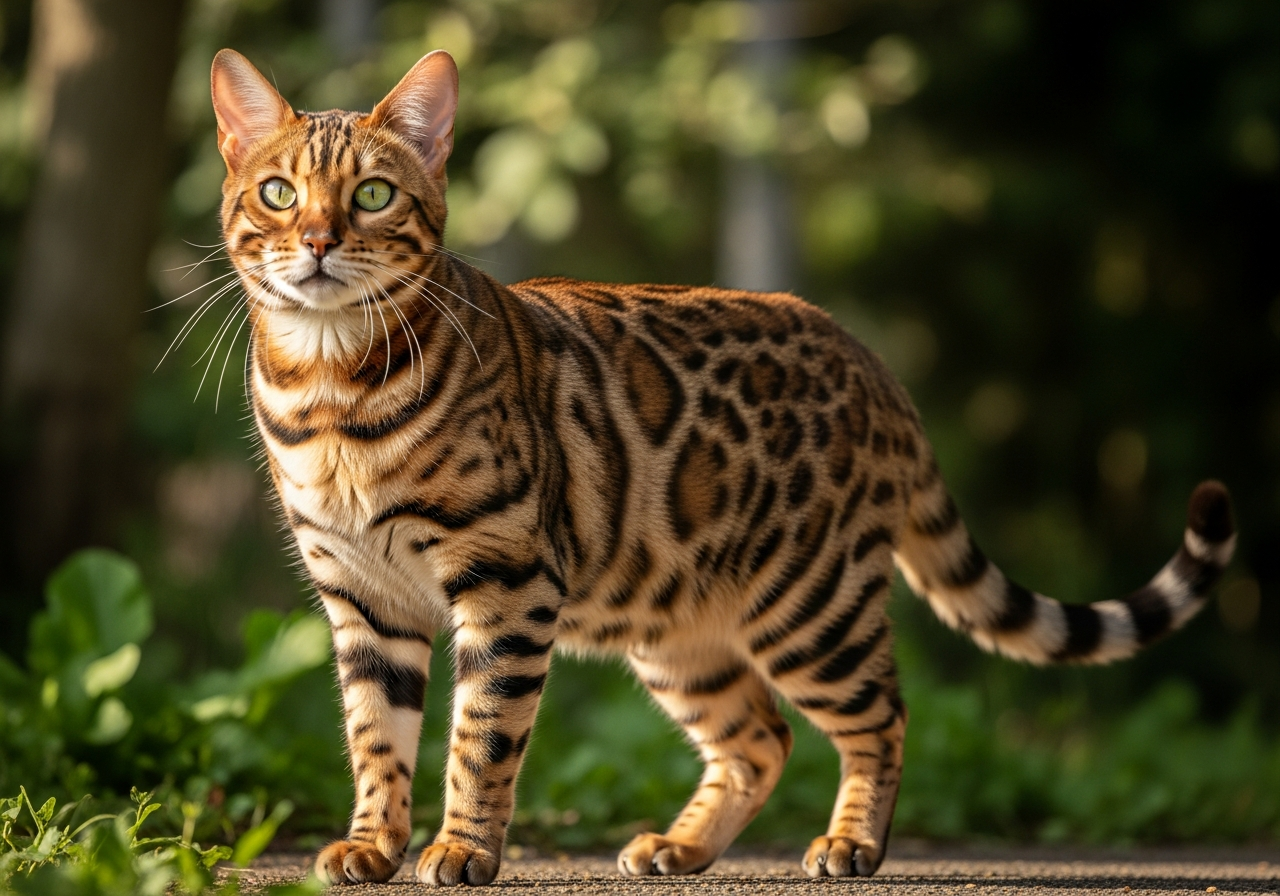
The Bengal is an athletic, wild-looking cat with a spotted or rosetted coat bred from the Asian leopard cat. Energetic, curious, and playful, it loves climbing, water, and active engagement, suiting busy, interactive households.
Bengal at a glance
| Origin | United States |
|---|---|
| Size | Medium (4–7 kg) |
| Weight | 4–7 kg (9–15 lb) |
| Lifespan | 12–16 years |
| Coat | Short, dense, glossy coat; low-maintenance, brush weekly |
| Temperament | Active, playful, curious |
| Good with | Active families, experienced owners, enrichment-rich homes |
History of the Bengal
The Bengal was created in the United States in the 1960s and 1980s by crossing the small wild Asian leopard cat with domestic cats. Breeder Jean Mill is credited with developing the modern breed, aiming for a gentle pet with an exotic, wild appearance. After several generations, Bengals became fully domestic in temperament while keeping their striking rosetted and spotted coats. The breed gained recognition from major registries and rapidly grew in popularity for its energetic, dog-like nature.
Interesting facts about the Bengal
- Bengals descend from the small wild Asian leopard cat.
- Many Bengals love water and may join their owners at the sink or bath.
- Their coats can have a shimmering, glittered appearance in sunlight.
- Bengals are highly athletic and can leap several times their own height.
If a cat of your own isn't practical right now, you can adopt a cat symbolically through World Animal Rescue Network — it funds rescue and care for community cats.
Common health issues in the Bengal and how to help
Like all cat breeds, the Bengal can be more prone to a few specific health conditions. Knowing the early signs helps you act quickly — always consult a qualified vet for diagnosis and treatment.
Hypertrophic cardiomyopathy (HCM)
What it is: HCM thickens the heart muscle and can develop without obvious early signs.
How to help: A vet can screen with a heart scan and manage it with medication if needed; responsible breeders test their cats.
Progressive retinal atrophy
What it is: This inherited eye condition slowly reduces vision and can lead to blindness.
How to help: A vet or eye specialist can diagnose it, and cats cope well in a stable environment; genetic testing of breeding cats helps prevent it.
Patellar luxation
What it is: Some Bengals can have kneecaps that slip out of place, causing an occasional skip or hop in their step.
How to help: A vet can assess severity and recommend management, from weight control to corrective options in more significant cases.
This is general information for owners, not veterinary advice. If you are worried about your cat's health, contact your vet.
Frequently asked questions about the Bengal
Are Bengal cats wild or dangerous?
Modern Bengals are fully domestic cats, several generations removed from their wild ancestor. They are not dangerous, though their high energy and intelligence mean they need plenty of stimulation and exercise.
Do Bengal cats need a lot of exercise?
Yes. Bengals are very active and curious, needing daily play, climbing space, and enrichment. Without enough stimulation they can become bored and mischievous.
Do Bengal cats really like water?
Many Bengals are unusually drawn to water, playing in sinks, taps, or baths. This trait varies by individual but is far more common in Bengals than in most other breeds.