Sphynx
Quick answer
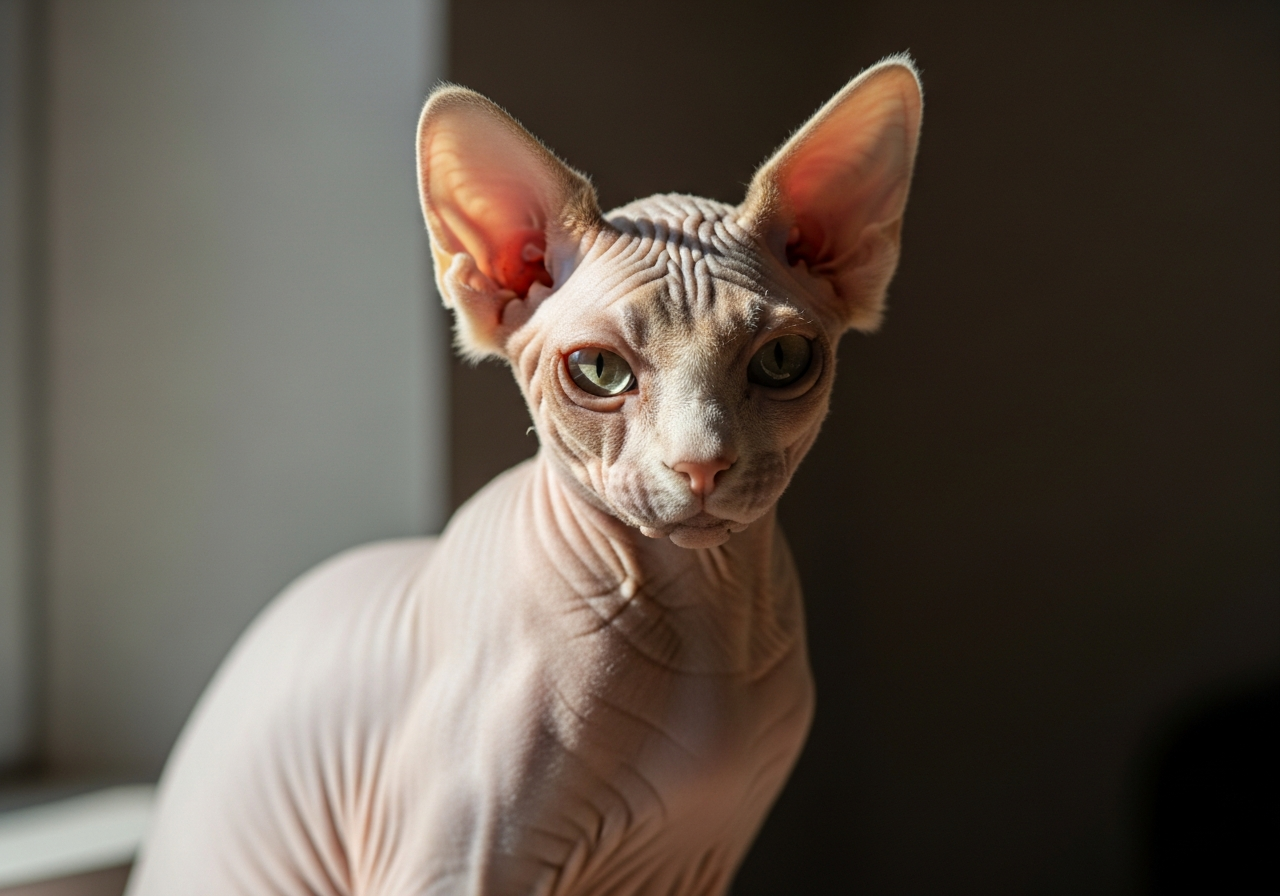
The Sphynx is a hairless cat with wrinkled, warm skin and large ears, known for being exceptionally affectionate and extroverted. Energetic and people-loving, it craves attention and warmth, often cuddling close to its owners.
Sphynx at a glance
| Origin | Canada |
|---|---|
| Size | Medium (3.5–5 kg) |
| Weight | 3.5–5 kg (8–11 lb) |
| Lifespan | 9–15 years |
| Coat | Hairless with fine down; needs regular bathing for skin oils |
| Temperament | Affectionate, energetic, mischievous |
| Good with | Attentive owners, warm indoor homes, families |
History of the Sphynx
The Sphynx began with a natural genetic mutation that produced a hairless kitten in Toronto, Canada, in 1966. Breeders carefully developed the trait, crossing hairless cats with coated cats to widen the gene pool and ensure health. The breed was refined through the 1970s and 1980s and gained recognition from major registries. Despite its exotic, ancient-looking appearance and Egyptian-inspired name, the Sphynx is a modern breed prized for its warmth and outgoing, affectionate personality.
Interesting facts about the Sphynx
- Despite appearing bald, the Sphynx has a fine peach-fuzz layer of down.
- Sphynx cats feel warm to the touch and often seek out blankets and laps.
- Without fur to absorb oils, they need regular baths to stay clean.
- The breed originated from a natural mutation in Canada in 1966.
Love cats but can't take one in? You can sponsor a cat welfare programme through World Animal Rescue Network, which helps community cats get food and veterinary care.
Common health issues in the Sphynx and how to help
Like all cat breeds, the Sphynx can be more prone to a few specific health conditions. Knowing the early signs helps you act quickly — always consult a qualified vet for diagnosis and treatment.
Hypertrophic cardiomyopathy (HCM)
What it is: HCM is a heart condition seen in Sphynx cats that thickens the heart muscle and may not show early signs.
How to help: A vet can screen with a heart scan and manage it with medication when needed; reputable breeders test their cats.
Skin care needs
What it is: Without a full coat, their skin produces oils that can build up and cause greasiness or irritation.
How to help: Regular gentle bathing helps keep the skin healthy, and a vet can advise on a routine and treat any irritation.
Getting cold
What it is: Their lack of fur means Sphynx cats lose body heat easily and can become chilled.
How to help: Warm indoor spaces and cozy bedding help, and a vet can advise if a cat seems persistently cold or unwell.
This is general information for owners, not veterinary advice. If you are worried about your cat's health, contact your vet.
Frequently asked questions about the Sphynx
Are Sphynx cats truly hairless?
Sphynx cats are not completely bald; they have a thin layer of fine, soft down that gives their skin a suede-like feel. Their lack of a full coat is what makes them appear hairless.
Do Sphynx cats need special care?
Yes. Because they lack a coat to absorb skin oils, Sphynx cats need regular bathing and ear cleaning. They also get cold easily and benefit from warm indoor environments.
Are Sphynx cats hypoallergenic?
Not entirely. Sphynx cats still produce the Fel d 1 allergen found in saliva and skin, so they are not truly hypoallergenic, though some allergy sufferers tolerate them better due to reduced shed hair.