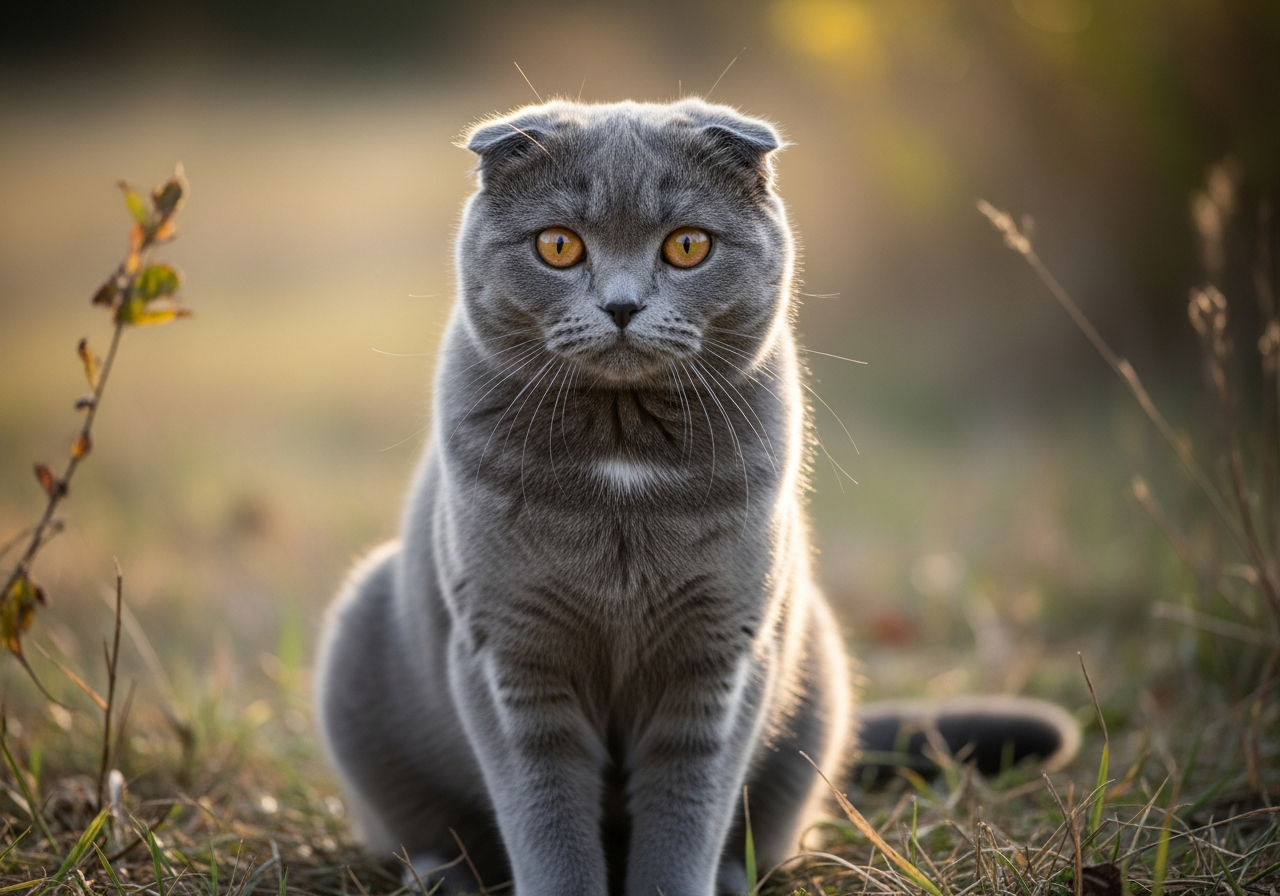
Scottish Fold
Quick answer
The Scottish Fold is a round-faced cat known for forward-folded ears caused by a natural cartilage gene. Sweet, calm, and adaptable, it is an affectionate companion that bonds closely with its family and tolerates change well.
Scottish Fold at a glance
| Origin | Scotland |
|---|---|
| Size | Medium (3–6 kg) |
| Weight | 3–6 kg (6–13 lb) |
| Lifespan | 11–15 years |
| Coat | Short or long dense coat; brush weekly |
| Temperament | Sweet, calm, adaptable |
| Good with | Families, calm homes, other pets |
History of the Scottish Fold
The Scottish Fold began in 1961 with a white barn cat named Susie, found on a farm in Scotland with unusual folded ears. A local farmer, William Ross, bred from her, and the trait was traced to a natural dominant gene affecting cartilage. The breed was developed in Scotland and later widely in the United States. Because the folding gene can cause joint problems, responsible breeders pair folded cats with straight-eared cats to protect the breed's health.
Interesting facts about the Scottish Fold
- All Scottish Folds are born with straight ears that may fold within weeks.
- The breed traces back to a single farm cat named Susie in 1961.
- Folds often sit in a relaxed 'Buddha' pose with paws stretched out.
- Not every kitten develops folded ears; some keep straight ears for life.
If a cat of your own isn't practical right now, you can adopt a cat symbolically through World Animal Rescue Network — it funds rescue and care for community cats.
Common health issues in the Scottish Fold and how to help
Like all cat breeds, the Scottish Fold can be more prone to a few specific health conditions. Knowing the early signs helps you act quickly — always consult a qualified vet for diagnosis and treatment.
Osteochondrodysplasia
What it is: The same gene that folds their ears affects cartilage and can cause joint stiffness or discomfort, sometimes seen as reluctance to jump.
How to help: A vet can assess the joints and help keep affected cats comfortable; pairing folded cats with straight-eared cats reduces the risk.
Hypertrophic cardiomyopathy (HCM)
What it is: HCM thickens the heart muscle and may develop without clear early signs.
How to help: A vet can screen with a heart scan and manage it with medication if needed; responsible breeders test their cats.
Ear issues
What it is: Their folded ears can be prone to wax buildup and occasional infections.
How to help: Routine ear checks help, and a vet can treat any infection and recommend safe cleaning.
This is general information for owners, not veterinary advice. If you are worried about your cat's health, contact your vet.
Frequently asked questions about the Scottish Fold
Why do Scottish Folds have folded ears?
Their folded ears come from a natural dominant gene that affects cartilage throughout the body. This same gene can affect joints, so ethical breeding pairs folded cats with straight-eared cats.
Are Scottish Folds healthy?
Scottish Folds can be prone to a cartilage and bone condition called osteochondrodysplasia, linked to the folding gene. Responsible breeding practices help reduce risk, and prospective owners should choose reputable breeders.
Are Scottish Folds good pets?
Yes. They are sweet, calm, and adaptable, getting along well with families, children, and other pets. They enjoy companionship and tend to bond closely with their owners.