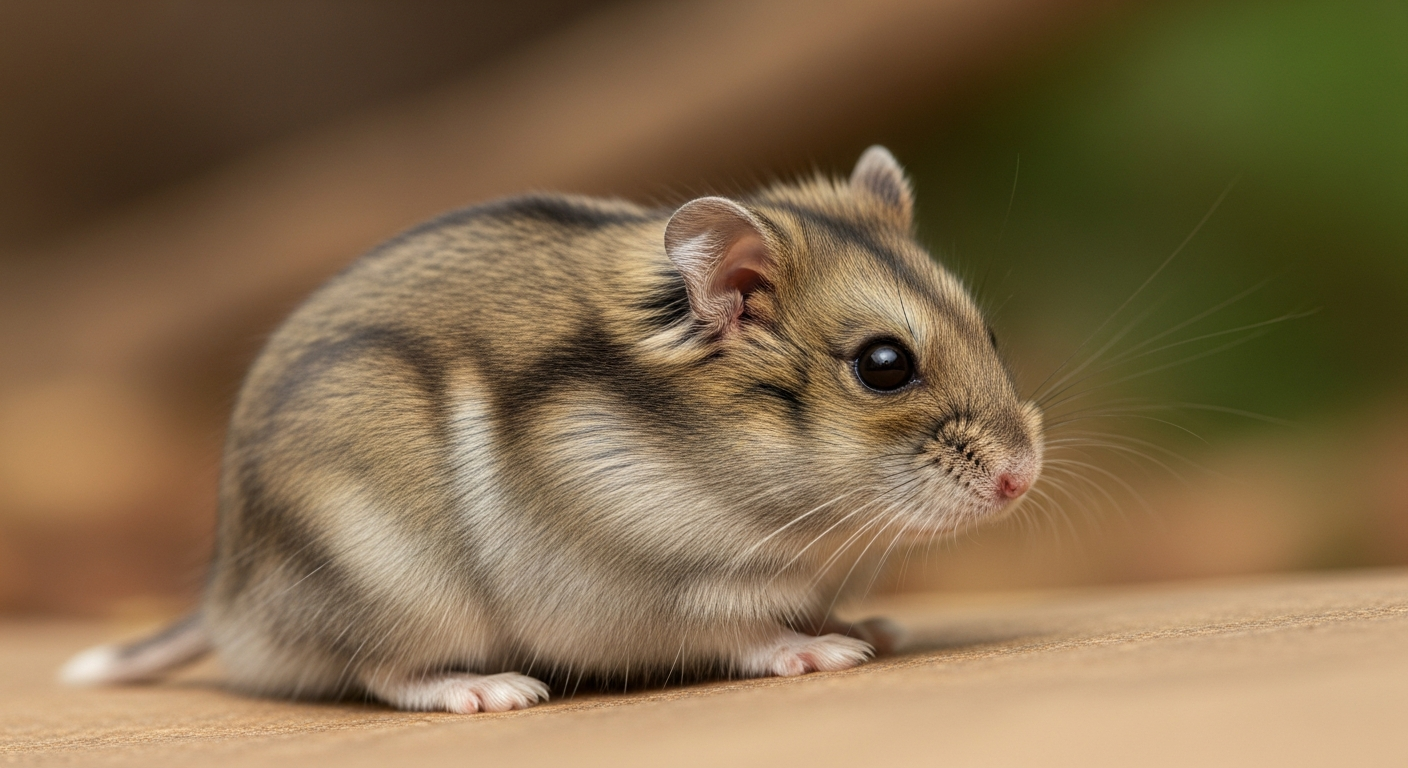
Campbell's Dwarf
Quick answer
Campbell's Dwarf is a small, curious hamster from the steppes of Central Asia, closely related to the Winter White. It comes in many colors and can be sociable, but it is fast and may nip, so it suits patient owners and is prone to diabetes.
Campbell's Dwarf at a glance
| Origin | Central Asia (Mongolia, northern China, Russia) |
|---|---|
| Size | Small dwarf (7–10 cm) |
| Weight | 30–50 g |
| Lifespan | 2–2.5 years |
| Coat | Short dense fur with a dorsal stripe; comes in many colors |
| Temperament | Curious, active, spirited |
| Good with | Adults and older children, patient and watchful owners |
History of the Campbell's Dwarf
Campbell's dwarf hamster was first collected in 1902 by W. C. Campbell in Mongolia and is native to the steppes and semi-deserts of Central Asia. It entered the pet trade as a small, hardy alternative to the Syrian and has since been bred into a wide range of coat colors and patterns. Closely related to the Winter White, it shares a similar build and the same tendency toward diabetes.
Interesting facts about the Campbell's Dwarf
- Campbell's dwarfs come in a wider range of colors than most other hamsters.
- They are closely related to Winter Whites and can look very similar.
- Quick and inquisitive, they are skilled little escape artists.
- Like Winter Whites, they are prone to diabetes and need a low-sugar diet.
Common health issues in the Campbell's Dwarf and how to help
Like all hamster breeds, the Campbell's Dwarf can be more prone to a few specific health conditions. Knowing the early signs helps you act quickly — always consult a qualified vet for diagnosis and treatment.
Diabetes
What it is: Campbell's dwarfs are prone to diabetes, which can show as increased thirst, frequent urination, weight changes, and sluggishness.
How to help: Feeding a low-sugar diet and avoiding fruit and sweet treats reduces the risk, and a vet can confirm diabetes and advise on long-term diet and monitoring.
Overgrown teeth
What it is: Their front teeth grow continuously and can overgrow if they do not wear evenly, causing drooling, dropped food, or difficulty eating.
How to help: Provide safe wood chews to encourage natural wear, and have a vet trim overgrown teeth and check for underlying issues.
Mites and skin irritation
What it is: Dwarf hamsters can carry skin mites that flare under stress, leading to itching, flaky skin, or thinning fur.
How to help: Keep the habitat clean and dry, and see a vet for diagnosis and prescribed treatment if scratching or fur loss appears.
This is general information for owners, not veterinary advice. If you are worried about your hamster's health, contact your vet.
Frequently asked questions about the Campbell's Dwarf
Are Campbell's dwarf hamsters friendly?
Campbell's dwarfs can be sociable and curious, but they are fast and more likely to nip than Syrians. Patient, gentle handling from a young age helps them become tame.
What is the difference between Campbell's and Winter White hamsters?
Campbell's and Winter White hamsters are closely related and look similar, but Campbell's come in more colors and do not turn white in winter. Both are prone to diabetes and need a low-sugar diet.
Can Campbell's dwarf hamsters live together?
Campbell's are sometimes kept in same-sex pairs introduced young, but they can fall out and fight. Owners should watch closely and be ready to separate them into individual cages.