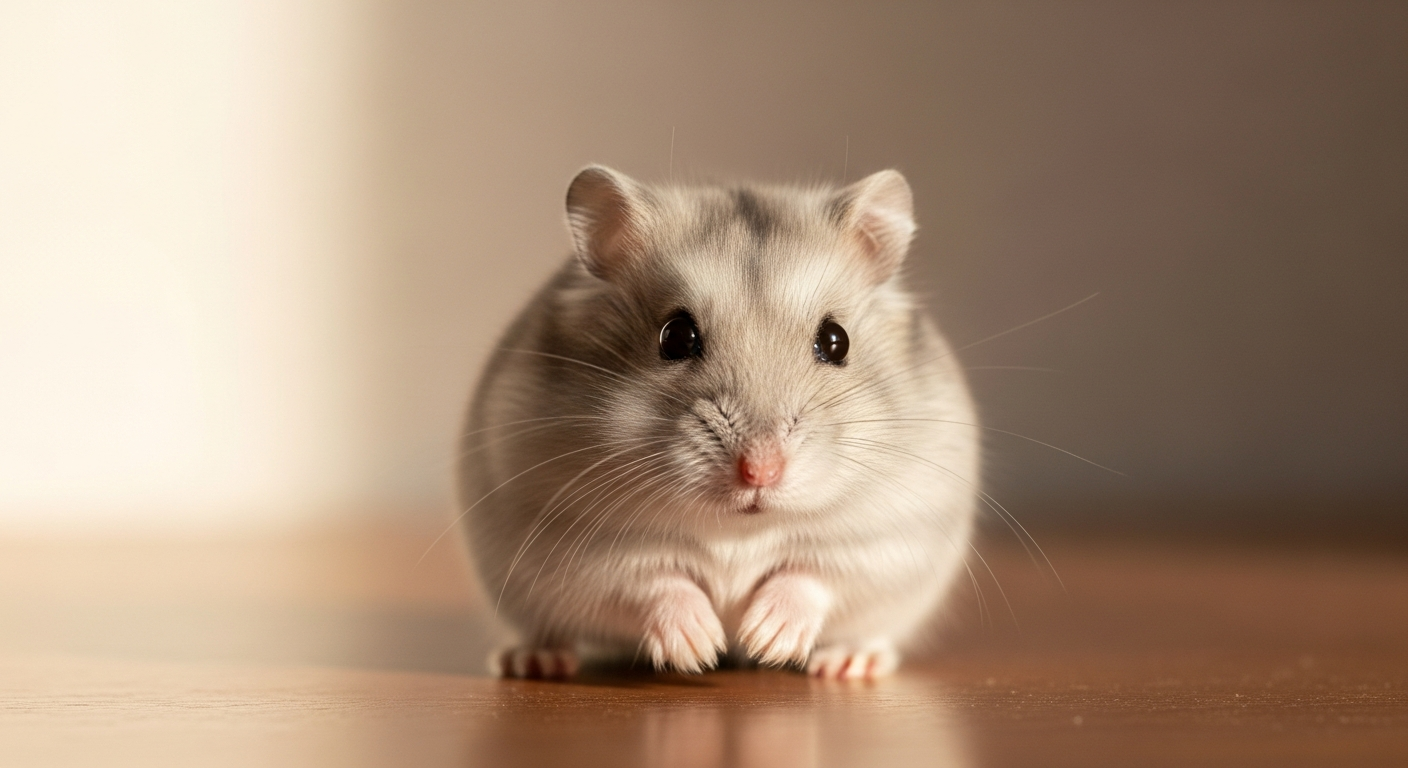
Winter White Russian Dwarf
Quick answer
The Winter White Russian Dwarf is a small, friendly hamster named for its ability to turn white in winter in the wild. It is one of the more handleable dwarf types but is prone to diabetes, so a low-sugar diet matters.
Winter White Russian Dwarf at a glance
| Origin | Kazakhstan and southwestern Siberia |
|---|---|
| Size | Small dwarf (7–9 cm) |
| Weight | 30–50 g |
| Lifespan | 2–2.5 years |
| Coat | Soft dense fur with a dark dorsal stripe; may lighten in winter |
| Temperament | Friendly, lively, sociable |
| Good with | Older children and adults, patient owners, watchful homes |
History of the Winter White Russian Dwarf
The Winter White hamster originates on the grassy steppes of Kazakhstan and southwestern Siberia, where shorter winter days trigger its coat to fade toward white as camouflage against snow. Closely related to Campbell's dwarf, it entered the pet trade as a small, sociable alternative to the Syrian. In heated indoor homes the dramatic winter color change is often muted, but its gentle nature has kept it a popular dwarf hamster.
Interesting facts about the Winter White Russian Dwarf
- In the wild its coat turns nearly white in winter to blend with snow.
- Indoor lighting and warmth often prevent the full winter color change in pets.
- It has a distinctive dark stripe running down its back.
- Winter Whites are among the more handleable of the dwarf hamsters.
Common health issues in the Winter White Russian Dwarf and how to help
Like all hamster breeds, the Winter White Russian Dwarf can be more prone to a few specific health conditions. Knowing the early signs helps you act quickly — always consult a qualified vet for diagnosis and treatment.
Diabetes
What it is: Winter White and related Russian dwarfs are prone to diabetes, which can cause excessive drinking, frequent urination, weight changes, and low energy.
How to help: A low-sugar diet with no sugary fruit or treats helps reduce the risk, and a vet can diagnose diabetes and guide ongoing dietary management.
Overgrown teeth
What it is: Their continuously growing front teeth can overgrow if they wear unevenly, leading to drooling, dropped food, or trouble eating.
How to help: Offer safe wood chews to support natural wear, and have a vet trim the teeth and examine the mouth if overgrowth appears.
Mites and skin problems
What it is: Dwarf hamsters can develop skin mites that cause itching, scaly skin, or patchy fur loss, often when they are stressed or run down.
How to help: Keep the cage clean and dry, and visit a vet for diagnosis and prescribed treatment if scratching or hair loss develops.
This is general information for owners, not veterinary advice. If you are worried about your hamster's health, contact your vet.
Frequently asked questions about the Winter White Russian Dwarf
Do Winter White hamsters really turn white?
In the wild, Winter White hamsters fade toward white in winter as camouflage against snow. As pets kept in warm, well-lit homes, the color change is often partial or does not happen at all.
Are Winter White hamsters friendly?
Yes, Winter Whites are among the friendlier dwarf hamsters and can become quite tame with gentle, regular handling. Their small size still means they need calm, careful holding.
Why do Winter White hamsters need a low-sugar diet?
Winter Whites are prone to diabetes, so sugary foods like fruit and sweet treats can raise their risk. A diet of appropriate hamster food without added sugar helps keep them healthier.