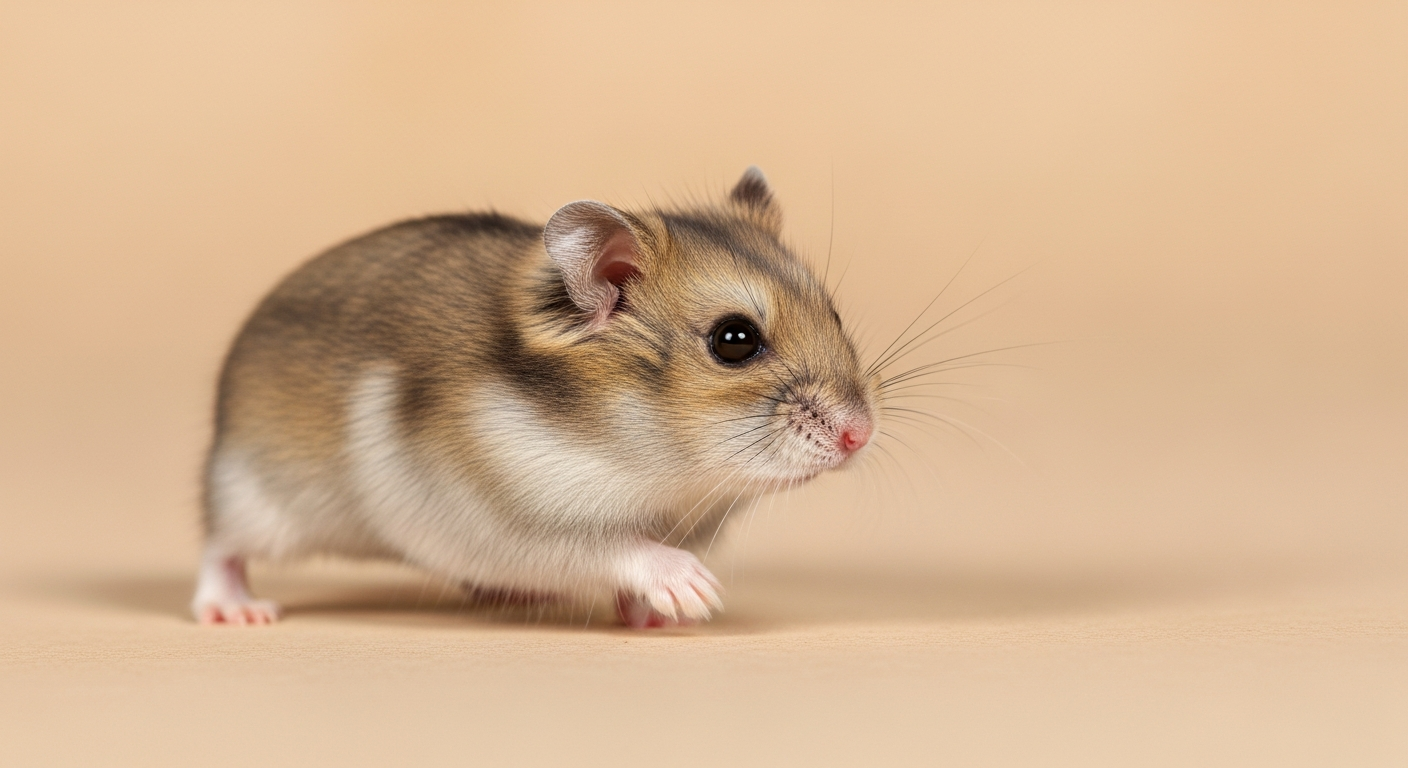
Roborovski Dwarf
Quick answer
The Roborovski is the smallest pet hamster, a quick, energetic dwarf from the deserts of Central Asia. It is best suited to gentle observation rather than constant handling, but it is hardy and often the longest-lived hamster.
Roborovski Dwarf at a glance
| Origin | Mongolia and northern China |
|---|---|
| Size | Tiny dwarf (4–5 cm) |
| Weight | 20–25 g |
| Lifespan | 3–3.5 years |
| Coat | Short dense sandy-brown fur; very low grooming needs |
| Temperament | Energetic, fast, shy |
| Good with | Older children and adults, observers, experienced owners |
History of the Roborovski Dwarf
The Roborovski hamster comes from the sandy deserts and steppes of Mongolia and northern China, where it was first recorded by the expedition of Lieutenant Roborovski in the late 1800s. It reached the pet trade much later than the Syrian, becoming popular for its tiny size and charming, busy nature. Built for life on the move, it remains one of the most active and enduring of the dwarf hamsters.
Interesting facts about the Roborovski Dwarf
- The Roborovski is the smallest hamster kept as a pet, often under five centimeters long.
- It is among the longest-lived hamsters, sometimes reaching three and a half years.
- Robos are remarkably fast and agile, making them tricky to hold.
- They have no dark dorsal stripe, unlike some other dwarf hamsters.
Common health issues in the Roborovski Dwarf and how to help
Like all hamster breeds, the Roborovski Dwarf can be more prone to a few specific health conditions. Knowing the early signs helps you act quickly — always consult a qualified vet for diagnosis and treatment.
Stress from over-handling
What it is: Because Roborovskis are tiny and very fast, frequent or forced handling can leave them stressed, which over time can lower their resistance to illness.
How to help: Let them settle through patient, brief sessions and plenty of enrichment, and ask a vet for advice if a hamster seems persistently fearful or unwell.
Overgrown teeth
What it is: Their continuously growing front teeth can overgrow if they wear unevenly, causing dropped food, drooling, or difficulty eating.
How to help: Provide safe gnawing materials to encourage natural wear, and have a vet trim the teeth and check the mouth if overgrowth develops.
Mites and skin irritation
What it is: Hamsters can carry skin mites that flare up under stress, leading to itching, flaky skin, or thinning fur.
How to help: Keep the habitat clean and dry, and see a vet for diagnosis and prescribed treatment if scratching or hair loss appears.
This is general information for owners, not veterinary advice. If you are worried about your hamster's health, contact your vet.
Frequently asked questions about the Roborovski Dwarf
Are Roborovski hamsters good for handling?
Roborovskis are very fast and small, so they are better suited to watching than frequent handling. They can become tame with patience, but they rarely enjoy being held for long.
How long do Roborovski hamsters live?
Roborovskis are among the longest-lived pet hamsters, often reaching three to three and a half years with good care. That is notably longer than the typical Syrian hamster.
Can Roborovski hamsters live together?
Roborovskis are sometimes kept in same-sex pairs or groups from a young age, but this is not guaranteed and they can fall out. Watch closely for fighting and be ready to separate them into individual cages.