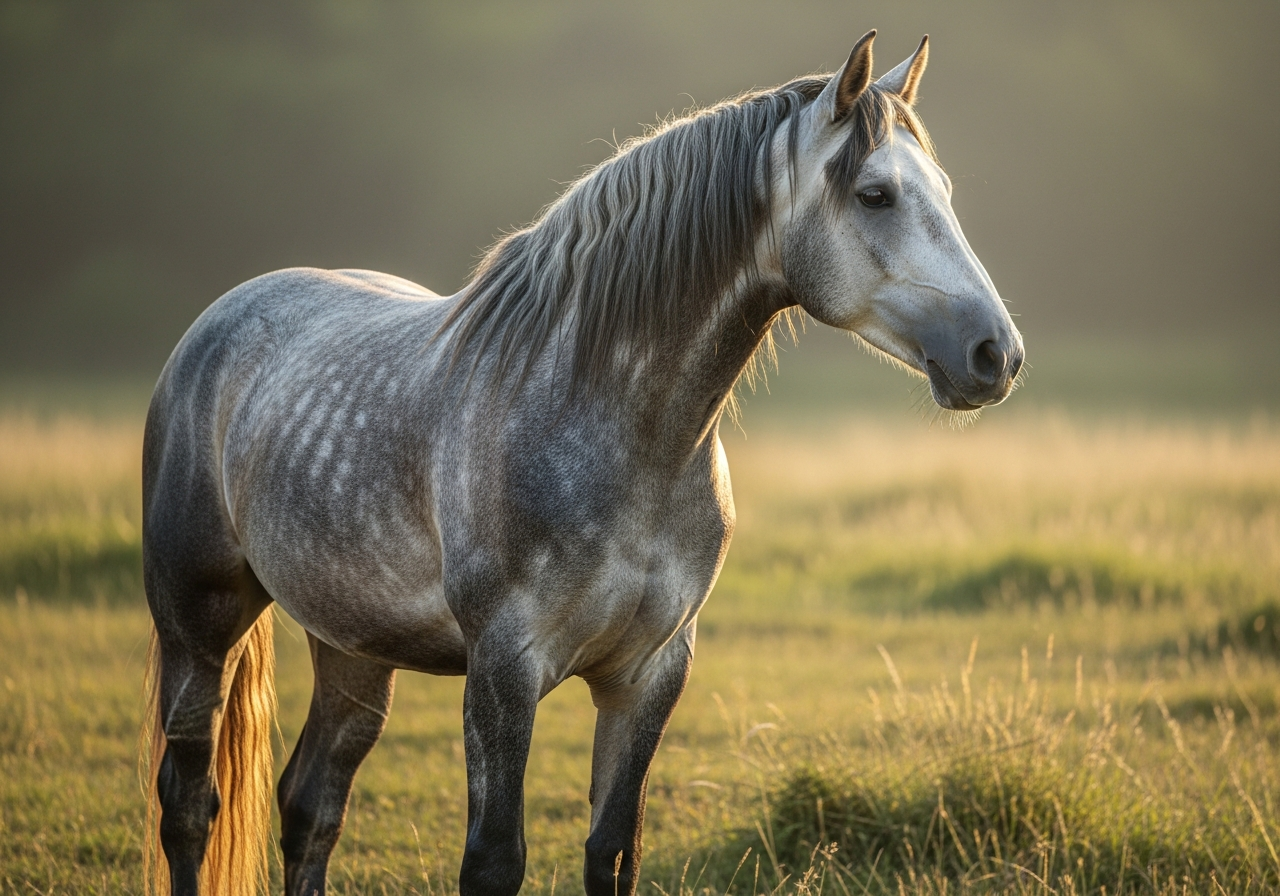
Andalusian
Quick answer
The Andalusian, or Pure Spanish Horse, is a strong, elegant breed from Spain with a long, distinguished history in classical dressage, known for its flowing mane, noble bearing, and willing, sensitive temperament.
Andalusian at a glance
| Origin | Spain |
|---|---|
| Size | 15–16.2 hands |
| Weight | 410–550 kg (900–1,200 lb) |
| Lifespan | 25–28 years |
| Coat | Often grey, with thick, long mane and tail; flowing hair needs regular grooming |
| Temperament | Noble, sensitive, willing |
| Good with | Dressage riders, classical riding enthusiasts, intermediate riders |
History of the Andalusian
The Andalusian, also called the Pura Raza Espanola, hails from the Iberian Peninsula and is one of the oldest recognized breeds. Shaped over centuries in Spain, it became the prized mount of nobility and a cornerstone of classical horsemanship and the Spanish Riding School tradition. Spanish horses spread across Europe and the Americas, influencing many breeds. Renowned for its agility, collected movement, and dramatic looks, the Andalusian remains a star of dressage, classical riding, and exhibition.
Interesting facts about the Andalusian
- Andalusians are one of the oldest documented horse breeds in the world.
- They strongly influenced the development of many New World horse breeds.
- Most Andalusians are grey, though bay and black also occur.
- Their natural collection and agility make them ideal for classical dressage.
Common health issues in the Andalusian and how to help
Like all horse breeds, the Andalusian can be more prone to a few specific health conditions. Knowing the early signs helps you act quickly — always consult a qualified vet for diagnosis and treatment.
Colic
What it is: Andalusians can be prone to digestive upset and colic, which appears as restlessness, pawing, or loss of appetite.
How to help: Consistent feeding, fresh water, and quick veterinary attention to any signs all help.
Laminitis
What it is: Easy-keeping horses can develop laminitis if overfed on rich pasture, causing hoof pain and lameness.
How to help: A vet can guide diet, weight control, and hoof care to prevent and manage it.
Allergic skin and airway issues
What it is: Some Andalusians are sensitive to dust or insects, leading to itchy skin or airway irritation.
How to help: A vet can help identify triggers and recommend management and treatment.
This is general information for owners, not veterinary advice. If you are worried about your horse's health, contact your vet.
Frequently asked questions about the Andalusian
What is an Andalusian horse known for?
Andalusians are known for their elegance, flowing manes, noble temperament, and outstanding ability in classical dressage and high-school riding.
Are Andalusian horses good for dressage?
Yes. Andalusians excel at dressage thanks to their natural collection, agility, balance, and willing, trainable nature.
What color are most Andalusian horses?
Most Andalusians are grey, though bay and black coats also occur within the breed.