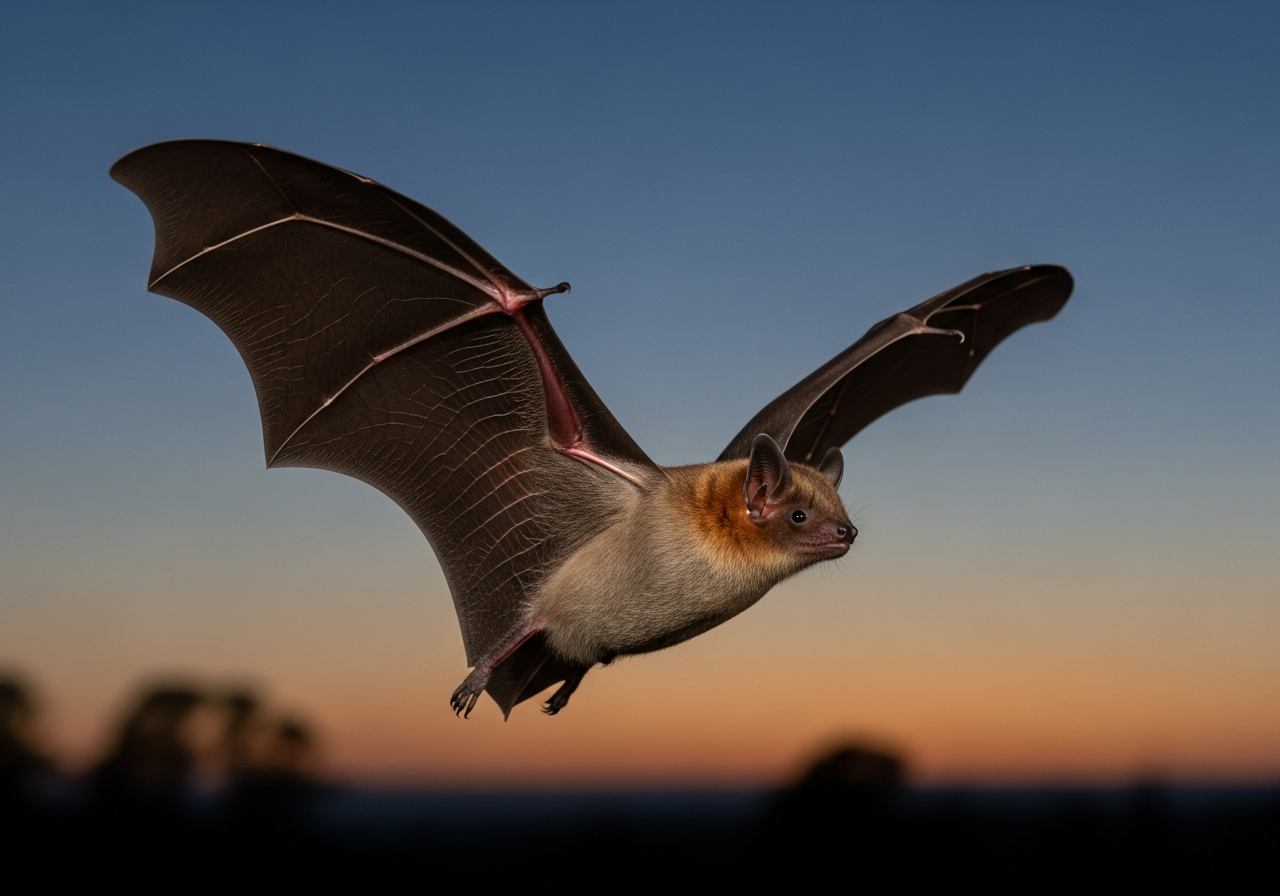
Quick answer
Bats live in Caves, forests, and urban roosts worldwide. Within that range they pick microhabitats that supply cover, food (Varies (insects, fruit, nectar, blood)), water, and breeding sites — and they disappear where those features are lost.
Key takeaway
Bats live in Caves, forests, and urban roosts worldwide. Within that range they pick microhabitats that supply cover, food (Varies (insects, fruit, nectar, blood)), water, and breeding sites — and they disappear where those features are lost.
Bat native habitat
Bats (Chiroptera) are tied to Caves, forests, and urban roosts worldwide. Look for sites that match their diet (Varies (insects, fruit, nectar, blood)) and movement style; seasonal rains or prey shifts can expand or shrink local occupancy.
Microhabitats bats prefer
Cover for resting, access to food, and safe breeding sites decide day-to-day use. Edge habitats can help adaptable populations but fail specialists that need continuous wild land.
How people change Bat range
Farms, suburbs, and roads create opportunity for some individuals and lethal risk for others. Fragmentation without corridors isolates bat groups and raises local extinction risk.
Conservation geography for bats
Status in our guides: <strong>Least Concern</strong>. Protecting linked habitat often beats a single fenced reserve. Watch from a distance and never feed wild bats.
Diet and feeding
Diet varies enormously across the more than 1,400 bat species. Many small bats are insectivores that can eat thousands of insects in a single night, helping control pests such as mosquitoes. Larger fruit bats feed on fruit, nectar, and pollen, making them important pollinators and seed dispersers in tropical forests. Only three species, all in the Americas, feed on blood.
Habitat and range
Bats are found almost everywhere on Earth except the most extreme polar regions and a few remote islands. They occupy caves, hollow trees, rock crevices, and human structures, and species range from rainforests and deserts to cities. Some temperate bats hibernate through winter or migrate to warmer areas when insects become scarce. Their wide distribution makes them one of the most successful mammal groups.
Sources
Bat FAQs
Where do bats live?
Bats live in Caves, forests, and urban roosts worldwide. Within that range they pick microhabitats that supply cover, food (Varies (insects, fruit, nectar, blood)), water, and breeding sites — and they disappear where those features are lost.
What is the scientific name of the bat?
Chiroptera — used in research and conservation listings for bats.
What do bats eat?
Bats eat insects, fruit, nectar and blood, with seasonal and regional variation in Caves, forests, and urban roosts worldwide.
What is the conservation status of bats?
Listed in our guides as Least Concern. Check the IUCN Red List and national assessments for the latest formal category.