Quick answer
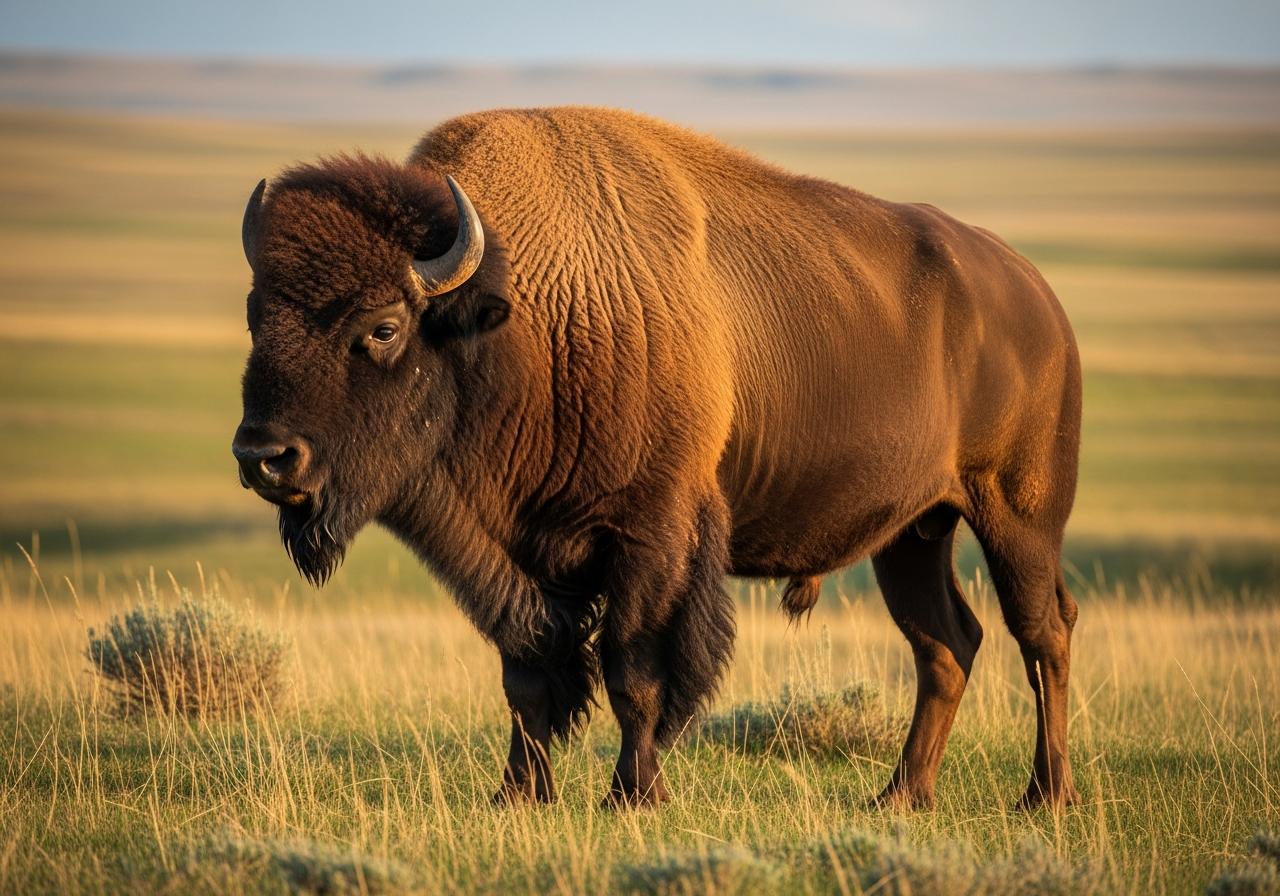
American Bisons can injure people in specific contexts — usually when surprised, cornered, defending young, or habituated to food. Risk scales with size (450–1,000 kg (1,000–2,200 lb)), weapons, and human behaviour, not with how “scary” the species looks online.
Key takeaway
American Bisons can injure people in specific contexts — usually when surprised, cornered, defending young, or habituated to food. Risk scales with size (450–1,000 kg (1,000–2,200 lb)), weapons, and human behaviour, not with how “scary” the species looks online.
Realistic risk from american bisons
Most wild american bisons avoid people. Serious incidents are uncommon relative to encounter rates, but consequences can be severe when animals are cornered or food-conditioned.
When American Bison encounters turn dangerous
Surprise meetings, food rewards, injured animals, and mothers with young raise danger. Approaching for photos is a frequent human factor in Grasslands, plains, and prairies.
American Bison capability
Consider bite, claws, horns, venom, constriction, or mass (450–1,000 kg (1,000–2,200 lb)). Even shy species can injure if handled. Status (Near Threatened) does not equal temperament.
Safety around american bisons
Keep distance, store food securely, leash pets, and follow park rules. Never feed wildlife. Seek medical care for puncture wounds and follow local public-health advice.
Diet and grazing
Bison are grazing herbivores that feed mainly on grasses and sedges, moving across the plains as they crop vegetation. Their grazing shapes grassland ecosystems, promoting plant diversity and creating habitat for other species. They have a multi-chambered stomach that ferments tough plant material, and they ruminate, chewing cud, to extract nutrients. In winter they use their massive heads to sweep snow aside and rea
History and near extinction
Before European settlement, an estimated 30 to 60 million bison roamed North America in vast herds. In the 1800s they were slaughtered on an enormous scale for hides, meat, and as part of efforts to displace Native American peoples, leaving only a few hundred animals by 1900. Conservation efforts, including protection in Yellowstone National Park, saved the species from extinction. Today bison are a powerful symbol o
Sources
American Bison FAQs
Are american bisons dangerous?
American Bisons can injure people in specific contexts — usually when surprised, cornered, defending young, or habituated to food. Risk scales with size (450–1,000 kg (1,000–2,200 lb)), weapons, and human behaviour, not with how “scary” the species looks online.
What is the scientific name of the american bison?
Bison bison — used in research and conservation listings for american bisons.
What do american bisons eat?
American Bisons eat grazer, with seasonal and regional variation in Grasslands, plains, and prairies.
Where do american bisons live?
They are associated with Grasslands, plains, and prairies. Local presence depends on food, cover, and human land use.
What is the conservation status of american bisons?
Listed in our guides as Near Threatened. Check the IUCN Red List and national assessments for the latest formal category.