Quick answer
Spotted Hyenas can injure people in specific contexts — usually when surprised, cornered, defending young, or habituated to food. Risk scales with size (40–86 kg (88–190 lb)), weapons, and human behaviour, not with how “scary” the species looks online.
Key takeaway
Spotted Hyenas can injure people in specific contexts — usually when surprised, cornered, defending young, or habituated to food. Risk scales with size (40–86 kg (88–190 lb)), weapons, and human behaviour, not with how “scary” the species looks online.
Realistic risk from spotted hyenas
Most wild spotted hyenas avoid people. Serious incidents are uncommon relative to encounter rates, but consequences can be severe when animals are cornered or food-conditioned.
When Spotted Hyena encounters turn dangerous
Surprise meetings, food rewards, injured animals, and mothers with young raise danger. Approaching for photos is a frequent human factor in Savanna, grassland, and semi-desert.
Spotted Hyena capability
Consider bite, claws, horns, venom, constriction, or mass (40–86 kg (88–190 lb)). Even shy species can injure if handled. Status (Least Concern) does not equal temperament.
Safety around spotted hyenas
Keep distance, store food securely, leash pets, and follow park rules. Never feed wildlife. Seek medical care for puncture wounds and follow local public-health advice.
Diet and hunting
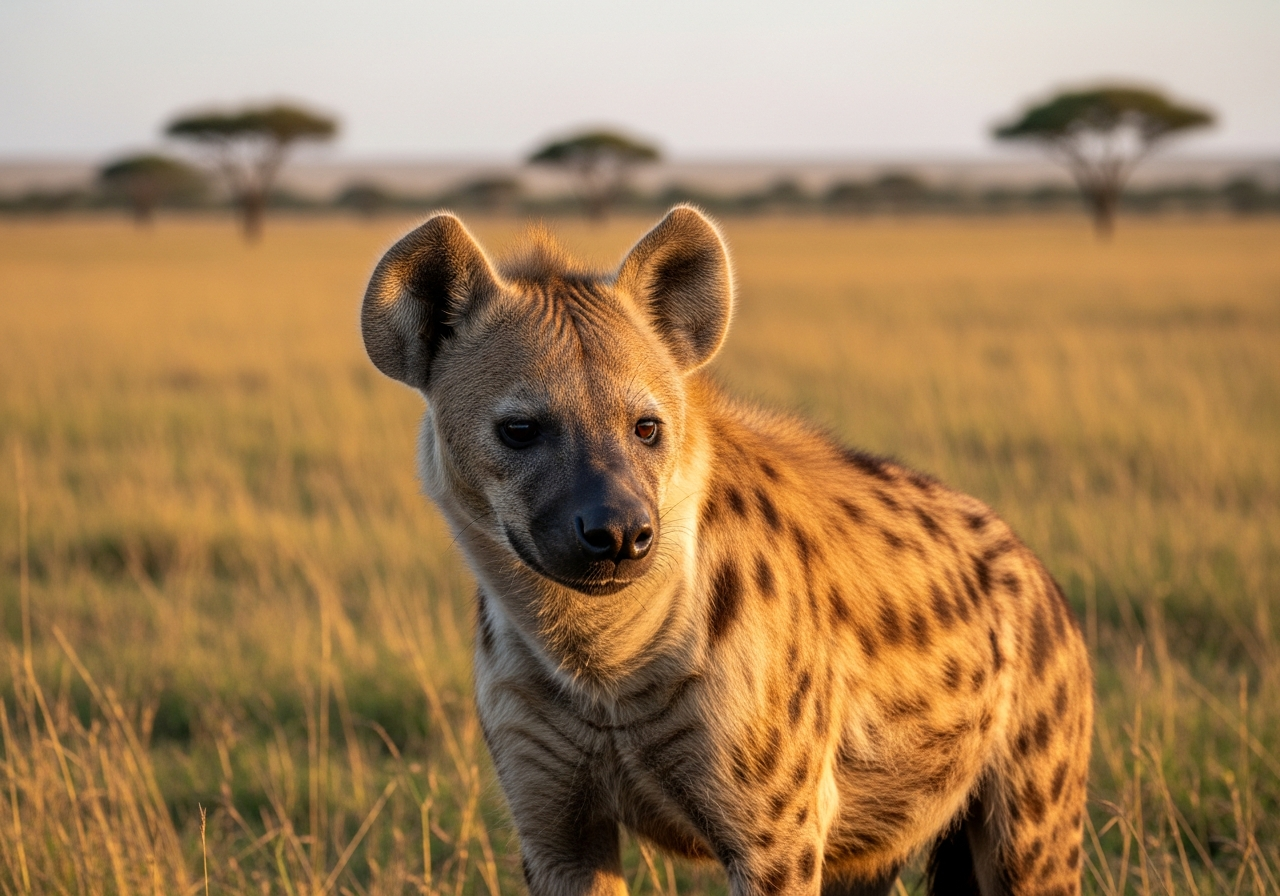
Spotted hyenas are formidable carnivores that hunt the majority of their own food, working together to chase down prey such as wildebeest, zebra, and antelope. They are also expert scavengers and have the strongest jaws relative to size of any mammal, able to crush and digest bone. Their digestive system extracts nutrients from parts other predators leave behind, wasting almost nothing of a carcass. A clan will defen
Habitat and range
The spotted hyena is widespread across sub-Saharan Africa, inhabiting savannas, grasslands, open woodlands, and semi-deserts. It avoids only dense rainforest and the most extreme deserts. Clans hold and defend territories, marking boundaries with scent and communal latrines. Their adaptability and varied diet have helped them remain common across much of the continent.
Sources
Spotted Hyena FAQs
Are spotted hyenas dangerous?
Spotted Hyenas can injure people in specific contexts — usually when surprised, cornered, defending young, or habituated to food. Risk scales with size (40–86 kg (88–190 lb)), weapons, and human behaviour, not with how “scary” the species looks online.
What is the scientific name of the spotted hyena?
Crocuta crocuta — used in research and conservation listings for spotted hyenas.
What do spotted hyenas eat?
Spotted Hyenas are described as carnivores, with seasonal and regional variation in Savanna, grassland, and semi-desert.
Where do spotted hyenas live?
They are associated with Savanna, grassland, and semi-desert. Local presence depends on food, cover, and human land use.
What is the conservation status of spotted hyenas?
Listed in our guides as Least Concern. Check the IUCN Red List and national assessments for the latest formal category.