Quick answer
Mule Deer feed on browse, forbs, grasses, and acorns, adjusting with season, age, and what is abundant in Western forests, sagebrush, deserts, and foothills of North America. That label is a preferred pattern, not every item an individual might sample.
Key takeaway
Mule Deer feed on browse, forbs, grasses, and acorns, adjusting with season, age, and what is abundant in Western forests, sagebrush, deserts, and foothills of North America. That label is a preferred pattern, not every item an individual might sample.
Mule Deer diet overview
Mule Deer (Odocoileus hemionus) are best summarised as Herbivore — browse, forbs, grasses, and acorns. Anatomy and habitat (Western forests, sagebrush, deserts, and foothills of North America) decide whether they hunt, graze, filter, scavenge, or mix strategies across the year.
How mule deer find food
Energy-rich foods are prioritised when available; lean seasons force broader diets or longer travel. Young animals may eat different items or receive food from parents.
Mule Deer role in the food web
As herbivores shaping plants and seeds, mule deer move nutrients and influence prey or vegetation.
Feeding and human conflict
Never feed wild mule deer. Habituation raises injury risk and can lead to lethal management. Captive diets must match species needs, not generic pet food rules.
Stotting and escape behaviour
When alarmed, mule deer often flee with a four-legged bounce called stotting, which may signal fitness to predators or improve visibility over brush. This gait distinguishes them from the running gallop of white-tailed deer.
Forked antlers and the rut
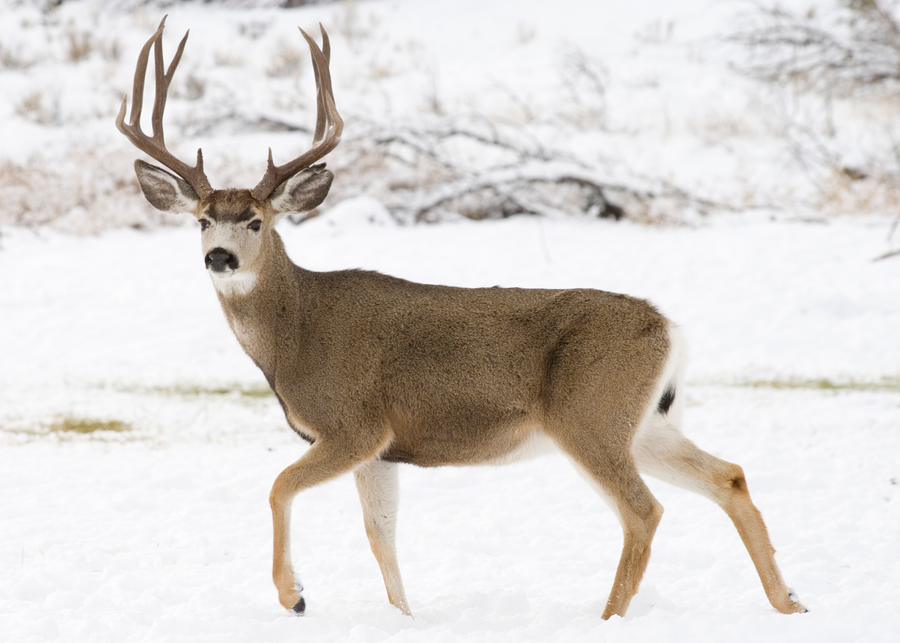
Bucks grow bifurcating antlers that fork rather than branch from a main beam like white-tailed deer. The rut peaks in late autumn; bucks spar for access to does. Afterward antlers are shed and regrow through spring and summer.
Sources
Mule Deer FAQs
What do mule deer eat?
Mule Deer feed on browse, forbs, grasses, and acorns, adjusting with season, age, and what is abundant in Western forests, sagebrush, deserts, and foothills of North America. That label is a preferred pattern, not every item an individual might sample.
What is the scientific name of the mule deer?
Odocoileus hemionus — used in research and conservation listings for mule deer.
Where do mule deer live?
They are associated with Western forests, sagebrush, deserts, and foothills of North America. Local presence depends on food, cover, and human land use.
What is the conservation status of mule deer?
Listed in our guides as Least Concern. Check the IUCN Red List and national assessments for the latest formal category.