Quick answer
Platypuses feed on insect larvae, worms and shellfish, adjusting with season, age, and what is abundant in Freshwater rivers, streams, and lakes. That label is a preferred pattern, not every item an individual might sample.
Key takeaway
Platypuses feed on insect larvae, worms and shellfish, adjusting with season, age, and what is abundant in Freshwater rivers, streams, and lakes. That label is a preferred pattern, not every item an individual might sample.
Platypus diet overview
Platypuses (Ornithorhynchus anatinus) are best summarised as Carnivore (insect larvae, worms, shellfish). Anatomy and habitat (Freshwater rivers, streams, and lakes) decide whether they hunt, graze, filter, scavenge, or mix strategies across the year.
How platypuses find food
Energy-rich foods are prioritised when available; lean seasons force broader diets or longer travel. Young animals may eat different items or receive food from parents.
Platypus role in the food web
As predators or scavengers, platypuses move nutrients and influence prey or vegetation.
Feeding and human conflict
Never feed wild platypuses. Habituation raises injury risk and can lead to lethal management. Captive diets must match species needs, not generic pet food rules.
A mammal that lays eggs
The platypus is a monotreme — one of just five surviving species of egg-laying mammals, alongside four echidna species. Females lay one to three leathery eggs in a riverbank burrow and curl around them until they hatch after about ten days. Like all mammals, the mother then feeds her young milk, though platypuses have no nipples and instead secrete milk through patches of skin.
The electric bill
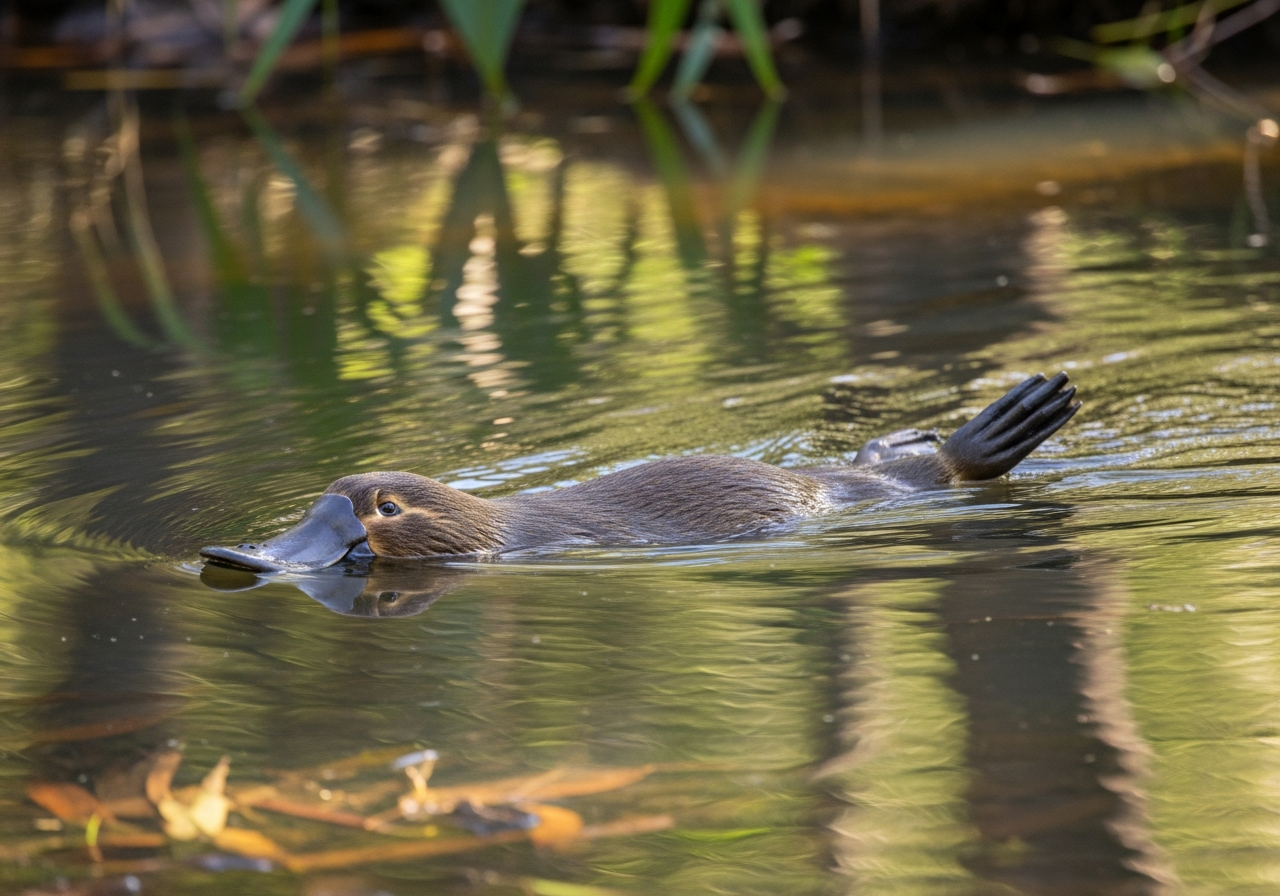
A platypus hunts with its eyes, ears, and nostrils sealed shut underwater. Instead, its soft rubbery bill is packed with tens of thousands of receptors that detect the faint electric fields given off by the muscles of prey such as insect larvae, worms, and shrimp. This electroreception lets it find food in murky water, sweeping its bill side to side like a living metal detector.
Sources
Platypus FAQs
What do platypuses eat?
Platypuses feed on insect larvae, worms and shellfish, adjusting with season, age, and what is abundant in Freshwater rivers, streams, and lakes. That label is a preferred pattern, not every item an individual might sample.
What is the scientific name of the platypus?
Ornithorhynchus anatinus — used in research and conservation listings for platypuses.
Where do platypuses live?
They are associated with Freshwater rivers, streams, and lakes. Local presence depends on food, cover, and human land use.
What is the conservation status of platypuses?
Listed in our guides as Near Threatened. Check the IUCN Red List and national assessments for the latest formal category.