Quick answer
Skunks live in Woodland, grassland, farmland, suburbs. Within that range they pick microhabitats that supply cover, food (Omnivore (insects, small animals, fruit)), water, and breeding sites — and they disappear where those features are lost.
Key takeaway
Skunks live in Woodland, grassland, farmland, suburbs. Within that range they pick microhabitats that supply cover, food (Omnivore (insects, small animals, fruit)), water, and breeding sites — and they disappear where those features are lost.
Skunk native habitat
Skunks (Mephitis mephitis) are tied to Woodland, grassland, farmland, suburbs. Look for sites that match their diet (Omnivore (insects, small animals, fruit)) and movement style; seasonal rains or prey shifts can expand or shrink local occupancy.
Microhabitats skunks prefer
Cover for resting, access to food, and safe breeding sites decide day-to-day use. Edge habitats can help adaptable populations but fail specialists that need continuous wild land.
How people change Skunk range
Farms, suburbs, and roads create opportunity for some individuals and lethal risk for others. Fragmentation without corridors isolates skunk groups and raises local extinction risk.
Conservation geography for skunks
Status in our guides: <strong>Least Concern</strong>. Protecting linked habitat often beats a single fenced reserve. Watch from a distance and never feed wild skunks.
Diet and behaviour
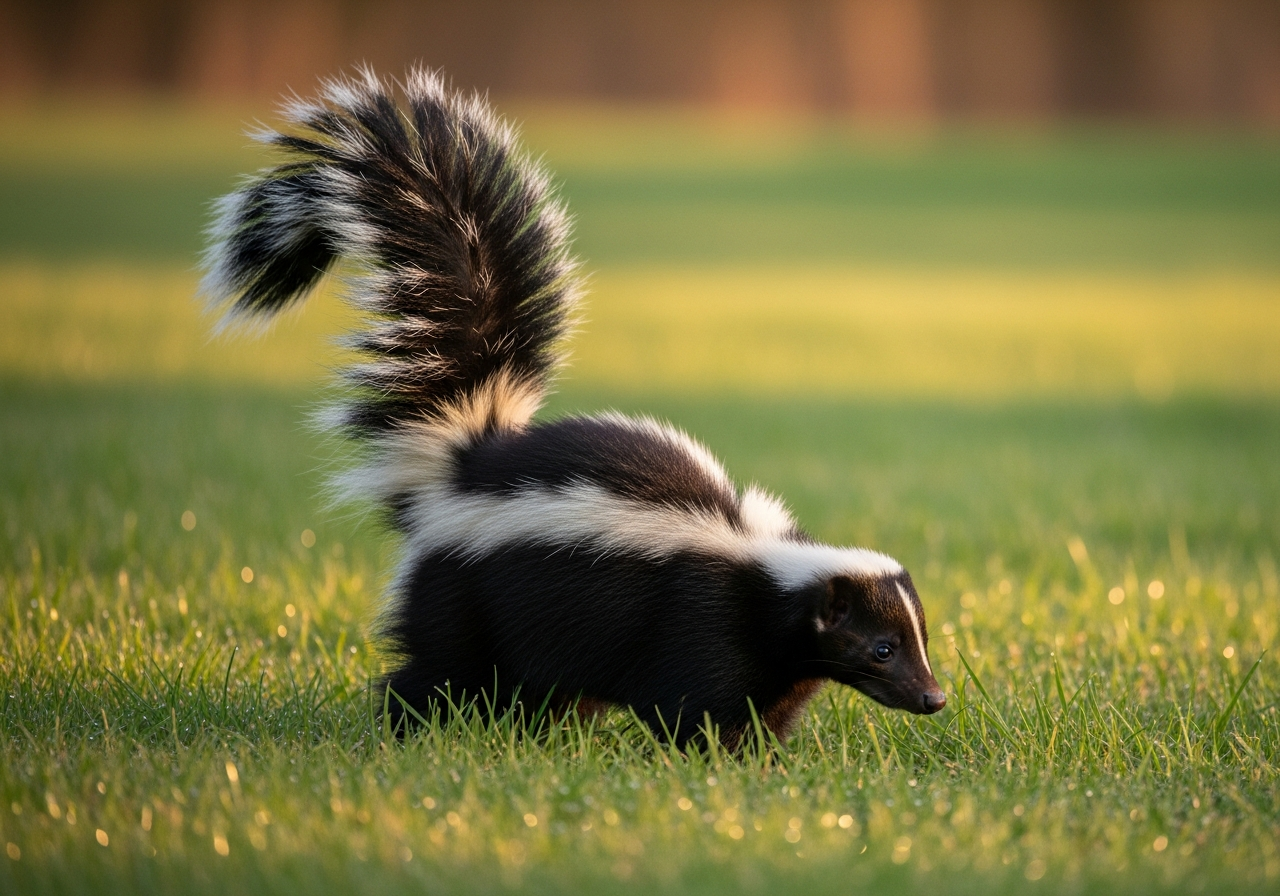
Striped skunks are opportunistic omnivores that eat insects, grubs, worms, small rodents, eggs, fruit, and human refuse, using their strong claws to dig for grubs and raid wasp nests. They are mainly nocturnal and largely solitary, though several may share a den in cold weather. Their bold coloration means they have few predators apart from the great horned owl, which has a poor sense of smell.
Range and dens
The striped skunk ranges across most of North America from southern Canada to northern Mexico, living in woodland, grassland, farmland, and increasingly in towns and suburbs. It shelters in burrows — often abandoned ones dug by other animals — as well as under buildings, woodpiles, and decks, which sometimes brings it into conflict with people.
Sources
Skunk FAQs
Where do skunks live?
Skunks live in Woodland, grassland, farmland, suburbs. Within that range they pick microhabitats that supply cover, food (Omnivore (insects, small animals, fruit)), water, and breeding sites — and they disappear where those features are lost.
What is the scientific name of the skunk?
Mephitis mephitis — used in research and conservation listings for skunks.
What do skunks eat?
Skunks eat insects, small animals and fruit, with seasonal and regional variation in Woodland, grassland, farmland, suburbs.
What is the conservation status of skunks?
Listed in our guides as Least Concern. Check the IUCN Red List and national assessments for the latest formal category.