Quick answer
Wombats feed on grasses, roots, bark and sedges, adjusting with season, age, and what is abundant in Forest, woodland, heath, and alpine grassland. That label is a preferred pattern, not every item an individual might sample.
Key takeaway
Wombats feed on grasses, roots, bark and sedges, adjusting with season, age, and what is abundant in Forest, woodland, heath, and alpine grassland. That label is a preferred pattern, not every item an individual might sample.
Wombat diet overview
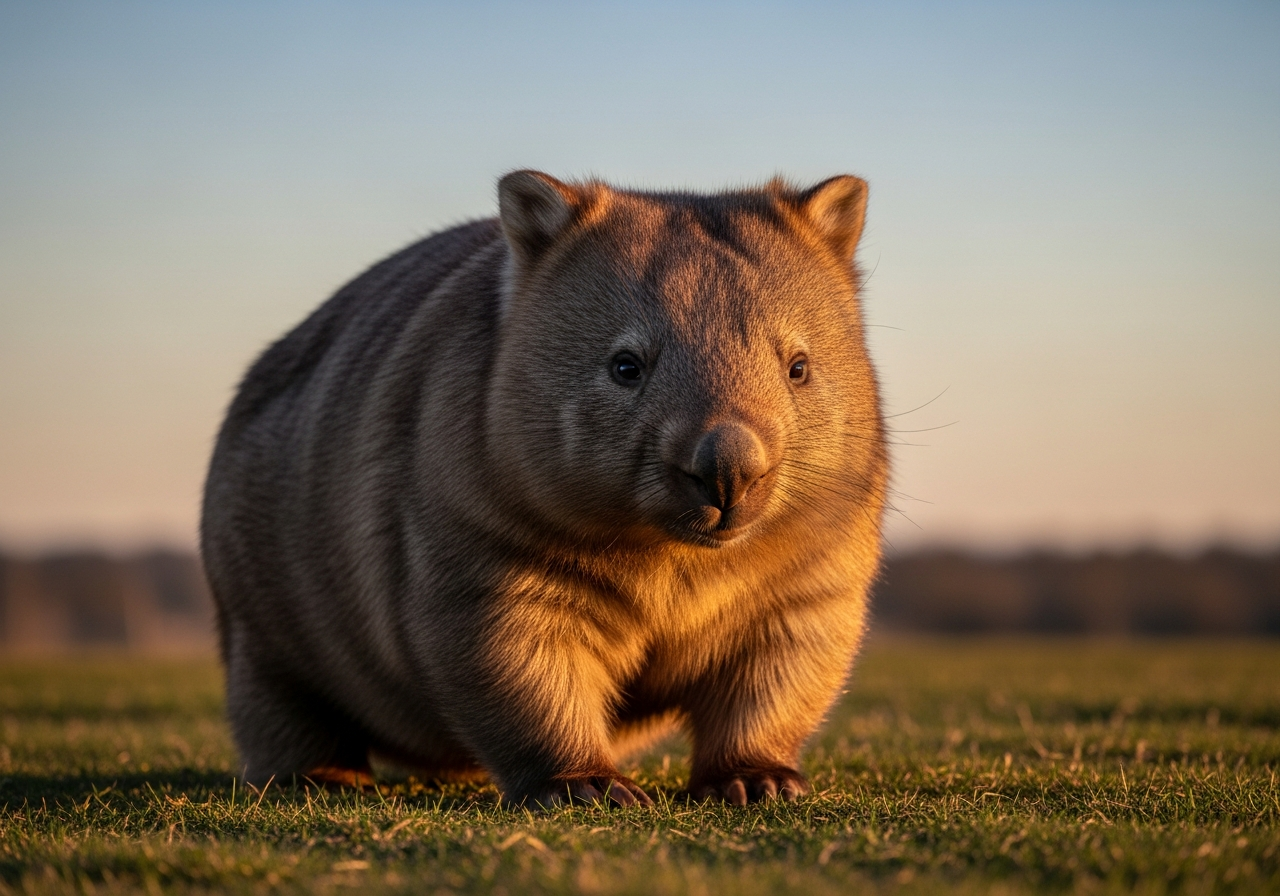
Wombats (Vombatus ursinus) are best summarised as Herbivore (grasses, roots, bark, sedges). Anatomy and habitat (Forest, woodland, heath, and alpine grassland) decide whether they hunt, graze, filter, scavenge, or mix strategies across the year.
How wombats find food
Energy-rich foods are prioritised when available; lean seasons force broader diets or longer travel. Young animals may eat different items or receive food from parents.
Wombat role in the food web
As herbivores shaping plants and seeds, wombats move nutrients and influence prey or vegetation.
Feeding and human conflict
Never feed wild wombats. Habituation raises injury risk and can lead to lethal management. Captive diets must match species needs, not generic pet food rules.
Cube-shaped poop: how and why
The wombat is the only animal in the world known to produce cube-shaped droppings. The approximately 2 cm cubic faeces are deposited on rocks, logs, and raised surfaces to mark territory. Research published in 2021 (Physical Review Fluids) revealed that the cubes form in the last section of the intestine, where varying elasticity in the gut wall squeezes the faecal matter into a cube shape as it passes through. The c
Built to dig
Wombats are among the most powerful burrowing mammals alive. Their thick, barrel-shaped body, broad flat head, and strong clawed feet are designed for sustained excavation. A wombat burrow can be up to 30 m long and 1.5 m wide. Wombats spend the hottest and coldest parts of the day underground, emerging mainly at night to graze. Their pouches face backward (toward the tail) rather than forward — this prevents soil an
Sources
Wombat FAQs
What do wombats eat?
Wombats feed on grasses, roots, bark and sedges, adjusting with season, age, and what is abundant in Forest, woodland, heath, and alpine grassland. That label is a preferred pattern, not every item an individual might sample.
What is the scientific name of the wombat?
Vombatus ursinus — used in research and conservation listings for wombats.
Where do wombats live?
They are associated with Forest, woodland, heath, and alpine grassland. Local presence depends on food, cover, and human land use.
What is the conservation status of wombats?
Listed in our guides as Least Concern. Check the IUCN Red List and national assessments for the latest formal category.