10 Animals That Mate for Life
From swans to gibbons, some animals form lifelong bonds. Here are 10 animals that mate for life — and the surprising truth about animal 'monogamy.'
Global Animal Guide · June 8, 2026
Quick answer
Some animals do form long-term, often lifelong pair bonds — including swans, wolves, gibbons, albatrosses, beavers, bald eagles, and macaroni penguins. But 'mating for life' in nature usually means a lasting social partnership for raising young, and some still mate outside the pair — true lifelong fidelity is rarer than the romantic image suggests.
Animals famous for lifelong bonds
- Swans — the classic symbol of devotion, often pairing for many years (their courtship even forms a heart shape with their necks).
- Wolves — a breeding pair leads the pack and typically stays together for life.
- Gibbons — these small apes form strong, long-lasting pair bonds and sing duets together.
- Albatrosses — spend years choosing a partner, then reunite with the same mate across decades and oceans.
- Beavers, bald eagles, French angelfish, macaroni penguins, prairie voles, and black vultures also form notably durable bonds.
What “mating for life” really means
Biologists distinguish social monogamy (a lasting partnership to raise offspring) from sexual monogamy (only ever mating with that partner). Most “lifelong” animals are socially monogamous — they share territory and parenting — but DNA studies show some still mate on the side. So the bond is real and often lifelong, but it’s usually about successful parenting and shared territory rather than strict fidelity.
This distinction was invisible until DNA fingerprinting arrived in the 1980s. Before that, ornithologists assumed that a bird pair tending a nest together had produced the chicks in it. Paternity testing overturned that comprehensively: in many socially monogamous songbirds, a meaningful share of chicks in a nest were fathered by a neighbouring male. The pair bond was real, the parenting was real, and the genetics were more complicated than anyone had written down.
Popular articles routinely collapse four separate strands into one: who lives together, who raises the young, who mates with whom, and how long any of it lasts. “Mates for life” is a claim about duration and living arrangements — not about exclusivity.
Why form a lifelong bond at all?
For many species, two parents dramatically raise the odds that offspring survive — sharing incubation, feeding, defence, and territory. Where raising young is hard work, a reliable partner is a survival advantage, which is why pair bonds evolve again and again across very different animals.
The clearest signal is in the numbers. Roughly nine in ten bird species are socially monogamous, but only a small minority of mammals are — somewhere in the low single-digit percentages. The reason is mechanical. A bird’s egg can be incubated by either parent, and chicks can be fed by either parent, so a male has real work to contribute. A mammalian male cannot gestate or lactate, so in most species his best reproductive strategy is to seek more mates rather than help with young he cannot feed anyway. Monogamy follows the biology of who can usefully help.
Where mammalian monogamy does appear, it tends to show up under specific conditions: females spread thinly across a landscape so a male cannot monopolise several, or offspring so demanding that a second adult genuinely changes survival odds. The gibbon fits the first pattern, defending a fruit territory as a pair and advertising it with elaborate duets. The beaver fits the second — a lodge and dam represent an enormous shared investment that takes two adults to build and maintain, and offspring often stay on to help.
The birds that genuinely stay together
Among long-lived birds, the case for a durable bond is strongest, and it is about efficiency rather than romance. The albatross is the outstanding example. These birds spend years in courtship, learning an intricate dance with a specific partner, and then reunite with that same bird across decades and thousands of kilometres of open ocean. Divorce rates are strikingly low. The reason is that raising a single albatross chick is a marathon requiring flawless coordination between two foraging adults, and an experienced pair simply does it better than a new one. The years spent choosing are an investment that pays out over a lifetime.
Swan pairs work on the same logic at a shorter timescale, defending a territory year after year, and studies of long-lived waterbirds consistently show that established pairs fledge more young than freshly formed ones. The bald eagle illustrates a subtler version: it is famously faithful, but much of that fidelity is to the nest site. Both birds return to a good territory, and because both return, they meet again. The bond is partly a by-product of real estate.
The sandhill crane rounds out the picture, pairing durably and performing the dancing displays that reinforce the bond each season. Crucially, none of these species is beyond re-pairing. When a mate dies, the survivor almost always finds another — a lifelong bond is not a vow, it is a partnership that lasts as long as both partners do.
The famous exceptions that get the story wrong
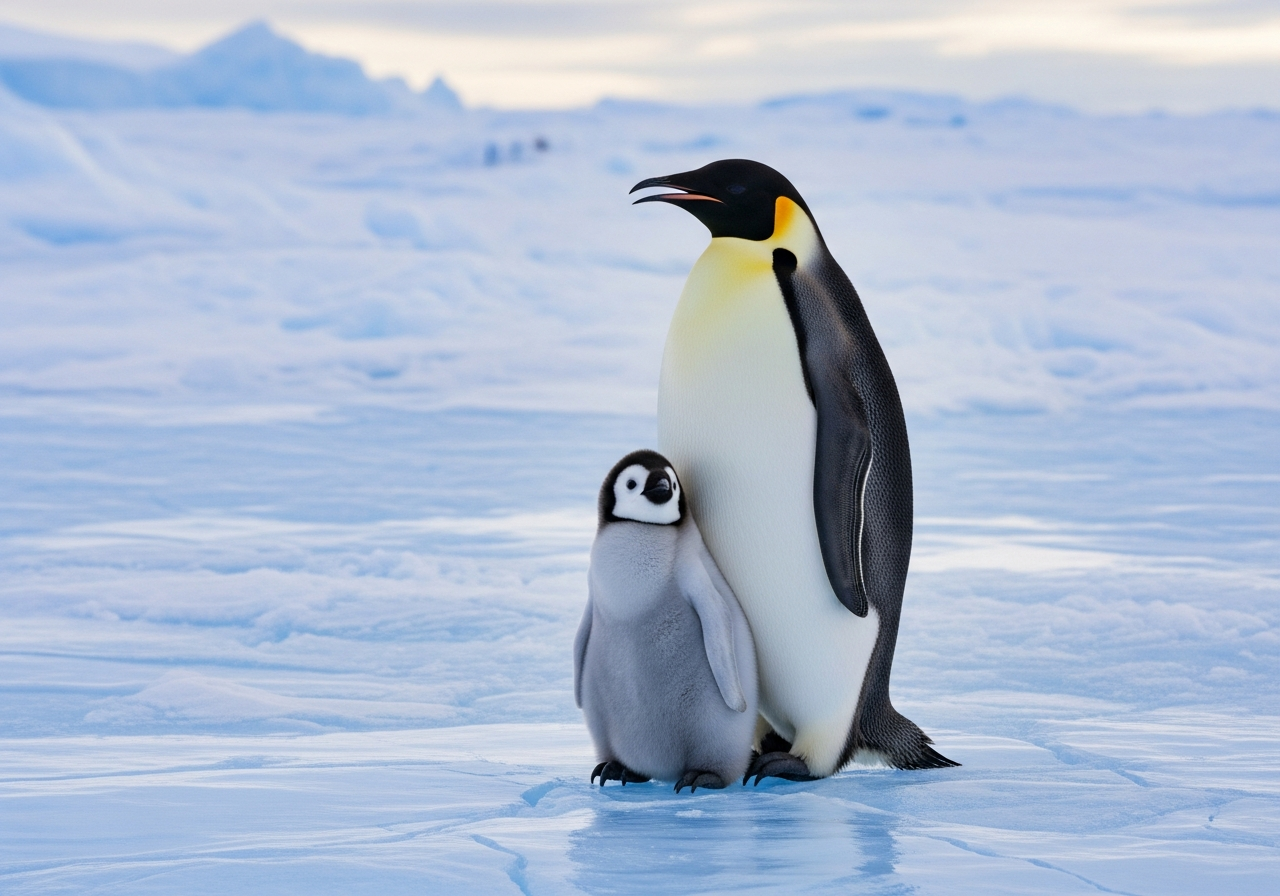
The emperor penguin is the species most often illustrated alongside the phrase “mates for life”, and it is close to the worst example available. Emperor penguins are seasonally monogamous — devoted and cooperative within a single breeding cycle, and then largely not. Only a modest fraction of pairs reunite the following year. The reason is timing: the breeding window on the Antarctic ice is brutally short, and a bird that waits around for last year’s partner risks missing the season entirely. Better to pair with whoever is available and on schedule.
Gray wolf packs are also routinely misdescribed. The breeding pair does typically stay together for years and lead the pack, and that much is accurate — but the “alpha” framing is a hangover from studies of unrelated captive wolves. A wild pack is usually a family: a breeding pair and their offspring from several years. The pair are not dominant tyrants; they are parents.
Even the strong cases have asterisks. Genetic studies of gibbons have found offspring fathered outside the pair, and the same is true for a range of socially monogamous birds. The seahorse is often called monogamous on the strength of its daily greeting ritual, but in many species that faithfulness holds within a breeding season rather than across a lifetime.
What holds a pair together
Underneath the behaviour sits real neurochemistry. Work on prairie voles — a small rodent that forms lasting pair bonds, unlike its promiscuous close relatives — showed that the difference tracks with receptors for oxytocin and vasopressin in the brain’s reward circuitry. A bonded vole finds its partner’s company rewarding in a way that is measurable, not metaphorical. Closely related species differ mainly in where those receptors sit.
Behaviourally, bonds are maintained by constant, cheap ritual rather than grand gesture. Albatrosses re-perform fragments of their courtship dance at each reunion. Cranes dance. Lovebird and other parrot pairs preen each other and feed one another. These acts look sentimental and function as maintenance — repeated signals that keep two animals coordinated enough to work as a unit.
Reading these lists sceptically
Lifelong pair bonds are real, uncommon, and unevenly distributed — concentrated among long-lived birds, rare in mammals, and shaped by whether a second parent has anything useful to do. The romantic gloss usually comes from us. When a klipspringer pair stays within metres of each other for years, it is because a small antelope in dangerous country benefits from a second set of eyes, not because it has found the one.
That does not diminish the phenomenon. A bond that survives decades, thousands of kilometres, and repeated hard breeding seasons is a genuine and unusual thing in nature. It is simply a working relationship rather than a vow — and understanding why it evolved is more interesting than the greetings-card version.
Sources
Related reading: Gray wolf · Emperor penguin · Bald eagle
Frequently asked questions
Do swans really mate for life?
Usually yes — they form long-term bonds, though they may re-pair if a mate dies.
Are any animals truly 100% monogamous?
Very few; most 'monogamous' animals are socially, not strictly sexually, monogamous.
Do wolves mate for life?
The breeding pair typically stays together for life and leads the pack.