Hibernation Explained: How Animals Survive Winter
Hibernation is a controlled energy-saving state — not just 'sleeping all winter.' True hibernators vs torpor, bears vs ground squirrels, and common myths.
Global Animal Guide · July 10, 2026
Quick answer
Hibernation is a seasonal state of reduced metabolism, heart rate, and body temperature that helps animals survive food scarcity. True deep hibernators (many ground squirrels, bats, hedgehogs) drop temperature dramatically. Bears enter a lighter winter lethargy — often called hibernation in popular writing, though physiologists debate the label. Torpor is a shorter daily or opportunistic slowdown.
Last updated: July 2026.
Hibernation is a solution to a food problem, not a cold problem
The intuitive story — animals hibernate because winter is cold — gets the causation backwards. Cold is survivable; a reindeer or a musk-ox handles an Arctic winter awake. The real difficulty is that winter removes food while simultaneously raising the cost of staying warm. A small mammal that must burn energy constantly to hold its body temperature, in a landscape with nothing left to eat, faces arithmetic that does not work.
Hibernation resolves this by abandoning the premise. Rather than defending a warm body against the cold, the animal lets its thermostat fall and coasts on stored fat until conditions improve. Metabolic rate can drop to a small fraction of normal, heart rate to a handful of beats per minute, and breathing to occasional shallow gasps. The animal is not asleep in any ordinary sense — brain activity during deep hibernation looks nothing like sleep, and hibernators actually have to wake up periodically in order to sleep, which is one of the stranger findings in the field.
The proof that food, not temperature, is the driver comes from the tropics. Some tropical species enter hibernation-like states during hot dry seasons, when food and water vanish — a phenomenon called aestivation. The trigger is scarcity, and cold is merely its most common cause.
Hibernation vs sleep vs torpor
| State | Duration | Temperature drop | Example |
|---|---|---|---|
| Sleep | Hours | Small | Most animals |
| Torpor | Hours–days | Can be large | Hummingbird overnight |
| Hibernation | Weeks–months | Often large | Arctic ground squirrel |
Who hibernates?
Many bats, rodents, insectivores, and some marsupials. Amphibians and reptiles use brumation — similar energy saving without the exact mammalian physiology.
The classic deep hibernators are small. The chipmunk, the groundhog, the hedgehog, and many species of bat all cool close to ambient temperature and stay down for months. Small bodies lose heat quickly relative to their volume, so they have the most to gain — and little enough mass that they can rewarm afterwards without an impossible energy bill.
Size is the real constraint. A large animal cools slowly and, more importantly, would need an enormous amount of energy to raise its temperature back up. This is why the deepest hibernators are rodents and insectivores rather than ungulates, and it is the key to the long-running argument about bears.
The arousal cycle: waking up to rest
Deep hibernation is not one continuous plunge. Every week or two, a hibernator rewarms itself to near-normal temperature, holds there for a few hours, then cools back down. These arousals are metabolically expensive — they consume a large share of the entire winter’s fat budget — which makes them a puzzle. Why spend so much to undo the saving?
The leading explanations are that some essential processes simply cannot run cold. The immune system is largely suspended at low temperature. Real sleep, with its normal brain patterns, appears not to happen during deep torpor, and hibernators show signs of sleep deprivation that they discharge during arousals. Nerve connections degrade and need repair. Waste must be dealt with. Whatever the precise mix, evolution has judged the cost worth paying, which tells you these functions are not optional.
Arousals are also where hibernation becomes fragile. Disturb an animal — by handling it, or by an infection forcing extra wake-ups — and it burns fat it cannot replace. This is precisely the mechanism behind white-nose syndrome, a fungal disease that has devastated hibernating bat populations. The fungus does not poison the bats so much as wake them repeatedly, and they starve before spring.
Do bears actually hibernate?
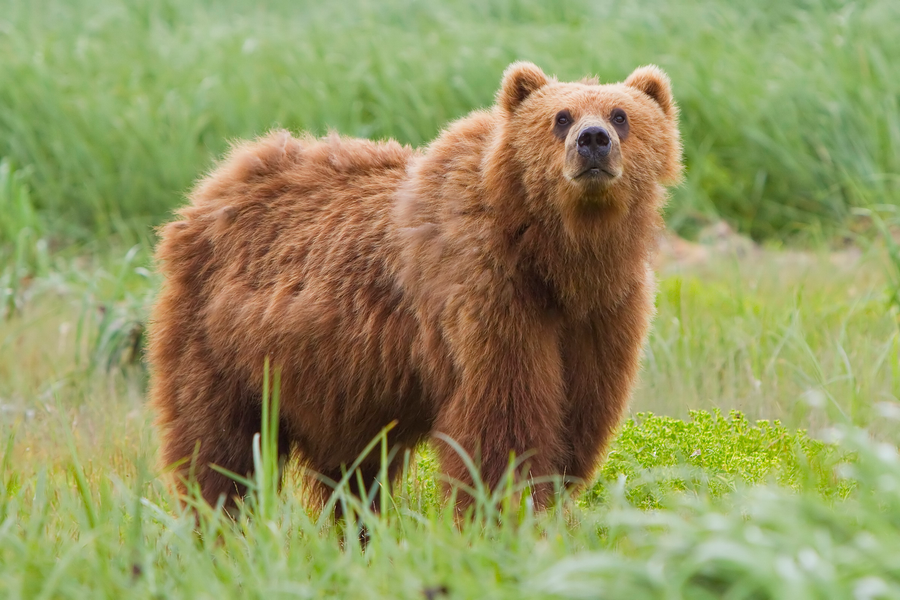
Bears are the famous edge case. A black-bear or brown-bear dens for months, does not eat, drink, urinate, or defecate, and drops its metabolic rate substantially — yet its body temperature falls only modestly, nowhere near the plunge of a ground squirrel. For years this was taken as evidence that bears do not truly hibernate.
The modern view is more generous, and physiologists now often treat bears as hibernators of a specialised kind. The reason for the mild temperature drop is size: a bear is too large to rewarm cheaply, so deep cooling would be a poor trade. Instead it achieves its energy saving through metabolic suppression at a relatively warm temperature — a different route to the same destination.
What bears do next is arguably more impressive than what ground squirrels do. They recycle urea back into protein, which is why they neither poison themselves with waste nor lose much muscle across a winter of total inactivity. Females give birth mid-denning and nurse cubs while eating nothing at all. The grizzly-bear emerging in spring is thinner but not wasted — a feat human medicine would very much like to understand.
Torpor: the short version
Torpor uses the same machinery over hours rather than months. A hummingbird has a metabolism so extreme that it cannot survive a night without it; every evening it lets its temperature crash and enters a state so profound that it takes a long while to become responsive again at dawn. Small rodents such as the mouse use daily torpor opportunistically when food runs short.
The distinction between torpor and hibernation is mostly one of duration and organisation. Hibernation is a seasonal programme, prepared for months in advance through fattening and hormonal change; torpor is a response to immediate conditions. The dividing line is genuinely blurry, and some species sit squarely on it. The echidna hibernates in some populations and uses torpor in others, depending on climate.
What is not hibernation
Several familiar winter behaviours get mislabelled. The skunk, raccoon, and badger den up and sleep a great deal in cold weather, but they wake readily, emerge on mild nights, and do not suppress metabolism the way a true hibernator does. This is winter dormancy — sensible inactivity, not a physiological state change.
Reptiles and amphibians go quiet too, but the mechanism differs fundamentally. A common-garter-snake or painted-turtle is ectothermic; it does not choose to cool, it simply cannot avoid it, and its metabolism slows because chemistry slows. This is brumation, and while the outcome resembles hibernation the underlying control is not the same. Some turtles overwinter under ice and absorb what little oxygen they need through tissue in their hindquarters rather than breathing at all.
The most extreme case belongs to the wood-frog, which does something no mammal manages: it lets much of the water in its body freeze solid. Glucose flooded into its cells acts as antifreeze, protecting the cell interiors while ice fills the spaces between them. The heart stops. In spring it thaws and hops away.
Related reading
Sources
Frequently asked questions
Do bears truly hibernate?
Bears den and lower metabolism substantially, but their body temperature drop is milder than classic hibernators — scientists often call it winter lethargy or a specialised hibernation.
What is torpor?
A short-term reduction in metabolic rate — hummingbirds and mice use daily torpor.
Do animals eat during hibernation?
Deep hibernators generally do not; they live on fat stores, occasionally arousing.
Can pets hibernate?
Some captive reptiles brumate (a reptile winter slowdown). Never force hibernation without expert care.