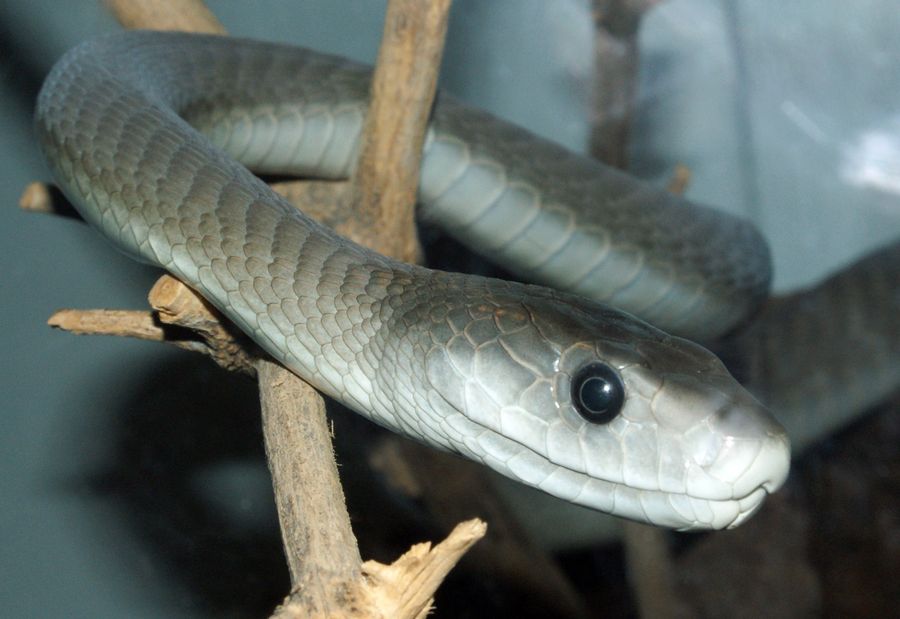
Quick answer
Black Mambas can injure people in specific contexts — usually when surprised, cornered, defending young, or habituated to food. Risk scales with size (Up to 1.6 kg (3.5 lb)), weapons, and human behaviour, not with how “scary” the species looks online.
Key takeaway
Black Mambas can injure people in specific contexts — usually when surprised, cornered, defending young, or habituated to food. Risk scales with size (Up to 1.6 kg (3.5 lb)), weapons, and human behaviour, not with how “scary” the species looks online.
Realistic risk from black mambas
Most wild black mambas avoid people. Serious incidents are uncommon relative to encounter rates, but consequences can be severe when animals are cornered or food-conditioned.
When Black Mamba encounters turn dangerous
Surprise meetings, food rewards, injured animals, and mothers with young raise danger. Approaching for photos is a frequent human factor in Savannas, rocky hills, and woodland in sub-Saharan Africa.
Black Mamba capability
Consider bite, claws, horns, venom, constriction, or mass (Up to 1.6 kg (3.5 lb)). Even shy species can injure if handled. Status (Least Concern) does not equal temperament.
Safety around black mambas
Keep distance, store food securely, leash pets, and follow park rules. Never feed wildlife. Seek medical care for puncture wounds and follow local public-health advice.
Behaviour and temperament
Contrary to myth, black mambas are shy and retreat when possible. They strike when cornered or threatened, often delivering multiple bites. The name comes from the inky black mouth lining displayed as a warning.
Habitat and range
Black mambas inhabit savannas, rocky outcrops, and woodland from Eritrea and Somalia south through East Africa to South Africa and Namibia. They shelter in termite mounds, rock crevices, and tree hollows.
Sources
Black Mamba FAQs
Are black mambas dangerous?
Black Mambas can injure people in specific contexts — usually when surprised, cornered, defending young, or habituated to food. Risk scales with size (Up to 1.6 kg (3.5 lb)), weapons, and human behaviour, not with how “scary” the species looks online.
What is the scientific name of the black mamba?
Dendroaspis polylepis — used in research and conservation listings for black mambas.
What do black mambas eat?
Black Mambas eat small mammals, birds, and occasionally bats, with seasonal and regional variation in Savannas, rocky hills, and woodland in sub-Saharan Africa.
Where do black mambas live?
They are associated with Savannas, rocky hills, and woodland in sub-Saharan Africa. Local presence depends on food, cover, and human land use.
What is the conservation status of black mambas?
Listed in our guides as Least Concern. Check the IUCN Red List and national assessments for the latest formal category.