Image sourcing: see credits & licences
The loggerhead sea turtle (Caretta caretta) is a reptile of the family Cryptodira, in the order Testudines.
Quick answer
The loggerhead is a large sea turtle found in temperate and tropical oceans worldwide, named for its exceptionally big, powerful-jawed head. Adults reach about 1 m in shell length and weigh 80 to 200 kg, using their strong jaws to crush hard-shelled prey like crabs and molluscs. They are long-lived, reaching 45 to 50 years, but mature only at 20 to 30 years old. The IUCN lists the loggerhead as Vulnerable.
Top questions about the Loggerhead Sea Turtle
Also available in Español (Tortuga boba)
Loggerhead Sea Turtle facts at a glance
- Weight 150 kg
- Length 1 m
- Top speed 24 km/h
- Lifespan 50 years
| Scientific name | Caretta caretta |
|---|---|
| Diet | Carnivore — crabs, molluscs, jellyfish, and fish |
| Habitat | Temperate and tropical oceans worldwide |
| Lifespan | 45–50 years; maturity at 20–30 years |
| Weight | 80–200 kg (175–440 lb); large heads relative to body |
| Top speed | Up to 24 km/h (15 mph) swimming |
| Conservation status | Vulnerable (IUCN) |
| Kingdom | Animalia |
|---|---|
| Phylum | Chordata |
| Class | Reptilia |
| Order | Testudines |
| Family | Cryptodira |
| Genus | Caretta |
Where it lives
The loggerhead sea turtle (Caretta caretta) is native to Temperate and tropical oceans worldwide — nesting on US Atlantic, Mediterranean, Oman, and Japan beaches. — recorded across Africa, Asia, Europe, North America, Oceania, Oceans, South America in this guide’s range summary.
For occurrence records, see GBIF species search and sources below.
How big is a loggerhead sea turtle?
An adult loggerhead sea turtle measures 1 m long — about 58% of the height of an average adult person (1.73 m) — and weighs around 150 kg, about 2.1× an average adult’s body weight (70 kg).
Length vs an average adult’s height (to scale)
What is a group of loggerhead sea turtles called?
Group name (collective noun)
A group of Loggerhead Sea Turtles is called a bale.
Baby name
A baby Loggerhead Sea Turtle is called a hatchling.
Explore more animal collective nouns and baby animal names .
Appearance and adaptations
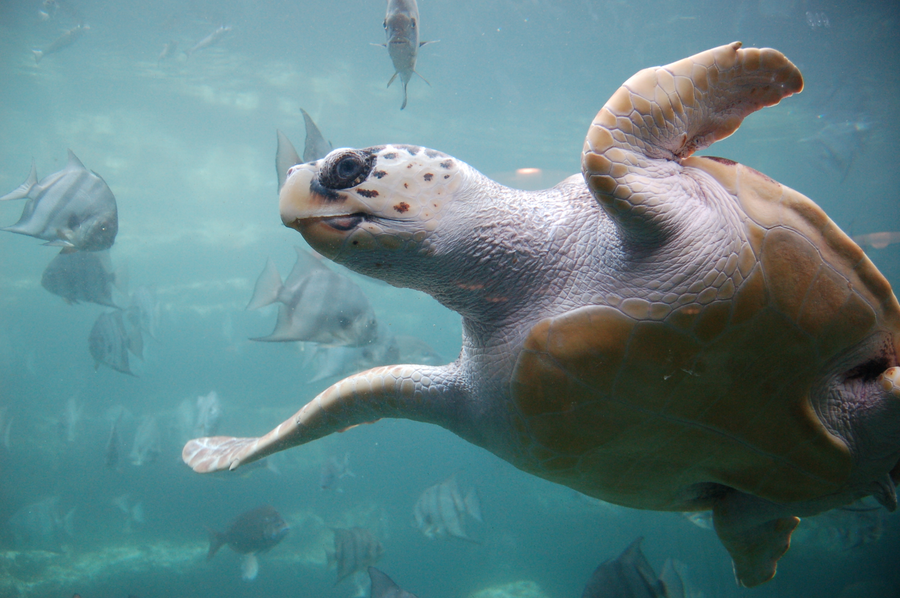
The loggerhead takes its name from its unusually large head and thick, muscular jaws, which give it a bite powerful enough to crush shellfish. Its heart-shaped shell is a warm reddish-brown above and paler yellow beneath, typically reaching around 1 m in length. Adults weigh between 80 and 200 kg, making the loggerhead one of the larger hard-shelled sea turtles. Powerful, flipper-like front limbs propel it through the water at speeds of up to 24 km/h in short bursts.
Diet and feeding
Loggerheads are carnivores whose strong jaws are built for a diet of hard-bodied prey. They eat crabs, molluscs such as whelks and clams, jellyfish, and fish, crushing shells that would defeat most other turtles. Young loggerheads drifting in the open ocean feed near the surface, while adults forage along the seabed of coastal shelves. Their feeding even helps recycle nutrients and shells across the seafloor.
Migration and life at sea
Loggerheads are ocean wanderers that undertake some of the longest migrations of any sea turtle, crossing entire ocean basins between feeding and nesting grounds. Hatchlings ride ocean currents for years in what biologists call the 'lost years', drifting among floating seaweed before returning to coastal waters as juveniles. Adults navigate thousands of kilometres using the Earth's magnetic field as a built-in compass. Remarkably, females return to nest on or near the very beach where they themselves hatched.
Nesting and reproduction
Female loggerheads come ashore on sandy beaches at night, dig a nest with their rear flippers, and lay around a hundred leathery eggs before returning to the sea. A single female may nest several times in a season, then skip several years before breeding again. The temperature of the sand determines the sex of the hatchlings, with warmer nests producing more females. Loggerheads grow slowly and do not reach breeding age until 20 to 30 years old.
Why it is vulnerable
The loggerhead is listed as Vulnerable, having declined across much of its range. Many drown after being caught accidentally in fishing gear such as trawls and longlines, one of the biggest threats to the species. Coastal development and artificial light disorient nesting females and hatchlings, while plastic pollution is often swallowed by mistake. Their slow maturity means populations recover only very slowly from these losses.
Range and habitat
Loggerheads live in temperate and tropical oceans around the world, from the Atlantic and Mediterranean to the Indian and Pacific. They spend most of their lives at sea, occupying open water as juveniles and shallower continental shelves as adults. Major nesting concentrations occur on beaches in places such as the south-eastern United States, Oman, and the Mediterranean. Because they range so widely, their conservation depends on cooperation across many nations.
Dig deeper into the Loggerhead Sea Turtle
- Are Loggerhead Sea Turtles Endangered?
Are loggerhead sea turtles endangered? Status Vulnerable, main threats, and what protection means.
- How Long Do Loggerhead Sea Turtles Live?
Loggerhead Sea Turtle lifespan is typically 45–50 years; maturity at 20–30 years. What shortens or extends life, life stages, and status (Vulnerable).
- Loggerhead Sea Turtle: Key Facts
Loggerheads are the most common sea turtle in US Atlantic waters, with massive heads for crushing crabs and molluscs, weighing about 150 kg and living 50…
- What Do Loggerhead Sea Turtles Eat?
What loggerhead sea turtles eat: Carnivore — crabs, molluscs, jellyfish, and fish, foraging style, and seasonal shifts in Temperate and tropical oceans worldwide.
- Where Do Loggerhead Sea Turtles Live?
Where loggerhead sea turtles live: Temperate and tropical oceans worldwide, native range cues, and human overlap. Status Vulnerable.
Explore the Loggerhead Sea Turtle
Compare
Close relatives
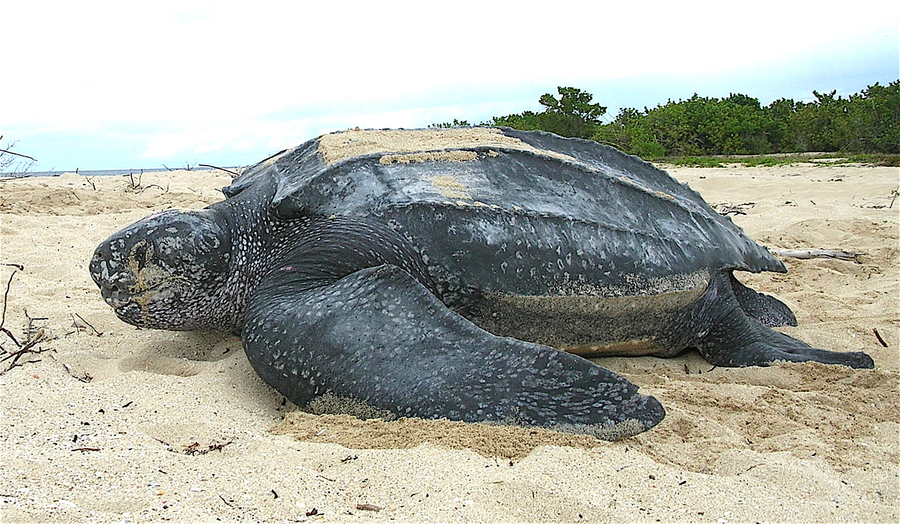
- Leatherback Sea Turtle Same order
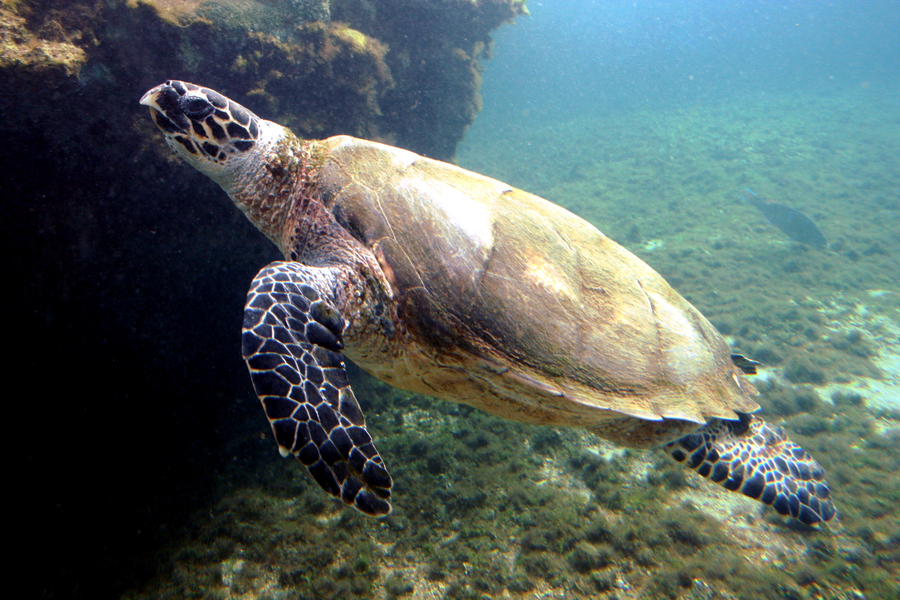
- Hawksbill Sea Turtle Same order
- Alligator Snapping Turtle Same order
- Eastern Box Turtle Same order
Collections
Did you know? Loggerhead Sea Turtle facts
- Loggerheads are the most common sea turtle in US Atlantic waters, with massive heads for crushing crabs and molluscs.
- 50+ years — maturity takes decades.
- Loggerheads have large heads and reddish-brown shells; greens are herbivorous with smoother shells.
- Conservation: Vulnerable.
Diet & feeding
Loggerhead Sea Turtle feeds primarily as a crabs, molluscs, jellyfish.
Adaptations
- Females lay 100+ eggs in sand — hatchlings race to moonlit water.
- Bycatch, plastic ingestion, and light pollution disorient hatchlings.
Behaviour & ecology
- Females lay 100+ eggs in sand — hatchlings race to moonlit water.
- Bycatch, plastic ingestion, and light pollution disorient hatchlings.
Communication
- Scent marking, body posture, and head-bobbing or tail signals communicate threat and dominance.
- Vocalisations are limited in many reptiles but hissing or bellowing occurs in some groups.
Habitat & range
Temperate and tropical oceans worldwide
Ecological role
Loggerhead Sea Turtle plays a recognised ecological role in temperate and tropical oceans worldwide.
Conservation status of the Loggerhead Sea Turtle
The loggerhead sea turtle (Caretta caretta) is listed as Vulnerable on the IUCN Red List. Vulnerable (VU) means a species faces a high risk of extinction in the medium-term future. It is the lowest-risk of the three 'threatened' IUCN categories — one step below Endangered, which is itself below Critically Endangered — and is often an early warning that a population is in trouble.
Main threats to the loggerhead sea turtle
- Fisheries bycatch
- Coastal development on nesting beaches
- Egg harvest
- Marine debris and climate change
Loggerhead Sea Turtle (Caretta caretta) was most recently assessed for the IUCN Red List in 2017. View the full IUCN assessment .
Frequently asked questions about the Loggerhead Sea Turtle
Why is it called a loggerhead turtle?
The name comes from the turtle's unusually large, block-like head. That big head houses powerful jaw muscles that give the loggerhead a bite strong enough to crush the shells of crabs and molluscs.
How big do loggerhead turtles get?
Adult loggerheads reach about 1 m in shell length and weigh between 80 and 200 kg (175 to 440 lb). This makes them one of the larger hard-shelled sea turtles, second among them mainly to the green turtle.
How long do loggerhead turtles live?
Loggerheads typically live 45 to 50 years. They grow slowly and do not reach breeding age until they are 20 to 30 years old, so each generation takes decades to replace itself.
What do loggerhead turtles eat?
Loggerheads are carnivores that eat crabs, molluscs such as clams and whelks, jellyfish, and fish. Their powerful jaws let them crush hard shells that most other sea turtles cannot manage.
Why are loggerhead turtles endangered?
Loggerheads are Vulnerable, threatened mainly by accidental capture in fishing gear, coastal development, artificial lighting on nesting beaches, and plastic pollution. Because they mature so slowly, their populations recover only gradually from these pressures.
How do loggerhead turtles find their nesting beaches?
Loggerheads navigate using the Earth's magnetic field like a built-in compass, allowing them to cross ocean basins. Females often return to nest on or near the same beach where they hatched decades earlier.
What is a group of loggerhead sea turtles called?
A group of Loggerhead Sea Turtles is called a bale.
What is a baby loggerhead sea turtle called?
A baby Loggerhead Sea Turtle is called a hatchling.
Sources & references
This guide is compiled and reviewed against established zoological and conservation references. Key sources for the Loggerhead Sea Turtle:
-
IUCN Red List of Threatened Species
Conservation status (Vulnerable) reflects the IUCN Red List category for Caretta caretta, most recently assessed in 2017.
-
iNaturalist — observations & photos
Search citizen-science observations and community IDs for Caretta caretta. Useful for range checks and recent sightings — not a substitute for formal Red List status.
-
GBIF — occurrence data
Global Biodiversity Information Facility species search for Caretta caretta. Explore published occurrence records used in range research.
- IUCN Red List — Caretta caretta.
Conservation status (Vulnerable) and population trends.
- Animal Diversity Web — Caretta caretta. University of Michigan Museum of Zoology.
Life history, morphology, and range.
-
Global Animal Guide editorial standards
How we research, source, review, and update every guide for accuracy.