Image sourcing: see credits & licences
The Eurasian lynx (Lynx lynx) is a mammal of the cat family, Felidae, in the order Carnivora.
Quick answer
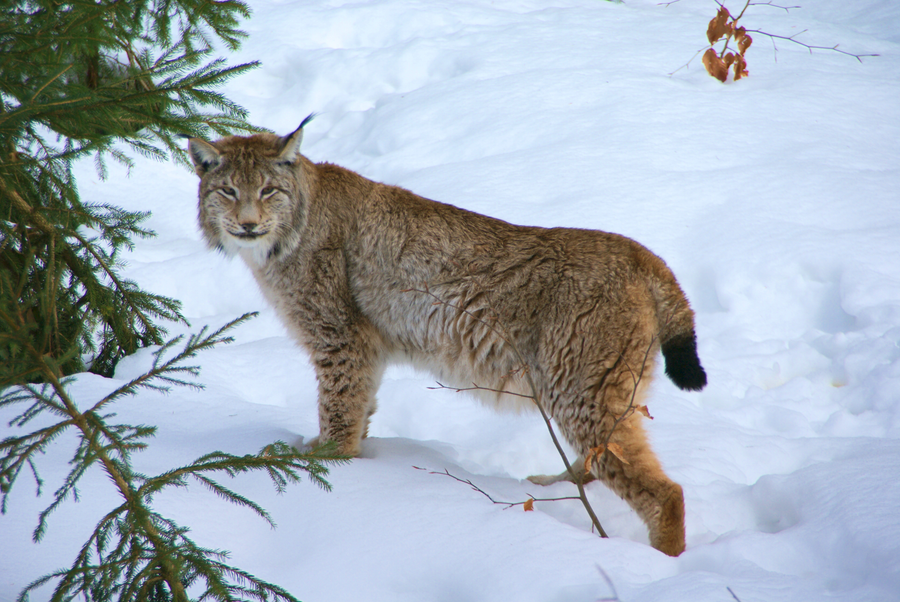
The Eurasian lynx is a medium-sized wild cat with black-tufted ears, a bobbed tail, and large snowshoe-like paws. It hunts deer, hares, and rodents across boreal and temperate forests from Scandinavia to the Himalayas, and is the largest lynx species in the world.
Top questions about the Eurasian Lynx
Also available in Español (Lince boreal)
Eurasian Lynx facts at a glance
- Weight 25 kg
- Length 1.1 m
- Top speed 50 km/h
- Lifespan 17 years
| Scientific name | Lynx lynx |
|---|---|
| Diet | Carnivore — deer, hares, rodents, and birds |
| Habitat | Boreal and temperate forests across Eurasia |
| Lifespan | 12–17 years in the wild |
| Weight | 18–30 kg (40–66 lb); males larger than females |
| Top speed | Up to 50 km/h (31 mph) in ambush pursuit |
| Conservation status | Least Concern (IUCN) |
| Kingdom | Animalia |
|---|---|
| Phylum | Chordata |
| Class | Mammalia |
| Order | Carnivora |
| Family | Felidae |
| Genus | Lynx |
Where it lives
The eurasian lynx (Lynx lynx) is native to Boreal and temperate forests from Scandinavia and the Carpathians east through Russia to Central Asia and the Himalayas. — recorded across Europe, Asia in this guide’s range summary.
For occurrence records, see GBIF species search and sources below.
How big is a eurasian lynx?
An adult eurasian lynx measures 1.1 m long — about 64% of the height of an average adult person (1.73 m) — and weighs around 25 kg, about 36% of an average adult’s body weight (70 kg).
Length vs an average adult’s height (to scale)
What is a group of eurasian lynxes called?
Group name (collective noun)
A group of Eurasian Lynxes is called a leap.
Baby name
A baby Eurasian Lynx is called a kitten.
Explore more animal collective nouns and baby animal names .
Stealth hunting
Lynxes are ambush predators that rely on short bursts and cover rather than long chases. Large paws act as snowshoes in winter, spreading weight over soft snow while pursuing roe deer and hares. A lynx may travel 20 km in a night while patrolling its territory.
Territory and solitude
Solitary and territorial, lynxes mark ranges with scrapes, urine, and scat. Males have larger territories that overlap several females. Kittens stay with the mother for about ten months before dispersing to find their own range.
Reintroduction success
Hunted to extinction in many parts of western Europe, the Eurasian lynx has been reintroduced successfully in Switzerland, Slovenia, and other countries. Carpathian and Scandinavian populations remain the strongholds, supporting ongoing conservation programmes.
Conservation status
Globally Least Concern, though some isolated populations are small and vulnerable to road mortality and habitat fragmentation. Lynxes need large, connected forest blocks with adequate prey — roe deer recovery has helped lynx comeback in several regions.
Dig deeper into the Eurasian Lynx
- Are Eurasian Lynxs Dangerous?
Are Eurasian lynxs dangerous? Realistic risk, when incidents rise, and safety basics.
- How Long Do Eurasian Lynxs Live?
Eurasian Lynx lifespan is typically 12–17 years in the wild. What shortens or extends life, life stages, and status (Least Concern).
- Eurasian Lynx: Key Facts
The Eurasian lynx is a medium-sized wild cat with black-tufted ears, a bobbed tail, and large snowshoe-like paws.
- What Do Eurasian Lynxs Eat?
What Eurasian lynxs eat: Carnivore — deer, hares, rodents, and birds, foraging style, and seasonal shifts in Boreal and temperate forests across Eurasia.
- Where Do Eurasian Lynxs Live?
Where Eurasian lynxs live: Boreal and temperate forests across Eurasia, native range cues, and human overlap. Status Least Concern.
Explore the Eurasian Lynx
Did you know? Eurasian Lynx facts
- The Eurasian lynx is a medium-sized wild cat with black-tufted ears, a bobbed tail, and large snowshoe-like paws.
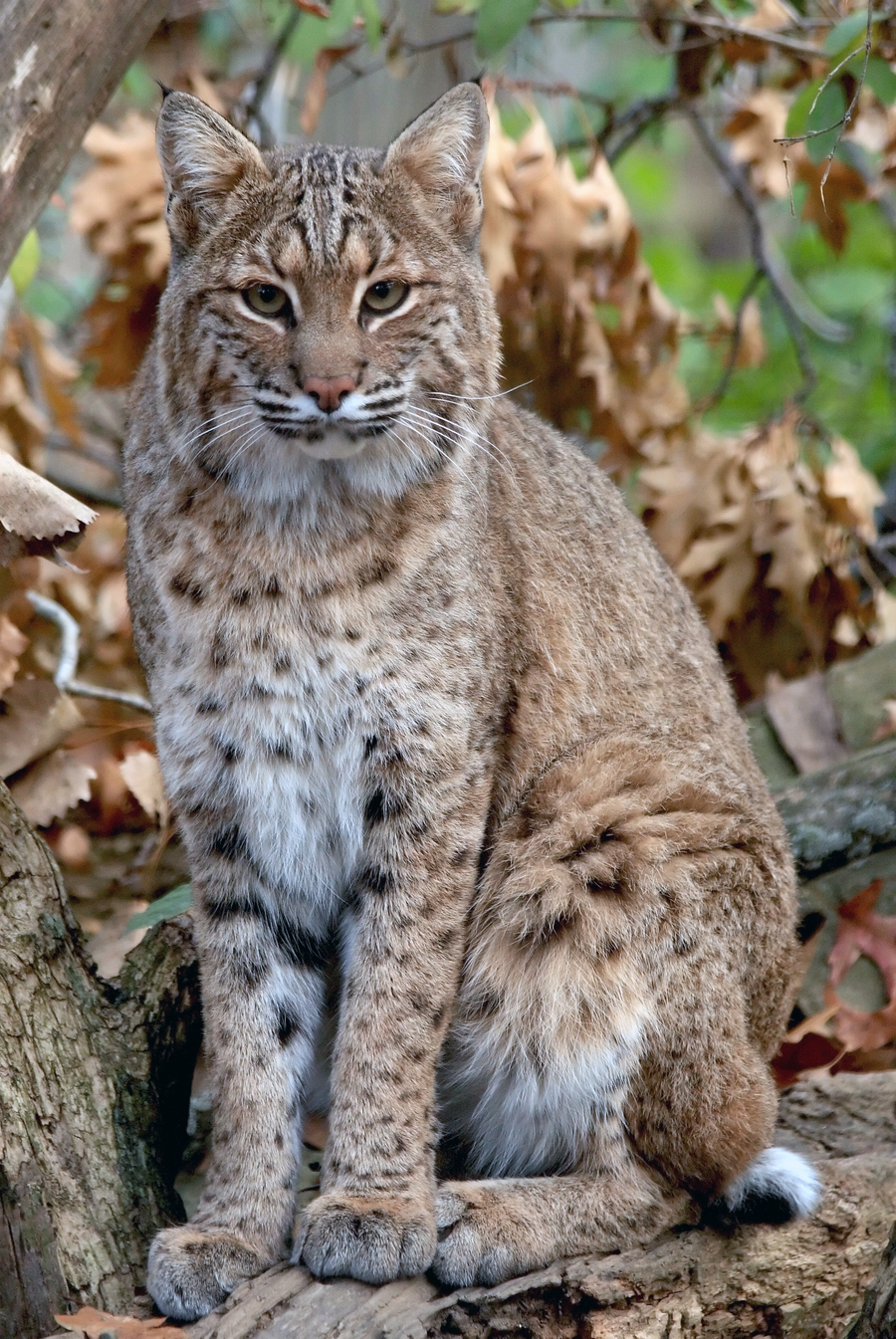
- The Eurasian lynx is generally larger — up to 30 kg — while North American bobcats typically weigh under 15 kg. Lynxes have longer legs and larger paws adapted to deep snow.
- Yes. Lynxes climb trees to rest, escape threats, and sometimes stash kills out of reach of scavengers.
- Mainly roe deer and other small to medium ungulates, plus hares, rodents, and birds when larger prey is scarce.
- Lynxes avoid people and attacks are exceptionally rare. They are secretive cats that retreat when detected.
- Conservation: Least Concern (IUCN).
Diet & feeding
Eurasian Lynx feeds primarily as a carnivore — deer, hares, rodents, and birds. Globally Least Concern, though some isolated populations are small and vulnerable to road mortality and habitat fragmentation. Lynxes need large, connected forest blocks with adequate prey — roe deer recovery has helped lynx comeback in sev
Adaptations
- Lynxes are ambush predators that rely on short bursts and cover rather than long chases. Large paws act as snowshoes in winter, spreading weight over soft snow while pursuing roe deer and hares. A lynx may travel 20 km in a night while patrolling its territory.
- Solitary and territorial, lynxes mark ranges with scrapes, urine, and scat. Males have larger territories that overlap several females. Kittens stay with the mother for about ten months before dispersing to find their own range.
Behaviour & ecology
- Lynxes are ambush predators that rely on short bursts and cover rather than long chases. Large paws act as snowshoes in winter, spreading weight over soft snow while pursuing roe deer and hares. A lynx may travel 20 km in a night while patrolling its territory.
- Solitary and territorial, lynxes mark ranges with scrapes, urine, and scat. Males have larger territories that overlap several females. Kittens stay with the mother for about ten months before dispersing to find their own range.
- Hunted to extinction in many parts of western Europe, the Eurasian lynx has been reintroduced successfully in Switzerland, Slovenia, and other countries. Carpathian and Scandinavian populations remain the strongholds, supporting ongoing conservation programmes.
Communication
- Eurasian Lynx uses scent, posture, and vocal signals to mark territory and coordinate social behaviour.
- Communication intensity often peaks during breeding seasons and territorial disputes.
Habitat & range
Boreal and temperate forests across Eurasia
Ecological role
Eurasian Lynx acts as a predator that helps regulate prey populations and maintain balance in boreal and temperate forests across eurasia.
Conservation status of the Eurasian Lynx
The eurasian lynx (Lynx lynx) is listed as Least Concern on the IUCN Red List. Least Concern (LC) is the IUCN's lowest-risk category, assigned to widespread, abundant species that have been evaluated and found not to be threatened. It does not mean a species faces no pressures — only that it is not currently at risk of extinction.
Main threats to the eurasian lynx
- Habitat fragmentation
- Prey depletion in some regions
- Poaching and vehicle collisions
- Hybridisation concerns in limited areas
Eurasian Lynx (Lynx lynx) was most recently assessed for the IUCN Red List in 2014. View the full IUCN assessment .
Frequently asked questions about the Eurasian Lynx
How big is a lynx compared to a bobcat?
The Eurasian lynx is generally larger — up to 30 kg — while North American bobcats typically weigh under 15 kg. Lynxes have longer legs and larger paws adapted to deep snow.
Do lynxes climb trees?
Yes. Lynxes climb trees to rest, escape threats, and sometimes stash kills out of reach of scavengers.
What do lynxes eat?
Mainly roe deer and other small to medium ungulates, plus hares, rodents, and birds when larger prey is scarce.
Are lynxes dangerous to humans?
Lynxes avoid people and attacks are exceptionally rare. They are secretive cats that retreat when detected.
Where can you see lynxes in the wild?
Scandinavia, the Carpathians, and the Balkans offer the best chances in Europe. Sightings are rare because lynxes are nocturnal and shy.
What is a group of eurasian lynxes called?
A group of Eurasian Lynxes is called a leap.
What is a baby eurasian lynx called?
A baby Eurasian Lynx is called a kitten.
Sources & references
This guide is compiled and reviewed against established zoological and conservation references. Key sources for the Eurasian Lynx:
-
IUCN Red List of Threatened Species
Conservation status (Least Concern) reflects the IUCN Red List category for Lynx lynx, most recently assessed in 2014.
-
iNaturalist — observations & photos
Search citizen-science observations and community IDs for Lynx lynx. Useful for range checks and recent sightings — not a substitute for formal Red List status.
-
GBIF — occurrence data
Global Biodiversity Information Facility species search for Lynx lynx. Explore published occurrence records used in range research.
- IUCN Red List — Lynx lynx.
Conservation status (Least Concern) and population trends.
- Animal Diversity Web — Lynx lynx. University of Michigan Museum of Zoology.
Life history, morphology, and range.
-
Global Animal Guide editorial standards
How we research, source, review, and update every guide for accuracy.