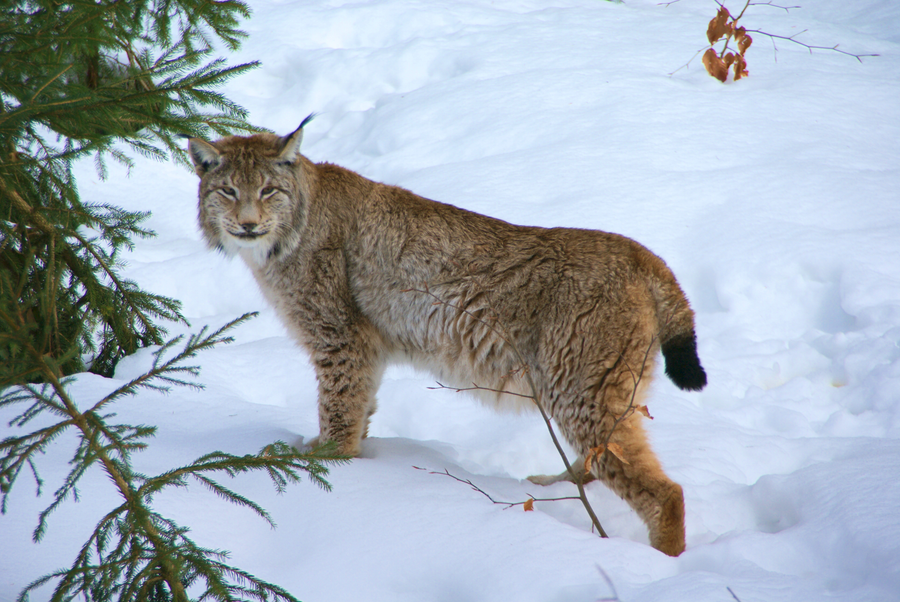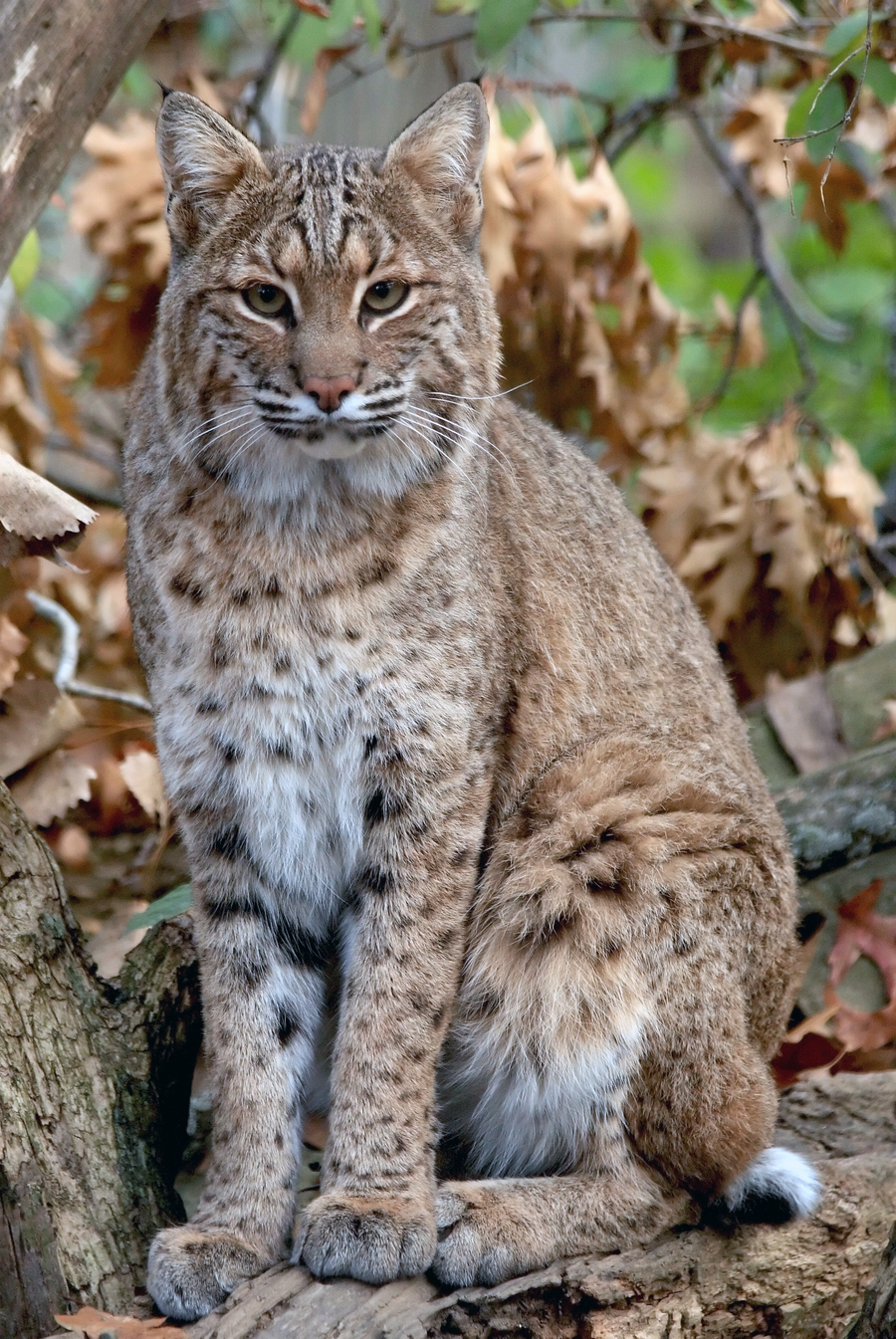
The bobcat (Lynx rufus) is a mammal of the cat family, Felidae, in the order Carnivora.
Quick answer
Bobcats are versatile medium-sized cats named for their short 'bobbed' tail, found from southern Canada to Mexico in forests, deserts, and swamps. They weigh 6–14 kg (13–30 lb), hunt rabbits and rodents, and increasingly appear on trail cameras in suburban greenbelts.
Top questions about the Bobcat
Also available in Español (Lince rojo)
Bobcat facts at a glance
- Weight 10 kg
- Length 85 cm
- Top speed 48 km/h
- Lifespan 12 years
| Scientific name | Lynx rufus |
|---|---|
| Diet | Carnivore — rabbits, hares, rodents, and birds |
| Habitat | Forests, deserts, swamps, and scrub across North America |
| Lifespan | 10–12 years in the wild (up to 15 in captivity) |
| Weight | 6–14 kg (13–30 lb); males larger than females |
| Top speed | Up to 48 km/h (30 mph) in short pursuit |
| Conservation status | Least Concern (IUCN) |
| Kingdom | Animalia |
|---|---|
| Phylum | Chordata |
| Class | Mammalia |
| Order | Carnivora |
| Family | Felidae |
| Genus | Lynx |
Where it lives
The bobcat (Lynx rufus) is native to Everywhere from southern Canada through the continental United States to Oaxaca in Mexico, in forest, desert, swamp, and suburban edge habitat. — recorded across North America in this guide’s range summary.
For occurrence records, see GBIF species search and sources below.
How big is a bobcat?
An adult bobcat measures 85 cm long — about 49% of the height of an average adult person (1.73 m) — and weighs around 10 kg, about 14% of an average adult’s body weight (70 kg).
Length vs an average adult’s height (to scale)
What is a group of bobcats called?
Group name (collective noun)
A group of Bobcats is called a clowder.
Baby name
A baby Bobcat is called a kitten.
Explore more animal collective nouns and baby animal names .
Urban adaptability
Bobcats tolerate human-altered landscapes better than many wild cats, hunting in parks, golf courses, and greenbelts where rabbits and rodents are abundant. They are primarily crepuscular — active at dawn and dusk — and rest in thick cover or rocky dens by day.
Hunting and diet
Rabbits and hares typically dominate the diet, but bobcats also take rodents, birds, and occasionally deer fawns. They hunt by stalking and pouncing, with a success rate that makes them efficient predators despite their modest size.
Territory and breeding
Solitary adults maintain territories marked with scent and scrapes. Breeding occurs in winter and spring; kittens are born in hidden dens and stay with the mother for several months before dispersing.
Conservation
Bobcats are Least Concern with a stable or expanding population estimated at several million across North America. They remain trapped for fur in some states and face habitat loss in rapidly developing regions, but overall numbers are robust.
Dig deeper into the Bobcat
- Bobcat: Key Facts
Bobcats are versatile medium-sized cats named for their short 'bobbed' tail, found from southern Canada to Mexico in forests, deserts, and swamps.
- How Fast Is A Bobcat?
Bobcat top speed is up to about 48 km/h (30 mph) in short pursuit. Sprint vs endurance and what limits pace.
- How Long Do Bobcats Live?
Bobcat lifespan is typically 10–12 years in the wild (up to 15 in captivity). What shortens or extends life, life stages, and status (Least Concern).
- What Do Bobcats Eat?
What bobcats eat: Carnivore — rabbits, hares, rodents, and birds, foraging style, and seasonal shifts in Forests, deserts, swamps, and scrub across North America.
- Where Do Bobcats Live?
Where bobcats live: Forests, deserts, swamps, and scrub across North America, native range cues, and human overlap. Status Least Concern.
Explore the Bobcat
Compare
Close relatives
- Eurasian Lynx Same genus
- Lion Same family
- Tiger Same family
- Cat Same family
Range & geography
Did you know? Bobcat facts
- Bobcats are versatile medium-sized cats named for their short 'bobbed' tail, found from southern Canada to Mexico in forests, deserts, and swamps.
- Bobcats may prey on small pets left outdoors at night in overlap areas, especially cats and small dogs. Keeping pets indoors at night and supervising small animals reduces risk.
- Bobcats are smaller, have shorter legs, shorter ear tufts, and more varied coat patterns. Canada lynx have larger paws and longer tufts adapted to deep snow.
- Bobcats are in the genus Lynx alongside the Canada lynx, Eurasian lynx, and Iberian lynx. The bobcat is a distinct species, Lynx rufus.
- Look for round tracks without claw marks, scrapes on logs, and scat containing fur and bone. Trail cameras often capture bobcats in suburban edge habitat.
- Conservation: Least Concern (IUCN).
Diet & feeding
Bobcat feeds primarily as a carnivore — rabbits, hares, rodents, and birds. Rabbits and hares typically dominate the diet, but bobcats also take rodents, birds, and occasionally deer fawns. They hunt by stalking and pouncing, with a success rate that makes them efficient predators despite their modest size.
Adaptations
- Bobcats tolerate human-altered landscapes better than many wild cats, hunting in parks, golf courses, and greenbelts where rabbits and rodents are abundant. They are primarily crepuscular — active at dawn and dusk — and rest in thick cover or rocky dens by day.
- Rabbits and hares typically dominate the diet, but bobcats also take rodents, birds, and occasionally deer fawns. They hunt by stalking and pouncing, with a success rate that makes them efficient predators despite their modest size.
Behaviour & ecology
- Bobcats tolerate human-altered landscapes better than many wild cats, hunting in parks, golf courses, and greenbelts where rabbits and rodents are abundant. They are primarily crepuscular — active at dawn and dusk — and rest in thick cover or rocky dens by day.
- Rabbits and hares typically dominate the diet, but bobcats also take rodents, birds, and occasionally deer fawns. They hunt by stalking and pouncing, with a success rate that makes them efficient predators despite their modest size.
- Solitary adults maintain territories marked with scent and scrapes. Breeding occurs in winter and spring; kittens are born in hidden dens and stay with the mother for several months before dispersing.
Communication
- Bobcat uses scent, posture, and vocal signals to mark territory and coordinate social behaviour.
- Communication intensity often peaks during breeding seasons and territorial disputes.
Habitat & range
Forests, deserts, swamps, and scrub across North America
Ecological role
Bobcat acts as a predator that helps regulate prey populations and maintain balance in forests, deserts, swamps, and scrub across north america.
Conservation status of the Bobcat
The bobcat (Lynx rufus) is listed as Least Concern on the IUCN Red List. Least Concern (LC) is the IUCN's lowest-risk category, assigned to widespread, abundant species that have been evaluated and found not to be threatened. It does not mean a species faces no pressures — only that it is not currently at risk of extinction.
The bobcat (Lynx rufus) is assessed on the IUCN Red List. Look up on the IUCN Red List .
Frequently asked questions about the Bobcat
Are bobcats dangerous to pets?
Bobcats may prey on small pets left outdoors at night in overlap areas, especially cats and small dogs. Keeping pets indoors at night and supervising small animals reduces risk.
Bobcat vs lynx — what is the difference?
Bobcats are smaller, have shorter legs, shorter ear tufts, and more varied coat patterns. Canada lynx have larger paws and longer tufts adapted to deep snow.
Are bobcats the same as lynxes?
Bobcats are in the genus Lynx alongside the Canada lynx, Eurasian lynx, and Iberian lynx. The bobcat is a distinct species, Lynx rufus.
How can you tell if a bobcat is nearby?
Look for round tracks without claw marks, scrapes on logs, and scat containing fur and bone. Trail cameras often capture bobcats in suburban edge habitat.
Do bobcats attack humans?
Attacks on people are extremely rare. Bobcats are shy and usually retreat. A rabid bobcat is the main exception wildlife officials warn about.
What is a group of bobcats called?
A group of Bobcats is called a clowder.
What is a baby bobcat called?
A baby Bobcat is called a kitten.
Sources & references
This guide is compiled and reviewed against established zoological and conservation references. Key sources for the Bobcat:
-
IUCN Red List of Threatened Species
Conservation status (Least Concern) reflects the IUCN Red List category for Lynx rufus.
-
iNaturalist — observations & photos
Search citizen-science observations and community IDs for Lynx rufus. Useful for range checks and recent sightings — not a substitute for formal Red List status.
-
GBIF — occurrence data
Global Biodiversity Information Facility species search for Lynx rufus. Explore published occurrence records used in range research.
- IUCN Red List — Lynx rufus.
Conservation status (Least Concern) and population trends.
- Animal Diversity Web — Lynx rufus. University of Michigan Museum of Zoology.
Life history, morphology, and range.
-
Global Animal Guide editorial standards
How we research, source, review, and update every guide for accuracy.