The caracal (Caracal caracal) is a mammal of the cat family, Felidae, in the order Carnivora.
Quick answer
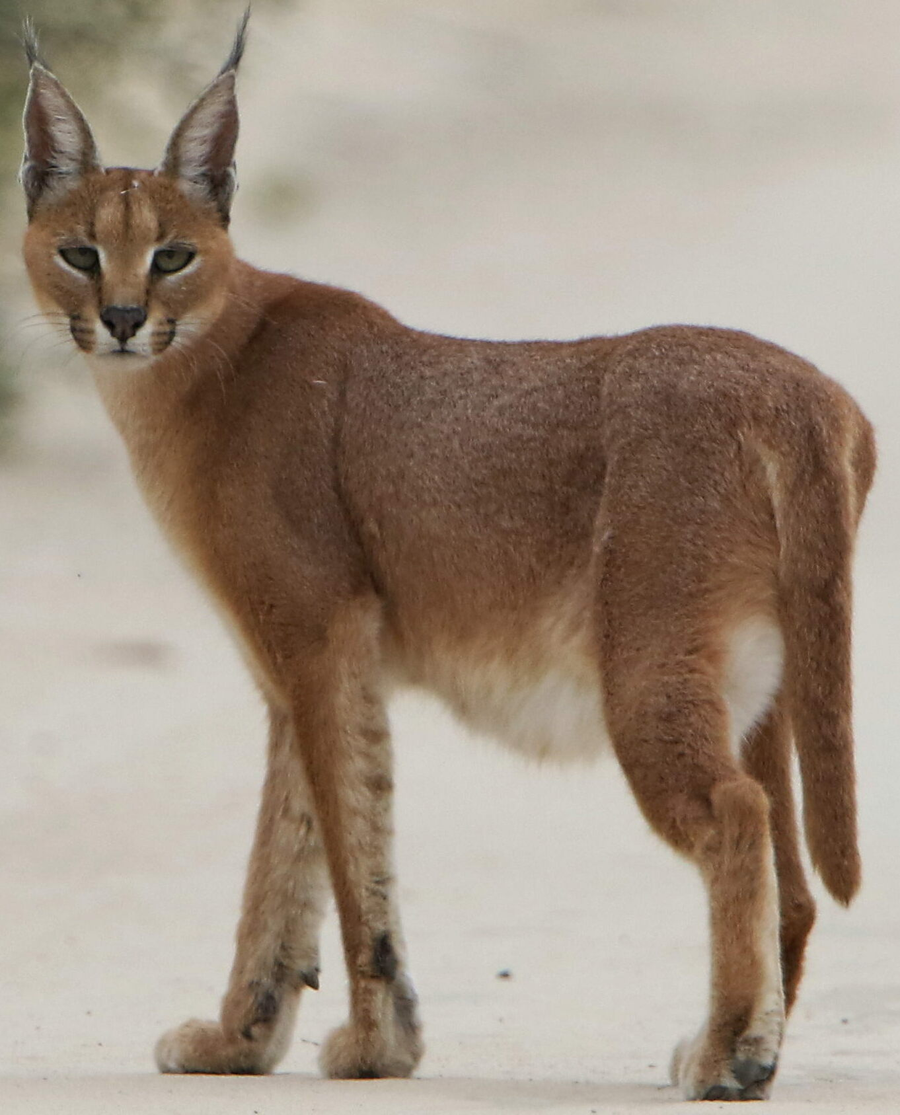
The caracal is a medium-sized wild cat with distinctive black ear tufts, long legs, and a short tail, capable of leaping more than 3 metres to snatch birds in flight. Found across Africa, the Middle East, and into India, it hunts rodents, hares, and small antelope in open country.
Top questions about the Caracal
Caracal facts at a glance
- Weight 14 kg
- Length 95 cm
- Top speed 80 km/h
- Lifespan 15 years
| Scientific name | Caracal caracal |
|---|---|
| Diet | Carnivore — rodents, hares, birds, and small antelope |
| Habitat | Savannas, scrub, dry forests, and rocky hills |
| Lifespan | 12–15 years in the wild (longer in captivity) |
| Weight | 8–19 kg (18–42 lb); males larger |
| Top speed | Up to 80 km/h (50 mph) in short pursuit |
| Conservation status | Least Concern (IUCN) |
| Kingdom | Animalia |
|---|---|
| Phylum | Chordata |
| Class | Mammalia |
| Order | Carnivora |
| Family | Felidae |
| Genus | Caracal |
Where it lives
The caracal (Caracal caracal) is native to Africa south of the Sahara, the Arabian Peninsula, Middle East, Turkey, and western India through Pakistan in savanna, scrub, and dry woodland. — recorded across Africa, Asia in this guide’s range summary.
For occurrence records, see GBIF species search and sources below.
How big is a caracal?
An adult caracal measures 95 cm long — about 55% of the height of an average adult person (1.73 m) — and weighs around 14 kg, about 20% of an average adult’s body weight (70 kg).
Length vs an average adult’s height (to scale)
What is a group of caracals called?
Group name (collective noun)
A group of Caracals is called a clowder.
Baby name
A baby Caracal is called a kitten.
Explore more animal collective nouns and baby animal names .
Spectacular leaping hunter
Caracals are famed for knocking down multiple birds with a single leap — historically featured in falconry displays in India and Persia. Powerful hind legs launch them vertically; they also hunt on the ground by stalking and short sprints.
Ear tufts and senses
Long black tufts on ear tips may aid signalling or camouflage in tall grass. Excellent hearing and night vision suit caracals to dawn and dusk hunting. They are largely silent cats, communicating with growls, hisses, and purrs.
Solitary and wide-ranging
Caracals are solitary and territorial, with home ranges that can exceed 200 km² in arid areas. Females bear one to six kittens in dense cover or abandoned burrows. Kittens stay with the mother for up to a year.
Conservation across continents
Globally Least Concern, caracals nevertheless face persecution as poultry predators and habitat loss in parts of North Africa and Asia. In South Africa they adapt to farmland where rodent prey is abundant, but snaring and road kills take a toll.
Dig deeper into the Caracal
- Are Caracals Dangerous?
Are caracals dangerous? Realistic risk, when incidents rise, and safety basics.
- Caracal: Key Facts
The caracal is a medium-sized wild cat with distinctive black ear tufts, long legs, and a short tail, capable of leaping more than 3 metres to snatch…
- How Long Do Caracals Live?
Caracal lifespan is typically 12–15 years in the wild (longer in captivity). What shortens or extends life, life stages, and status (Least Concern).
- What Do Caracals Eat?
What caracals eat: Carnivore — rodents, hares, birds, and small antelope, foraging style, and seasonal shifts in Savannas, scrub, dry forests, and rocky hills.
- Where Do Caracals Live?
Where caracals live: Savannas, scrub, dry forests, and rocky hills, native range cues, and human overlap. Status Least Concern.
Explore the Caracal
Collections
Did you know? Caracal facts
- The caracal is a medium-sized wild cat with distinctive black ear tufts, long legs, and a short tail, capable of leaping more than 3 metres to snatch birds in flight.
- Caracals can leap 3 metres or more vertically to catch birds — among the highest jumps relative to body size of any cat.
- The black tufts may help with communication, species recognition, or breaking up the ear outline in grass, though their exact function is debated.
- Africa south of the Sahara, the Arabian Peninsula, Middle East, and western India through Pakistan — mainly open dry country.
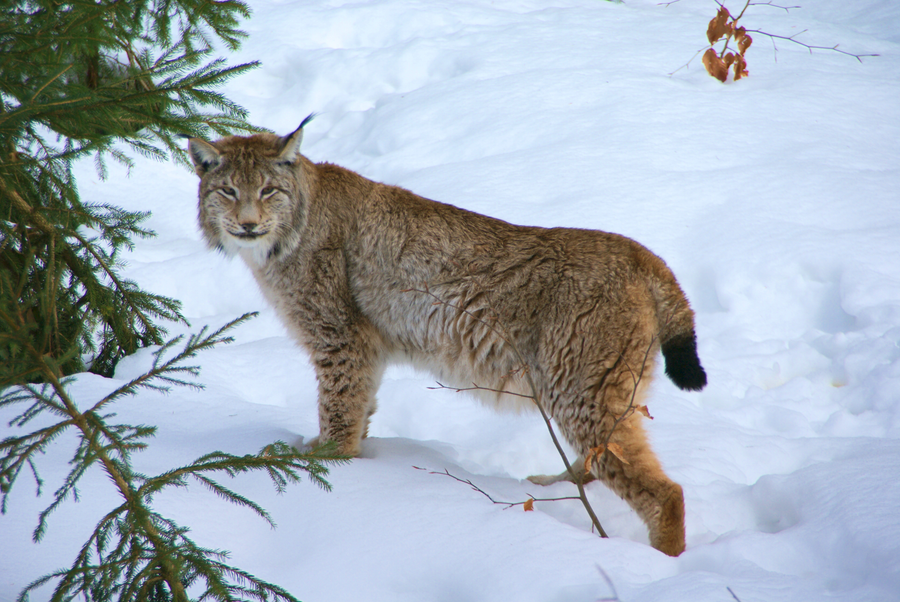
- Caracals have longer legs, uniform reddish coat, and longer ear tufts. Lynxes are stockier with shorter legs and often spotted or grey fur adapted to colder climates.
- Conservation: Least Concern (IUCN).
Diet & feeding
Caracal feeds primarily as a carnivore — rodents, hares, birds, and small antelope. Caracals are famed for knocking down multiple birds with a single leap — historically featured in falconry displays in India and Persia. Powerful hind legs launch them vertically; they also hunt on the ground by stalking and short sprin
Adaptations
- Caracals are famed for knocking down multiple birds with a single leap — historically featured in falconry displays in India and Persia. Powerful hind legs launch them vertically; they also hunt on the ground by stalking and short sprints.
- Long black tufts on ear tips may aid signalling or camouflage in tall grass. Excellent hearing and night vision suit caracals to dawn and dusk hunting. They are largely silent cats, communicating with growls, hisses, and purrs.
Behaviour & ecology
- Caracals are famed for knocking down multiple birds with a single leap — historically featured in falconry displays in India and Persia. Powerful hind legs launch them vertically; they also hunt on the ground by stalking and short sprints.
- Long black tufts on ear tips may aid signalling or camouflage in tall grass. Excellent hearing and night vision suit caracals to dawn and dusk hunting. They are largely silent cats, communicating with growls, hisses, and purrs.
- Caracals are solitary and territorial, with home ranges that can exceed 200 km² in arid areas. Females bear one to six kittens in dense cover or abandoned burrows. Kittens stay with the mother for up to a year.
Communication
- Caracal uses scent, posture, and vocal signals to mark territory and coordinate social behaviour.
- Communication intensity often peaks during breeding seasons and territorial disputes.
Habitat & range
Savannas, scrub, dry forests, and rocky hills
Ecological role
Caracal acts as a predator that helps regulate prey populations and maintain balance in savannas, scrub, dry forests, and rocky hills.
Conservation status of the Caracal
The caracal (Caracal caracal) is listed as Least Concern on the IUCN Red List. Least Concern (LC) is the IUCN's lowest-risk category, assigned to widespread, abundant species that have been evaluated and found not to be threatened. It does not mean a species faces no pressures — only that it is not currently at risk of extinction.
The caracal (Caracal caracal) is assessed on the IUCN Red List. Look up on the IUCN Red List .
Frequently asked questions about the Caracal
How high can a caracal jump?
Caracals can leap 3 metres or more vertically to catch birds — among the highest jumps relative to body size of any cat.
What are the ear tufts for?
The black tufts may help with communication, species recognition, or breaking up the ear outline in grass, though their exact function is debated.
Where do caracals live?
Africa south of the Sahara, the Arabian Peninsula, Middle East, and western India through Pakistan — mainly open dry country.
Caracal vs lynx?
Caracals have longer legs, uniform reddish coat, and longer ear tufts. Lynxes are stockier with shorter legs and often spotted or grey fur adapted to colder climates.
Are caracals dangerous to humans?
Wild caracals avoid people. Captive caracals can injure handlers — they are powerful predators, not pets.
What is a group of caracals called?
A group of Caracals is called a clowder.
What is a baby caracal called?
A baby Caracal is called a kitten.
Sources & references
This guide is compiled and reviewed against established zoological and conservation references. Key sources for the Caracal:
-
IUCN Red List of Threatened Species
Conservation status (Least Concern) reflects the IUCN Red List category for Caracal caracal.
-
iNaturalist — observations & photos
Search citizen-science observations and community IDs for Caracal caracal. Useful for range checks and recent sightings — not a substitute for formal Red List status.
-
GBIF — occurrence data
Global Biodiversity Information Facility species search for Caracal caracal. Explore published occurrence records used in range research.
- IUCN Red List — Caracal caracal.
Conservation status (Least Concern) and population trends.
- Animal Diversity Web — Caracal caracal. University of Michigan Museum of Zoology.
Life history, morphology, and range.
-
Global Animal Guide editorial standards
How we research, source, review, and update every guide for accuracy.