The hawksbill sea turtle (Eretmochelys imbricata) is a reptile of the family Cheloniidae, in the order Testudines.
Quick answer
The hawksbill is a small sea turtle of tropical coral reefs worldwide, named for its narrow, bird-like beak. It grows to about 0.9 m (3 ft) and 45 to 90 kg, feeds mainly on sponges, and can swim at up to 24 km/h (15 mph). Hawksbills live 30 to 50 years in the wild and are Critically Endangered, largely because their beautiful shells were harvested for tortoiseshell.
Top questions about the Hawksbill Sea Turtle
Also available in Español (Tortuga carey)
Hawksbill Sea Turtle facts at a glance
- Weight 80 kg
- Length 90 cm
- Top speed 24 km/h
- Lifespan 50 years
| Scientific name | Eretmochelys imbricata |
|---|---|
| Diet | Carnivore — sponges, jellyfish, algae, and anemones |
| Habitat | Tropical coral reefs worldwide |
| Lifespan | 30–50 years in the wild |
| Weight | 45–90 kg (100–200 lb); smaller than loggerheads |
| Top speed | Up to 24 km/h (15 mph) swimming |
| Conservation status | Critically Endangered (IUCN) |
| Kingdom | Animalia |
|---|---|
| Phylum | Chordata |
| Class | Reptilia |
| Order | Testudines |
| Family | Cheloniidae |
| Genus | Eretmochelys |
Where it lives
The hawksbill sea turtle (Eretmochelys imbricata) is native to Tropical coral reefs worldwide — nesting beaches in Caribbean, Indo-Pacific, and Red Sea. — recorded across Africa, Asia, North America, Oceania, Oceans, South America in this guide’s range summary.
For occurrence records, see GBIF species search and sources below.
How big is a hawksbill sea turtle?
An adult hawksbill sea turtle measures 90 cm long — about 52% of the height of an average adult person (1.73 m) — and weighs around 80 kg, about 1.1× an average adult’s body weight (70 kg).
Length vs an average adult’s height (to scale)
What is a group of hawksbill sea turtles called?
Group name (collective noun)
A group of Hawksbill Sea Turtles is called a bale.
Baby name
A baby Hawksbill Sea Turtle is called a hatchling.
Explore more animal collective nouns and baby animal names .
Appearance and the tortoiseshell shell
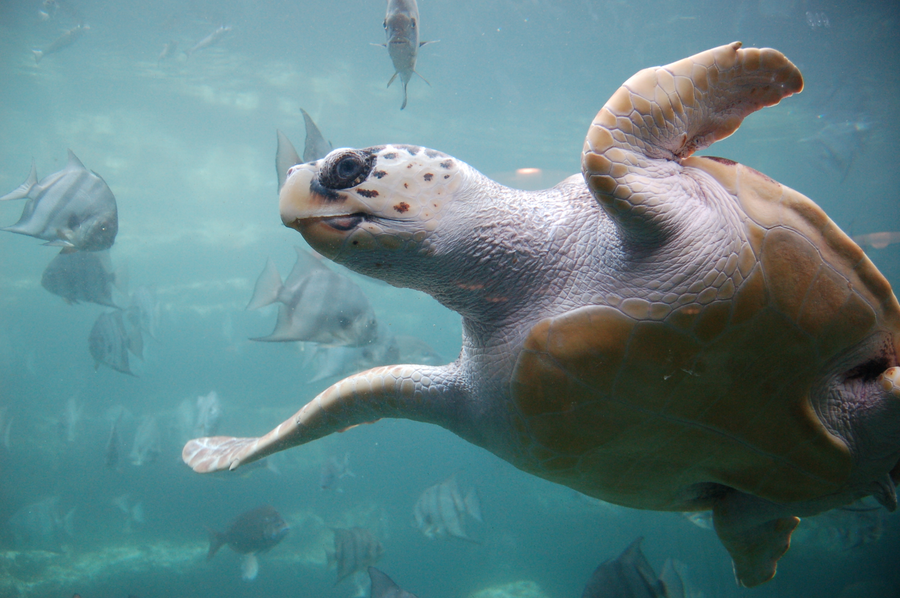
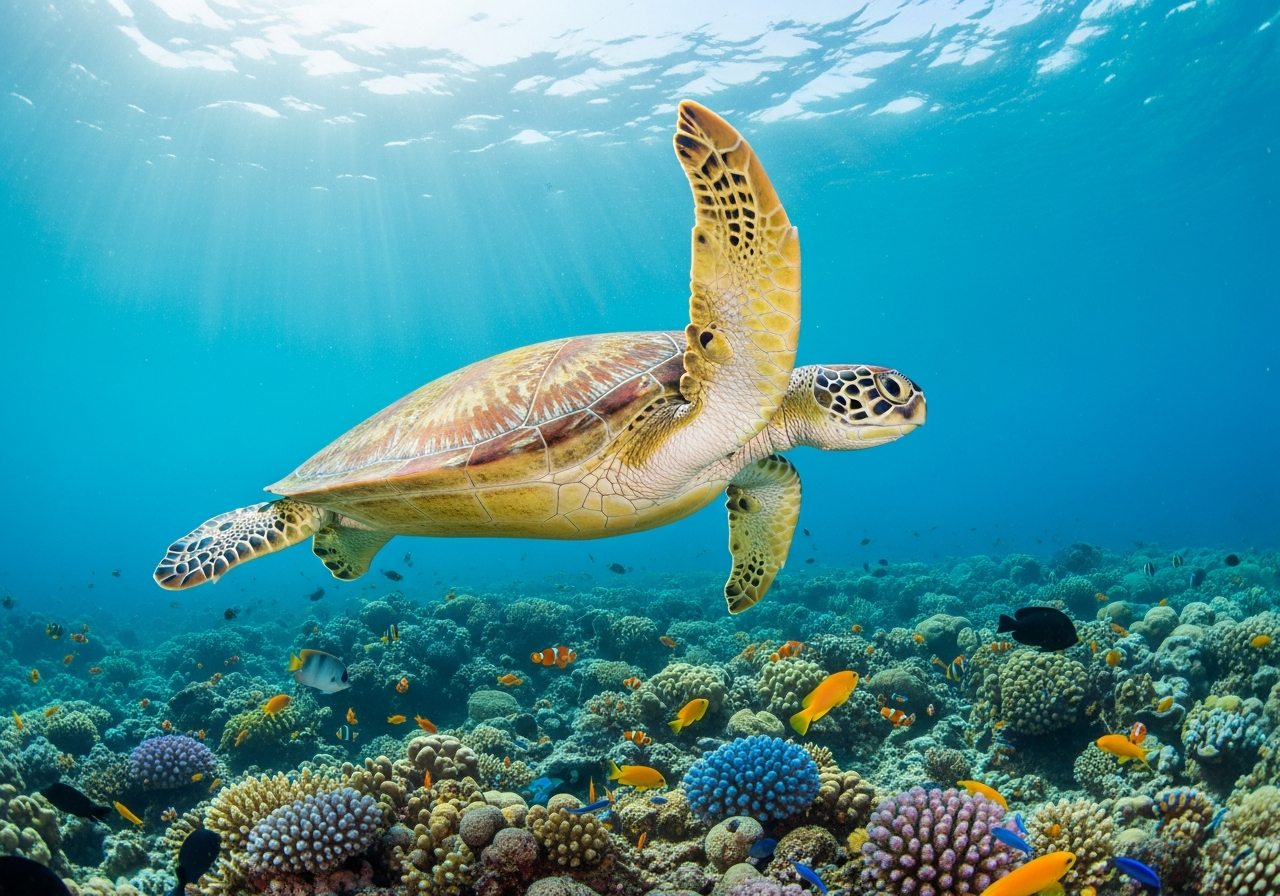
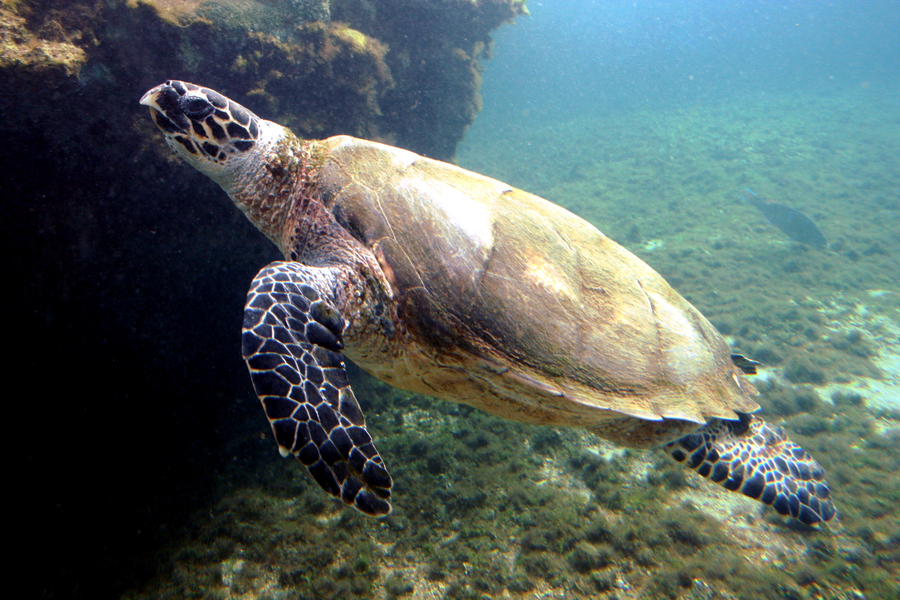
The hawksbill is instantly recognised by its overlapping, amber-and-brown scutes, which form the patterned shell long prized as "tortoiseshell". Its jaws taper to a sharp, hooked beak that works like a pair of scissors, and the rear of the shell is serrated like the teeth of a saw. Adults reach around 0.9 m (3 ft) in shell length and 45 to 90 kg, making them smaller than the bulky loggerhead.
A sponge specialist
Hawksbills are one of the very few animals that eat sponges as the core of their diet, using that narrow beak to reach into reef crevices. They also take jellyfish, sea anemones, and algae, and are tolerant of toxins that would poison most predators. By grazing sponges that would otherwise overgrow corals, hawksbills help keep reef surfaces open for reef-building coral.
Coral reef habitat
Hawksbills favour tropical coral reefs, rocky areas, lagoons, and mangrove estuaries across the Atlantic, Indian, and Pacific Oceans. They are strong, agile swimmers that reach speeds of up to 24 km/h (15 mph) and squeeze into tight reef spaces where larger turtles cannot follow. Individuals often show strong fidelity to particular reefs, returning to the same feeding grounds year after year.
Nesting and reproduction
Females come ashore on remote tropical beaches, usually at night, digging a pit and laying clutches that can exceed 100 eggs. The sex of the hatchlings is set by nest temperature, with warmer sand producing more females. Hatchlings emerge after about two months and scramble to the sea, but only a tiny fraction survive to adulthood, and females may not breed until they are decades old.
Why it is Critically Endangered
The hawksbill is listed as Critically Endangered by the IUCN, and its population has fallen sharply over the last century. The main driver was the tortoiseshell trade, which killed vast numbers for jewellery and ornaments, and demand persists illegally today. Habitat loss, coral-reef decline, egg collection, and entanglement in fishing gear continue to threaten the species despite international protection.
Lifespan and slow maturity
Hawksbills are long-lived, reaching 30 to 50 years in the wild, but they mature slowly and reproduce late. This slow life history means populations recover very gradually, so losses from hunting or bycatch take decades to replace. Protecting nesting beaches and reducing illegal shell trade are therefore central to any recovery.
Dig deeper into the Hawksbill Sea Turtle
- Are Hawksbill Sea Turtles Endangered?
Hawksbills are IUCN Critically Endangered (2008). Tortoiseshell trade, bycatch, egg harvest and reef loss. Not a sea-snake.
- Hawksbill Sea Turtle: Key Facts
Hawksbills have hawk-like beaks for reaching sponges in coral crevices, weighing about 80 kg and living 50 years.
- How Long Do Hawksbill Sea Turtles Live?
Hawksbills often live about 30–50 years; bycatch, tortoiseshell and egg harvest cut the average. IUCN Critically Endangered.
- What Do Hawksbill Sea Turtles Eat?
Hawksbills eat reef sponges with a hawk-like beak — not seagrass, not a sea-snake diet. Never feed them.
- Where Do Hawksbill Sea Turtles Live?
Hawksbills live on tropical coral reefs worldwide and nest on tropical beaches. IUCN Critically Endangered. Not sea-snakes.
Explore the Hawksbill Sea Turtle
Close relatives
- Green Sea Turtle Same family
- Leatherback Sea Turtle Same order
- Alligator Snapping Turtle Same order
- Loggerhead Sea Turtle Same order
Collections
Did you know? Hawksbill Sea Turtle facts
- Hawksbills have hawk-like beaks for reaching sponges in coral crevices.
- Critically Endangered — populations declined over 80% in a century.
- Hawksbills have overlapping scutes and pointed beaks; greens have smooth shells.
- Conservation: Critically Endangered.
Diet & feeding
Hawksbill Sea Turtle feeds primarily as a sponges, jellyfish, algae. By eating sponges, hawksbills reduce sponge competition with corals.
Adaptations
- By eating sponges, hawksbills reduce sponge competition with corals.
- Tortoiseshell products persist on black markets despite CITES ban.
Behaviour & ecology
- By eating sponges, hawksbills reduce sponge competition with corals.
- Tortoiseshell products persist on black markets despite CITES ban.
Communication
- Scent marking, body posture, and head-bobbing or tail signals communicate threat and dominance.
- Vocalisations are limited in many reptiles but hissing or bellowing occurs in some groups.
Habitat & range
Tropical coral reefs worldwide
Ecological role
Hawksbill Sea Turtle plays a recognised ecological role in tropical coral reefs worldwide.
Conservation status of the Hawksbill Sea Turtle
The hawksbill sea turtle (Eretmochelys imbricata) is listed as Critically Endangered on the IUCN Red List. Critically Endangered (CR) is the highest-risk category the IUCN Red List assigns to a wild species before Extinct in the Wild. It means a species faces an extremely high probability of extinction — usually because its population has collapsed, its range has shrunk drastically, or very few mature individuals remain. Species at this level typically depend on active conservation to survive.
Main threats to the hawksbill sea turtle
- Illegal tortoiseshell trade
- Fisheries bycatch
- Egg harvest
- Coral-reef habitat degradation
Hawksbill Sea Turtle (Eretmochelys imbricata) was most recently assessed for the IUCN Red List in 2008. View the full IUCN assessment .
Frequently asked questions about the Hawksbill Sea Turtle
Why is the hawksbill turtle endangered?
Hawksbills are Critically Endangered mainly because of the historic tortoiseshell trade, which killed huge numbers for their patterned shells. Ongoing threats include illegal shell sales, loss of coral-reef habitat, egg poaching, and accidental capture in fishing gear.
What do hawksbill turtles eat?
Hawksbills are specialists that feed mainly on sponges, which most animals avoid. They also eat jellyfish, sea anemones, and algae, using their narrow, beak-like jaws to reach prey inside reef crevices.
How big do hawksbill turtles get?
Adult hawksbills reach about 0.9 m (3 ft) in shell length and weigh roughly 45 to 90 kg (100 to 200 lb). They are noticeably smaller than loggerhead and green turtles.
How long do hawksbill turtles live?
In the wild hawksbills live around 30 to 50 years. They mature slowly and breed late in life, which makes their populations slow to recover from losses.
Why is it called a hawksbill turtle?
The name comes from its narrow, pointed beak, which curves like a hawk's bill. This sharp beak lets it reach into tight crevices in the reef to pull out sponges and other prey.
How fast can a hawksbill turtle swim?
Hawksbills can swim at up to about 24 km/h (15 mph) in short bursts. They are agile in the water and can twist through narrow reef spaces that larger turtles cannot enter.
What is a group of hawksbill sea turtles called?
A group of Hawksbill Sea Turtles is called a bale.
What is a baby hawksbill sea turtle called?
A baby Hawksbill Sea Turtle is called a hatchling.
Sources & references
This guide is compiled and reviewed against established zoological and conservation references. Key sources for the Hawksbill Sea Turtle:
-
IUCN Red List of Threatened Species
Conservation status (Critically Endangered) reflects the IUCN Red List category for Eretmochelys imbricata, most recently assessed in 2008.
-
iNaturalist — observations & photos
Search citizen-science observations and community IDs for Eretmochelys imbricata. Useful for range checks and recent sightings — not a substitute for formal Red List status.
-
GBIF — occurrence data
Global Biodiversity Information Facility species search for Eretmochelys imbricata. Explore published occurrence records used in range research.
- IUCN Red List — Eretmochelys imbricata.
Conservation status (Critically Endangered) and population trends.
- Animal Diversity Web — Eretmochelys imbricata. University of Michigan Museum of Zoology.
Life history, morphology, and range.
-
Global Animal Guide editorial standards
How we research, source, review, and update every guide for accuracy.