Image sourcing: see credits & licences
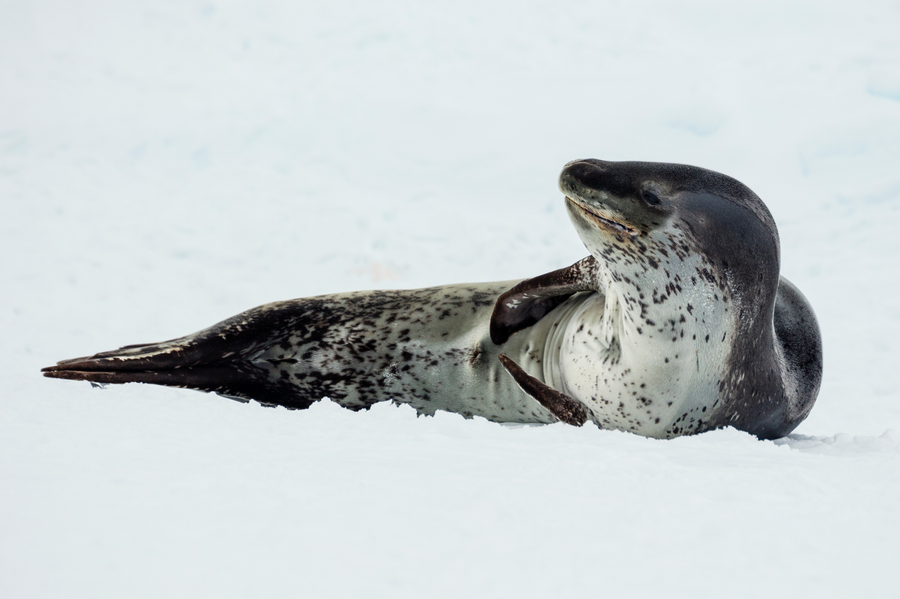
The leopard seal (Hydrurga leptonyx) is a mammal of the true seal family, Phocidae, in the order Carnivora.
Quick answer
The leopard seal is a large, solitary predator of the Antarctic pack ice, named for the dark spots scattered across its silvery-grey coat. It grows to about 3.5 m (11.5 ft) long and weighs 200 to 450 kg (440 to 990 lb), with females larger than males. A formidable hunter, it eats penguins, seals, fish and krill and can reach 40 km/h (25 mph) in the water. Wild leopard seals live 20 to 26 years and are listed as Least Concern.
Top questions about the Leopard Seal
Also available in Español (Foca leopardo)
Leopard Seal facts at a glance
- Weight 450 kg
- Length 3.5 m
- Top speed 40 km/h
- Lifespan 26 years
| Scientific name | Hydrurga leptonyx |
|---|---|
| Diet | Carnivore — penguins, seals, fish, and krill |
| Habitat | Antarctic and sub-Antarctic pack ice and waters |
| Lifespan | 20–26 years in the wild |
| Weight | 200–450 kg (440–990 lb); females larger |
| Top speed | Up to 40 km/h (25 mph) in water |
| Conservation status | Least Concern (IUCN) |
| Kingdom | Animalia |
|---|---|
| Phylum | Chordata |
| Class | Mammalia |
| Order | Carnivora |
| Family | Phocidae |
| Genus | Hydrurga |
Where it lives
The leopard seal (Hydrurga leptonyx) is native to Antarctic pack ice and sub-Antarctic islands — circumpolar Southern Ocean with vagrant records to Australia and South America. — recorded across Antarctica, Oceania, Oceans, South America in this guide’s range summary.
For occurrence records, see GBIF species search and sources below.
How big is a leopard seal?
An adult leopard seal measures 3.5 m long — about 2.0× the height of an average adult person (1.73 m) — and weighs around 450 kg, about 6.4× an average adult’s body weight (70 kg).
Length vs an average adult’s height (to scale)
What is a group of leopard seals called?
Group name (collective noun)
A group of Leopard Seals is called a colony.
Baby name
A baby Leopard Seal is called a pup.
Explore more animal collective nouns and baby animal names .
Antarctica's apex predator
The leopard seal sits near the top of the Antarctic food chain, with only the killer whale as a serious rival. It is one of the very few seals that regularly hunts other warm-blooded animals, including penguins and smaller seals. Armed with a wide gape, powerful jaws and long canine teeth, it is a bold and effective ambush predator. Its reputation is fearsome, yet it plays a central role in keeping Antarctic prey populations in balance.
A surprisingly varied diet
Despite its predatory image, the leopard seal is a flexible feeder that takes penguins, seals, fish and krill. Much of its diet, especially in summer, is actually made up of tiny shrimp-like krill, which it strains from the water using specially shaped cheek teeth. When hunting penguins, it often waits at the ice edge and seizes them as they enter the sea, then thrashes the catch to break it apart. This mix of hunting and filter-feeding lets it thrive across the changing Antarctic seasons.
Built for cold water
The leopard seal is superbly adapted to the freezing Southern Ocean. A thick layer of blubber insulates its long, muscular body and streamlines it for fast, agile swimming. Unusually for a seal, it relies mainly on its powerful front flippers to drive itself through the water, giving it bursts of speed up to 40 km/h. Its large head and serpentine neck let it strike quickly at fast-moving prey.
A solitary life on the ice
Leopard seals live alone across a vast range of Antarctic and sub-Antarctic pack ice and water. Outside the brief breeding season they rarely tolerate company, hauling out on isolated ice floes to rest between hunts. They communicate over long distances with haunting underwater calls, which males produce for hours during the summer. This solitary, wide-ranging lifestyle makes the species difficult to study in the wild.
Breeding and life cycle
Mating takes place in the water during the Antarctic summer, and females give birth on the ice after a gestation of around eleven months. A mother nurses her single pup on rich milk for about a month before leaving it to fend for itself. Females grow larger than males, reaching lengths of around 3.5 m, and both sexes can live for 20 to 26 years in the wild. Young seals must learn to hunt quickly once their mother departs.
Conservation status
The leopard seal is listed as Least Concern by the IUCN, and its remote Antarctic home has so far shielded it from most direct human pressures. Its numbers are hard to count precisely because the animals are scattered and spend much of their time on remote ice. The greatest long-term concern is climate change, which is reducing the sea ice the seals and their prey depend on. Shrinking krill stocks in a warming ocean could affect the whole Antarctic food web on which the leopard seal sits.
Dig deeper into the Leopard Seal
- Are Leopard Seals Dangerous?
Are leopard seals dangerous? Realistic risk, when incidents rise, and safety basics.
- How Long Do Leopard Seals Live?
Leopard Seal lifespan is typically 20–26 years in the wild. What shortens or extends life, life stages, and status (Least Concern).
- Leopard Seal: Key Facts
The leopard seal is a formidable Antarctic predator with a reptilian head and spotted coat, weighing up to 450 kg and living about 26 years.
- What Do Leopard Seals Eat?
What leopard seals eat: Carnivore — penguins, seals, fish, and krill, foraging style, and seasonal shifts in Antarctic and sub-Antarctic pack ice and waters.
- Where Do Leopard Seals Live?
Where leopard seals live: Antarctic and sub-Antarctic pack ice and waters, native range cues, and human overlap. Status Least Concern.
Explore the Leopard Seal
Compare
Close relatives
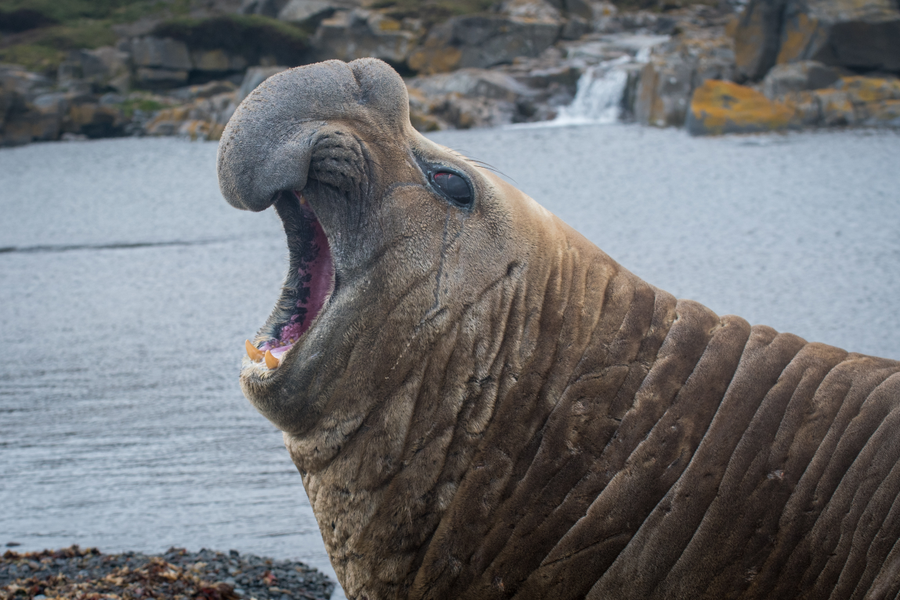
- Northern Elephant Seal Same family
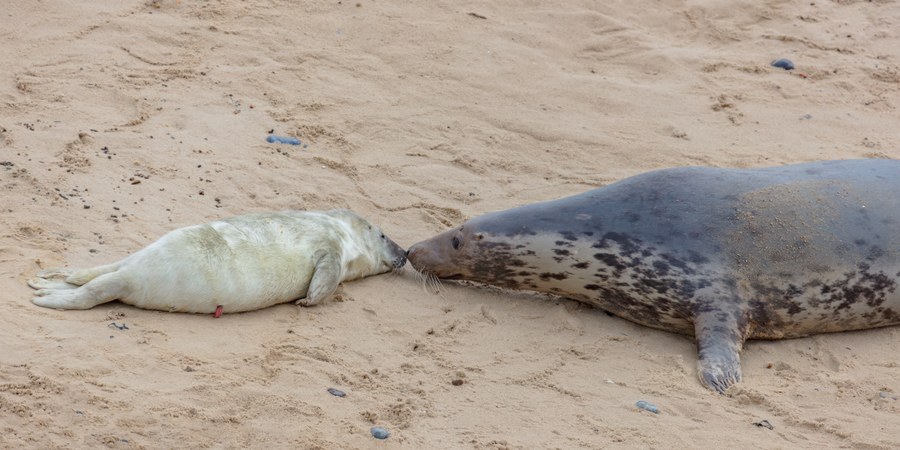
- Grey Seal Same family
- Harbor Seal Same family
- Lion Same order
Did you know? Leopard Seal facts
- Leopard seals are formidable Antarctic predators with reptilian heads and spotted coats.
- Along with killer whales — leopard seals dominate the ice edge food web.
- Young seals filter krill; adults focus on vertebrate prey.
- Conservation: Least Concern.
Diet & feeding
Leopard Seal feeds primarily as a penguins, seals, fish, krill. They have killed researchers — treat as dangerous in the water.
Adaptations
- Leopard seals ambush penguins as they enter water from ice.
- They have killed researchers — treat as dangerous in the water.
Behaviour & ecology
- Leopard seals ambush penguins as they enter water from ice.
- They have killed researchers — treat as dangerous in the water.
Communication
- Leopard Seal uses scent, posture, and vocal signals to mark territory and coordinate social behaviour.
- Communication intensity often peaks during breeding seasons and territorial disputes.
Habitat & range
Antarctic and sub-Antarctic waters
Ecological role
Leopard Seal plays a recognised ecological role in antarctic and sub-antarctic waters.
Conservation status of the Leopard Seal
The leopard seal (Hydrurga leptonyx) is listed as Least Concern on the IUCN Red List. Least Concern (LC) is the IUCN's lowest-risk category, assigned to widespread, abundant species that have been evaluated and found not to be threatened. It does not mean a species faces no pressures — only that it is not currently at risk of extinction.
The leopard seal (Hydrurga leptonyx) is assessed on the IUCN Red List. Look up on the IUCN Red List .
Frequently asked questions about the Leopard Seal
How big is a leopard seal?
Leopard seals grow to around 3.5 m (11.5 ft) long and weigh between 200 and 450 kg (440 to 990 lb). Unusually, females are larger than males.
What do leopard seals eat?
Leopard seals eat penguins, other seals, fish and krill. They are one of the few seals that hunt warm-blooded prey, but a large part of their diet is actually tiny krill strained from the water.
Are leopard seals dangerous to humans?
Leopard seals are powerful predators and should be treated with respect, and there have been rare serious incidents. Encounters are uncommon, however, because the seals live in remote Antarctic waters far from most people.
How fast can a leopard seal swim?
A leopard seal can swim at up to 40 km/h (25 mph). It uses its long front flippers, rather than its hind flippers, to power through the water in fast, agile bursts.
How long do leopard seals live?
Leopard seals live around 20 to 26 years in the wild. Females tend to grow larger than males, and both sexes reach maturity after a few years.
Are leopard seals endangered?
No. Leopard seals are listed as Least Concern by the IUCN, largely because they live in remote Antarctic waters. The main long-term threat is climate change, which is reducing the sea ice and krill they depend on.
What is a group of leopard seals called?
A group of Leopard Seals is called a colony.
What is a baby leopard seal called?
A baby Leopard Seal is called a pup.
Sources & references
This guide is compiled and reviewed against established zoological and conservation references. Key sources for the Leopard Seal:
-
IUCN Red List of Threatened Species
Conservation status (Least Concern) reflects the IUCN Red List category for Hydrurga leptonyx.
-
iNaturalist — observations & photos
Search citizen-science observations and community IDs for Hydrurga leptonyx. Useful for range checks and recent sightings — not a substitute for formal Red List status.
-
GBIF — occurrence data
Global Biodiversity Information Facility species search for Hydrurga leptonyx. Explore published occurrence records used in range research.
- IUCN Red List — Hydrurga leptonyx.
Conservation status (Least Concern) and population trends.
- Animal Diversity Web — Hydrurga leptonyx. University of Michigan Museum of Zoology.
Life history, morphology, and range.
-
Global Animal Guide editorial standards
How we research, source, review, and update every guide for accuracy.