Photo: Muhammad Mahdi Karim Facebook The making of this document was supported by Wikimedia CH. (Submit your project!) For all the files concerned, please see the category Supported by Wikimedia CH. العربية ∙ বাংলা ∙ čeština ∙ Deutsch ∙ English ∙ Esperanto ∙ español ∙ français ∙ galego ∙ हिन्दी ∙ magyar ∙ italiano ∙ 日本語 ∙ македонски ∙ Nederlands ∙ português do Brasil ∙ rumantsch ∙ русский ∙ sicilianu ∙ slovenščina ∙ தமிழ் ∙ українська ∙ 中文 ∙ +/− · GFDL 1.2 · source · credits
The northern elephant seal (Mirounga angustirostris) is a mammal of the true seal family, Phocidae, in the order Carnivora.
Quick answer
The northern elephant seal (Mirounga angustirostris) is a huge deep-diving seal of the eastern Pacific, breeding on beaches in California and Mexico and feeding far offshore. Bulls are enormous, reaching around 3.5 m long and weighing anywhere from 400 to 2,300 kg, far heavier than females. They dive for squid and deep-sea fish and typically live 11 to 13 years. The species is listed as Least Concern.
Top questions about the Northern Elephant Seal
Also available in Español (Elefante marino del norte)
Northern Elephant Seal facts at a glance
- Weight 900 kg
- Length 3.5 m
- Top speed 16 km/h
- Lifespan 13 years
| Scientific name | Mirounga angustirostris |
|---|---|
| Diet | Carnivore — squid, deep-sea fish, and rays |
| Habitat | Offshore Pacific and breeding beaches of California and Mexico |
| Lifespan | 11–13 years in the wild (females longer than bulls) |
| Weight | 400–2,300 kg (880–5,070 lb); bulls vastly heavier |
| Top speed | Up to 16 km/h (10 mph) on land; strong swimmer |
| Conservation status | Least Concern (IUCN) |
| Kingdom | Animalia |
|---|---|
| Phylum | Chordata |
| Class | Mammalia |
| Order | Carnivora |
| Family | Phocidae |
| Genus | Mirounga |
Where it lives
The northern elephant seal (Mirounga angustirostris) is native to North Pacific offshore waters; breeding on California and Baja California coasts from Point Reyes to Isla Guadalupe. — recorded across North America, Oceans in this guide’s range summary.
For occurrence records, see GBIF species search and sources below.
How big is a northern elephant seal?
An adult northern elephant seal measures 3.5 m long — about 2.0× the height of an average adult person (1.73 m) — and weighs around 900 kg, about 13× an average adult’s body weight (70 kg).
Length vs an average adult’s height (to scale)
What is a group of northern elephant seals called?
Group name (collective noun)
A group of Northern Elephant Seals is called a colony.
Baby name
A baby Northern Elephant Seal is called a pup.
Explore more animal collective nouns and baby animal names .
Size and the elephant-like nose
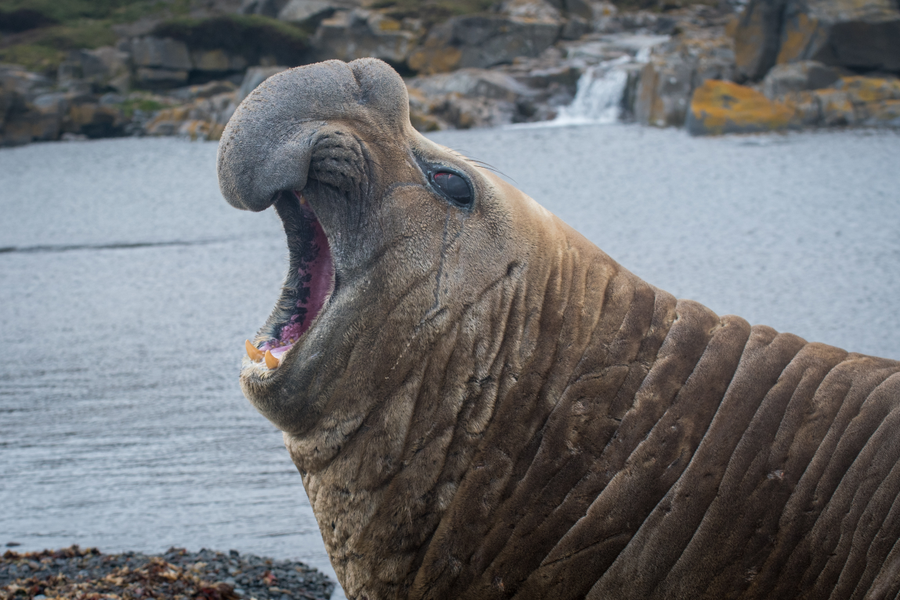
Northern elephant seals are named for the large, inflatable snout of adult males, which resembles a short trunk and hangs over the mouth. Bulls are among the largest of all seals, growing to roughly 3.5 m and weighing from 400 kg up to about 2,300 kg, while females are far smaller. Males use the trunk-like proboscis as a resonating chamber, producing deep, clattering roars that carry across a crowded breeding beach. This dramatic size difference between the sexes is one of the most extreme of any mammal.
Record-breaking diving
Few mammals dive as deeply or for as long as the northern elephant seal. Individuals routinely descend hundreds of metres and can reach depths beyond 1,500 m, staying submerged for 20 minutes or more between short breaths at the surface. They spend most of the year at sea, diving almost continuously day and night to hunt in the cold, dark water column. Special adaptations, including large blood volume and oxygen-rich muscle, let them stay under far longer than their lung capacity alone would allow.
Diet and hunting at depth
Elephant seals are carnivores that feed mainly on squid, deep-sea fish, and occasionally rays and small sharks. They hunt in the twilight and dark zones of the open ocean, using sensitive whiskers and large eyes to detect prey where little light reaches. Because they feed far offshore and deep down, they rarely compete with coastal fisheries. A foraging seal may travel thousands of kilometres across the Pacific during a single trip to sea.
Breeding beaches and battles
Each winter, northern elephant seals haul out on beaches in California and Baja California, Mexico, to breed. Dominant bulls fight for control of harems of females, rearing up and slamming their chests and necks together in bloody clashes. Females give birth to a single pup and nurse it on extremely rich milk for about a month before returning to sea. Only the largest, most dominant males win the right to mate, so the winners father a large share of the pups.
Recovery from near-extinction
The northern elephant seal is a rare conservation success story. Hunted relentlessly for its blubber oil in the nineteenth century, the species was reduced to perhaps fewer than 100 animals before protection began. Given legal protection by Mexico and later the United States, the population has rebounded into the hundreds of thousands and is now listed as Least Concern by the IUCN. Because all living individuals descend from that tiny remnant, however, the species carries very low genetic diversity.
Time on land and moulting
Although superb swimmers, elephant seals are ungainly on land, hauling themselves along at up to about 16 km/h in short bursts. They come ashore twice a year: once to breed and again to moult, when they shed skin and fur in large patches during a so-called catastrophic moult. During these weeks on land they fast, living off stored blubber rather than feeding. Between these visits they are almost entirely oceanic, returning to the same beaches year after year.
Dig deeper into the Northern Elephant Seal
- Northern Elephant Seal: Key Facts
The northern elephant seal is the largest seal in the Northern Hemisphere — bulls reach 2,300 kg with an inflatable proboscis.
- How Big Is A Northern Elephant Seal?
Northern Elephant Seal size and weight: typical 400–2,300 kg (880–5,070 lb); bulls vastly heavier, dimorphism, and growth.
- How Long Do Northern Elephant Seals Live?
Northern Elephant Seal lifespan is typically 11–13 years in the wild (females longer than bulls). What shortens or extends life, life stages, and status (Least Concern).
- What Do Northern Elephant Seals Eat?
What northern elephant seals eat: Carnivore — squid, deep-sea fish, and rays, foraging style, and seasonal shifts in Offshore Pacific and breeding beaches of California and Mexico.
- Where Do Northern Elephant Seals Live?
Where northern elephant seals live: Offshore Pacific and breeding beaches of California and Mexico, native range cues, and human overlap. Status Least Concern.
Explore the Northern Elephant Seal
Close relatives
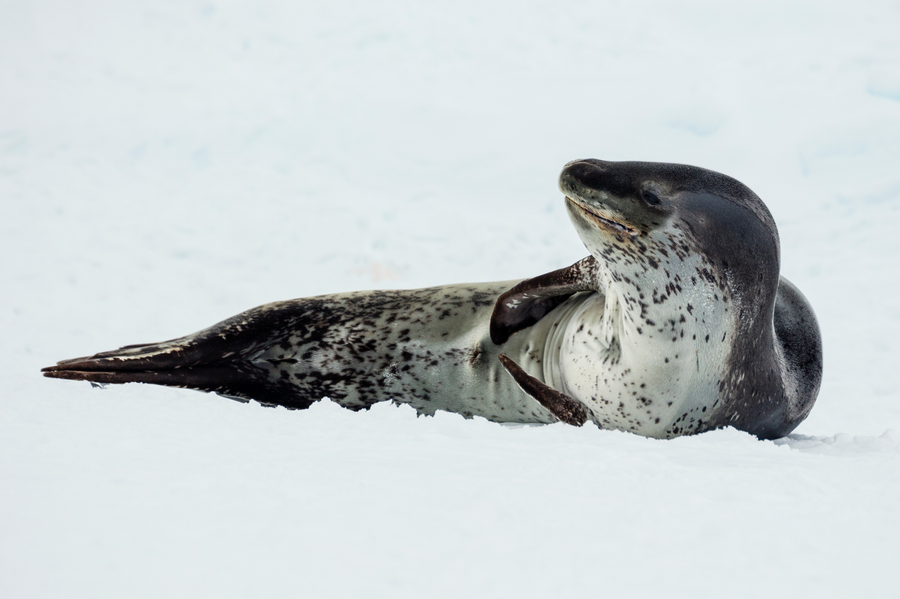
- Leopard Seal Same family
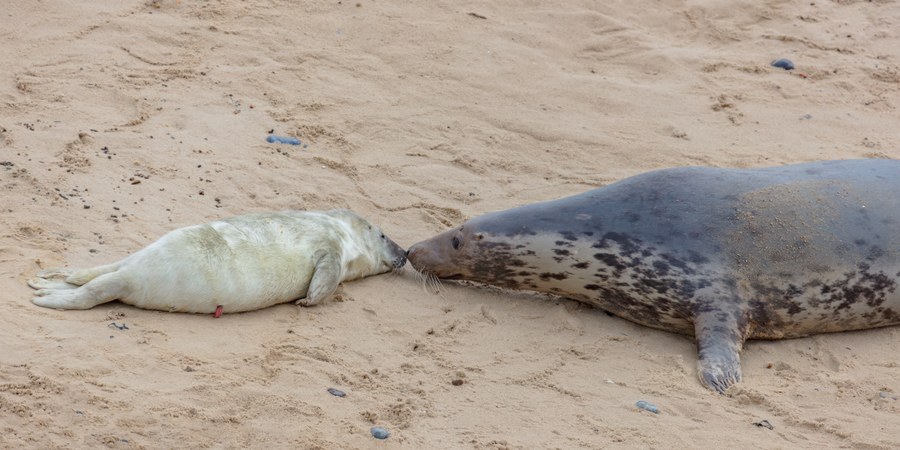
- Grey Seal Same family
- Harbor Seal Same family
- Lion Same order
Range & geography
Did you know? Northern Elephant Seal facts
- Northern elephant seals are the largest seals in the Northern Hemisphere — bulls reach 2,300 kg.
- Male proboscis inflates during breeding displays — resembling an elephant trunk.
- Bulls fight fiercely in breeding season; keep distance on beaches.
- Conservation: Least Concern.
Diet & feeding
Northern Elephant Seal feeds primarily as a squid and deep-sea fish.
Adaptations
- Hunted near extinction by 1900, the population now exceeds 200,000.
Behaviour & ecology
- Hunted near extinction by 1900, the population now exceeds 200,000.
Communication
- Northern Elephant Seal uses scent, posture, and vocal signals to mark territory and coordinate social behaviour.
- Communication intensity often peaks during breeding seasons and territorial disputes.
Habitat & range
Pacific coast of North America
Ecological role
Northern Elephant Seal plays a recognised ecological role in pacific coast of north america.
Conservation status of the Northern Elephant Seal
The northern elephant seal (Mirounga angustirostris) is listed as Least Concern on the IUCN Red List. Least Concern (LC) is the IUCN's lowest-risk category, assigned to widespread, abundant species that have been evaluated and found not to be threatened. It does not mean a species faces no pressures — only that it is not currently at risk of extinction.
The northern elephant seal (Mirounga angustirostris) is assessed on the IUCN Red List. Look up on the IUCN Red List .
Frequently asked questions about the Northern Elephant Seal
How big is a northern elephant seal?
Bulls reach around 3.5 m in length and can weigh anywhere from 400 kg to about 2,300 kg (880 to 5,070 lb). Females are much smaller, which makes the northern elephant seal one of the most size-differentiated mammals between the sexes.
How deep can elephant seals dive?
Northern elephant seals are among the deepest-diving mammals, routinely reaching several hundred metres and sometimes exceeding 1,500 m. They can stay underwater for 20 minutes or more, thanks to large blood volume and oxygen-storing muscle.
What do elephant seals eat?
They are carnivores that feed mainly on squid and deep-sea fish, along with the occasional ray or small shark. They hunt in the dark, deep layers of the open Pacific rather than in shallow coastal waters.
Where do northern elephant seals live?
They spend most of the year far offshore in the eastern North Pacific and come ashore to breed and moult on beaches in California and Baja California, Mexico. Well-known haul-out sites include Año Nuevo and Piedras Blancas.
Why are they called elephant seals?
The name comes from the large, inflatable snout of adult males, which resembles a short elephant's trunk. Bulls use it to amplify their roaring calls during the breeding season.
Are northern elephant seals endangered?
No. Although they were hunted almost to extinction in the 1800s, they have recovered strongly and are now listed as Least Concern by the IUCN. The whole population descends from a tiny surviving group, so genetic diversity remains low.
What is a group of northern elephant seals called?
A group of Northern Elephant Seals is called a colony.
What is a baby northern elephant seal called?
A baby Northern Elephant Seal is called a pup.
Sources & references
This guide is compiled and reviewed against established zoological and conservation references. Key sources for the Northern Elephant Seal:
-
IUCN Red List of Threatened Species
Conservation status (Least Concern) reflects the IUCN Red List category for Mirounga angustirostris.
-
iNaturalist — observations & photos
Search citizen-science observations and community IDs for Mirounga angustirostris. Useful for range checks and recent sightings — not a substitute for formal Red List status.
-
GBIF — occurrence data
Global Biodiversity Information Facility species search for Mirounga angustirostris. Explore published occurrence records used in range research.
- IUCN Red List — Mirounga angustirostris.
Conservation status (Least Concern) and population trends.
- Animal Diversity Web — Mirounga angustirostris. University of Michigan Museum of Zoology.
Life history, morphology, and range.
-
Global Animal Guide editorial standards
How we research, source, review, and update every guide for accuracy.