Image sourcing: see credits & licences
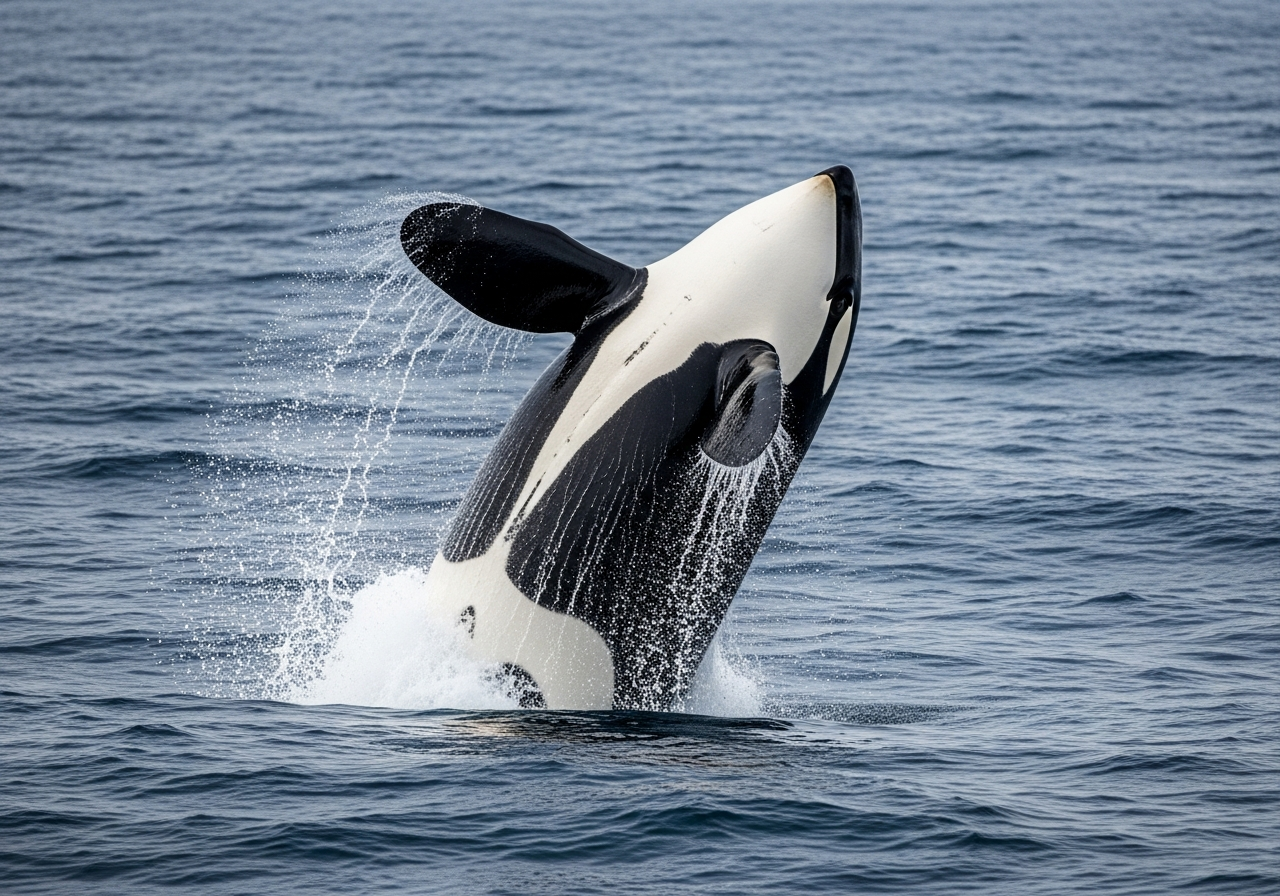
The orca (Orcinus orca) is a mammal of the oceanic dolphin family, Delphinidae, in the order Artiodactyla.
Quick answer
The orca, or killer whale, is the largest member of the dolphin family and an apex predator found in every ocean on Earth. Highly intelligent and social, orcas hunt in coordinated family groups called pods and can weigh up to 6,000 kg (13,000 lb). Wild orcas can live 50 to 80 years or more.
Top questions about the Orca
Also available in Español (Orca)
Orca facts at a glance
- Weight 5000 kg
- Length 8 m
- Top speed 56 km/h
- Lifespan 60 years
| Scientific name | Orcinus orca |
|---|---|
| Diet | Carnivore |
| Habitat | All oceans, from polar to tropical |
| Lifespan | 50–80+ years in the wild |
| Weight | Up to 6,000 kg (13,000 lb) |
| Top speed | Up to 56 km/h (35 mph) |
| Conservation status | Data Deficient (IUCN) |
| Kingdom | Animalia |
|---|---|
| Phylum | Chordata |
| Class | Mammalia |
| Order | Artiodactyla |
| Family | Delphinidae |
| Genus | Orcinus |
Where it lives
The orca (Orcinus orca) is native to Every ocean on Earth, from polar seas to the tropics. — recorded across Oceans in this guide’s range summary.
For occurrence records, see GBIF species search and sources below.
How big is a orca?
An adult orca measures 8 m long — about 4.6× the height of an average adult person (1.73 m) — and weighs around 5000 kg, about 71× an average adult’s body weight (70 kg).
Length vs an average adult’s height (to scale)
What is a group of orcas called?
Group name (collective noun)
A group of Orcas is called a pod.
Baby name
A baby Orca is called a calf.
Explore more animal collective nouns and baby animal names .
Intelligence and family pods
Orcas are among the most intelligent animals in the ocean. They live in tight family groups called pods, led by the oldest females, and stay with their mothers for life. Different pods have their own dialects of calls, distinct hunting techniques, and even food preferences, a form of culture passed down through generations.
Apex hunters
As apex predators, orcas have no natural enemies. Depending on the population, they hunt fish, seals, sea lions, penguins, sharks, and even other whales. They use remarkable cooperative strategies, such as creating waves to wash seals off ice floes and beaching themselves briefly to grab prey at the shoreline.
Built for the open ocean
The orca's powerful tail can drive it through the water at up to 56 km/h, making it one of the fastest marine mammals. Its distinctive black-and-white coloring helps break up its outline while hunting, and its tall dorsal fin, reaching up to 1.8 m in males, makes it instantly recognizable.
Conservation
The IUCN currently lists the orca as Data Deficient because the species spans many distinct populations with very different levels of risk. Some local populations are healthy while others are threatened by pollution, declining prey, noise, and disturbance, so conservation is managed population by population.
Dig deeper into the Orca
- Are Orcas Dangerous?
Are orcas dangerous? Realistic risk, when incidents rise, and safety basics.
- Are Orcas Dangerous?
Are orcas dangerous? Realistic risk, when incidents rise, and safety basics.
- How Fast Is An Orca?
Orca top speed is up to about 56 km/h (35 mph). Sprint vs endurance and what limits pace.
- How Long Do Orcas Live?
Orca lifespan is typically 50–80+ years in the wild. What shortens or extends life, life stages, and status (Data Deficient).
- Orca Captivity Controversy
The orca, or killer whale, is the largest member of the dolphin family and an apex predator found in every ocean on Earth.
- Orca Communication
The orca, or killer whale, is the largest member of the dolphin family and an apex predator found in every ocean on Earth.
- Orca Hunting Techniques
The orca, or killer whale, is the largest member of the dolphin family and an apex predator found in every ocean on Earth.
- Orca Intelligence
The orca, or killer whale, is the largest member of the dolphin family and an apex predator found in every ocean on Earth.
- Orca Lifespan
The orca, or killer whale, is the largest member of the dolphin family and an apex predator found in every ocean on Earth.
- Orca Pod Structure
The orca, or killer whale, is the largest member of the dolphin family and an apex predator found in every ocean on Earth.
- How Big Is An Orca?
Orca size and weight: typical Up to 6,000 kg (13,000 lb), dimorphism, and growth.
- Orca Vs Great White
The orca, or killer whale, is the largest member of the dolphin family and an apex predator found in every ocean on Earth.
- What Do Orcas Eat?
What orcas eat: Carnivore, foraging style, and seasonal shifts in All oceans, from polar to tropical.
- Where Do Orcas Live?
Where orcas live: All oceans, from polar to tropical, native range cues, and human overlap. Status Data Deficient.
Explore the Orca
Compare
Close relatives
- Bottlenose Dolphin Same family
- Giraffe Same order
- Pygmy Hippopotamus Same order
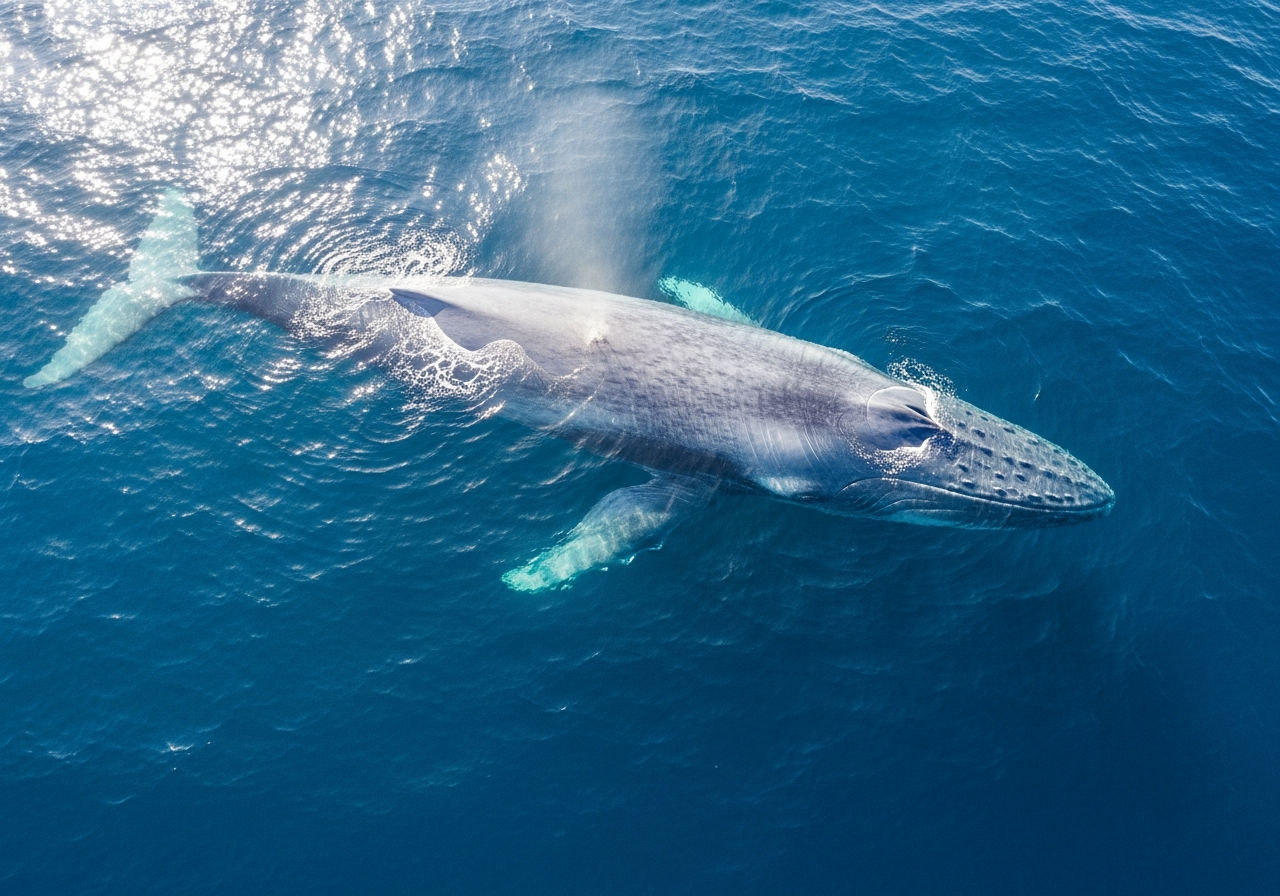
- Blue Whale Same order
Collections
Range & geography
Did you know? Orca facts
- The orca (killer whale) is the largest member of the dolphin family.
- There is no confirmed record of a wild orca killing a human.
- Orcas live in stable matrilineal pods centred on long-lived females.
- Different populations have distinct diets, dialects, and hunting traditions — a form of culture.
- Some orcas hunt cooperatively, even washing seals off ice floes with coordinated waves.
- Female orcas can live into their 80s or beyond and go through menopause, unusual among animals.
- Orcas are found in every ocean, from the tropics to the polar ice edges.
Diet & feeding
Diet is population-specific: 'resident' types may specialise on salmon, 'transient/Bigg's' types on marine mammals such as seals and porpoises, and others on sharks — each with learned, culturally transmitted hunting methods.
Adaptations
- Sophisticated echolocation lets orcas hunt and navigate in dark or murky water. (Ford 2009)
- A thick blubber layer insulates against cold across their global range.
- Powerful tail flukes drive bursts of speed up to ~50 km/h in pursuit of prey.
- Large, convoluted brains support complex social learning and cooperation.
Behaviour & ecology
- Pods are matrilineal, with offspring often staying with their mother for life. (Bigg et al. 1990)
- Distinct ecotypes specialise on fish, marine mammals, or sharks, with matching techniques. (Ford et al. 1998)
- Cooperative tactics include beach-hunting and 'wave-washing' seals off ice.
- Hunting methods and vocal dialects are taught across generations.
Communication
- Each pod uses a distinctive set of calls — a dialect that marks group identity. (Ford 1991)
- Echolocation clicks build a detailed acoustic picture for hunting and navigation.
- Whistles and pulsed calls coordinate close-range social behaviour.
Habitat & range
Orcas are the most widely distributed marine mammals, ranging across every ocean and many seas, from tropical waters to the edges of the Arctic and Antarctic ice, with different populations occupying distinct ecological niches.
Ecological role
As the ocean's apex predator, the orca exerts top-down influence on populations of fish, seals, sea lions, and even large whales, with effects that cascade through marine food webs.
Conservation status of the Orca
The orca (Orcinus orca) is listed as Data Deficient on the IUCN Red List. Data Deficient (DD) means there is not enough information about a species' population or range to assess its extinction risk. Such species may prove to be threatened once more data is gathered, so the category is treated as a research priority rather than a clean bill of health.
Main threats to the orca
- Prey depletion for some ecotypes
- Chemical pollutants accumulating in blubber
- Noise and disturbance from vessels
- Captures and localised hunting historically
Orca (Orcinus orca) was most recently assessed for the IUCN Red List in 2017. View the full IUCN assessment .
Frequently asked questions about the Orca
Is an orca a whale or a dolphin?
The orca is actually the largest member of the dolphin family, even though it is commonly called the killer whale. Like other dolphins, it is a highly social, intelligent marine mammal.
What do orcas eat?
Orcas are carnivores with diets that vary by population. Different groups specialize in fish, seals, sea lions, penguins, sharks, or even other whales, using coordinated group hunting techniques.
Are orcas dangerous to humans?
Despite the name killer whale, there are no confirmed records of wild orcas killing humans. Serious incidents have involved captive orcas, while wild orcas generally show little aggression toward people.
How long do orcas live?
Wild orcas can live 50 to 80 years or more. Females tend to live much longer than males, and some have been documented living well past 80.
How fast can an orca swim?
Orcas can reach speeds of up to about 56 km/h (35 mph) in short bursts, making them one of the fastest marine mammals and formidable pursuit hunters.
What is a group of orcas called?
A group of Orcas is called a pod.
What is a baby orca called?
A baby Orca is called a calf.
Sources & references
This guide is compiled and reviewed against established zoological and conservation references. Key sources for the Orca:
-
IUCN Red List of Threatened Species
Conservation status (Data Deficient) reflects the IUCN Red List category for Orcinus orca, most recently assessed in 2017.
-
iNaturalist — observations & photos
Search citizen-science observations and community IDs for Orcinus orca. Useful for range checks and recent sightings — not a substitute for formal Red List status.
-
GBIF — occurrence data
Global Biodiversity Information Facility species search for Orcinus orca. Explore published occurrence records used in range research.
- Reeves, R. et al. (2017). Orcinus orca. The IUCN Red List of Threatened Species.
Status (Data Deficient) and ecotype notes.
- Ford, J. K. B. (1991). Vocal traditions among resident killer whales. Canadian Journal of Zoology.
Pod-specific dialects.
- Ford, J. K. B. et al. (1998). Dietary specialization in killer whales. Canadian Journal of Zoology.
Ecotype diets.
- Bigg, M. A. et al. (1990). Social organization of resident killer whales. Report of the International Whaling Commission.
Matrilineal pod structure.
-
Global Animal Guide editorial standards
How we research, source, review, and update every guide for accuracy.