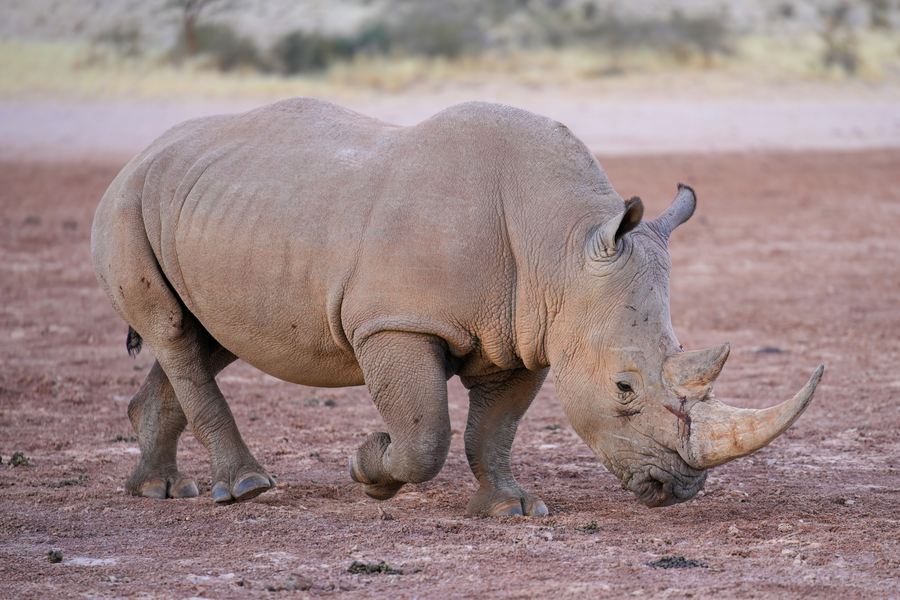
Image sourcing: see credits & licences
The white rhinoceros (Ceratotherium simum) is a mammal of the rhinoceros family, Rhinocerotidae, in the order Perissodactyla.
Quick answer
The white rhinoceros is the largest rhino species, with a broad square lip adapted for grazing short grass. Southern white rhinos recovered from near extinction to over 15,000 through protection, while the northern white rhino is functionally extinct with only two females remaining under guard in Kenya.
Top questions about the White Rhinoceros
Also available in Español (Rinoceronte blanco)
White Rhinoceros facts at a glance
- Weight 2200 kg
- Length 4 m
- Top speed 40 km/h
- Lifespan 45 years
| Scientific name | Ceratotherium simum |
|---|---|
| Diet | Herbivore — short grasses and occasionally browse |
| Habitat | Open savanna grasslands and woodland of southern and eastern Africa |
| Lifespan | 40–50 years in the wild |
| Weight | 1,800–2,500 kg (4,000–5,500 lb) |
| Top speed | Up to 40 km/h (25 mph) |
| Conservation status | Near Threatened (IUCN) |
| Kingdom | Animalia |
|---|---|
| Phylum | Chordata |
| Class | Mammalia |
| Order | Perissodactyla |
| Family | Rhinocerotidae |
| Genus | Ceratotherium |
Where it lives
The white rhinoceros (Ceratotherium simum) is native to Southern white rhinos in South Africa, Namibia, Zimbabwe, and reintroduced areas of Kenya; northern white rhino formerly in DRC, South Sudan, and Uganda. — recorded across Africa in this guide’s range summary.
For occurrence records, see GBIF species search and sources below.
How big is a white rhinoceros?
An adult white rhinoceros measures 4 m long — about 2.3× the height of an average adult person (1.73 m) — and weighs around 2200 kg, about 31× an average adult’s body weight (70 kg).
Length vs an average adult’s height (to scale)
What is a group of white rhinoceroses called?
Group name (collective noun)
A group of White Rhinoceroses is called a crash.
Baby name
A baby White Rhinoceros is called a calf.
Explore more animal collective nouns and baby animal names .
Grassland grazer
White rhinos crop grass with a wide muscular lip, spending half the day feeding. Their head is held low near the ground — unlike browsing black rhinos. Poor eyesight is offset by excellent smell; mud wallows cool the skin and deter parasites.
Southern recovery miracle
Southern white rhinos (Ceratotherium simum simum) fell to roughly 50 animals in the early 1900s in South Africa's KwaZulu-Natal. Protection and translocation rebuilt the population to over 15,000 — one of conservation's greatest recoveries — though poaching pressure continues.
Northern white rhino tragedy
The northern subspecies is functionally extinct: the last male died in 2018, leaving two females in Kenya's Ol Pejeta Conservancy. IVF and stem-cell research aim to prevent total loss, but the wild northern white rhino is gone from its range in Central Africa.
Dig deeper into the White Rhinoceros
- Are White Rhinoceroses Dangerous?
White rhinos can kill if surprised or if you approach a mother. Grazers, not pets. Do not run. Near Threatened, not tame.
- How Long Do White Rhinoceroses Live?
Wild white rhinos often live about 40–50 years; poaching truncates the average. Southern recovered then pressure returned; northern whites are functionally extinct.
- What Do White Rhinoceroses Eat?
White rhinos are square-lipped grazers of short grass — not black-rhino browsers. Ceratotherium simum. Never feed them.
- Where Do White Rhinoceroses Live?
Southern white rhinos live in African short-grass savanna; northern whites have no wild population. Near Threatened, not finished.
- White Rhinoceros: Key Facts
The white rhinoceros is the largest rhino species, with a broad square lip adapted for grazing short grass.
Explore the White Rhinoceros
Close relatives
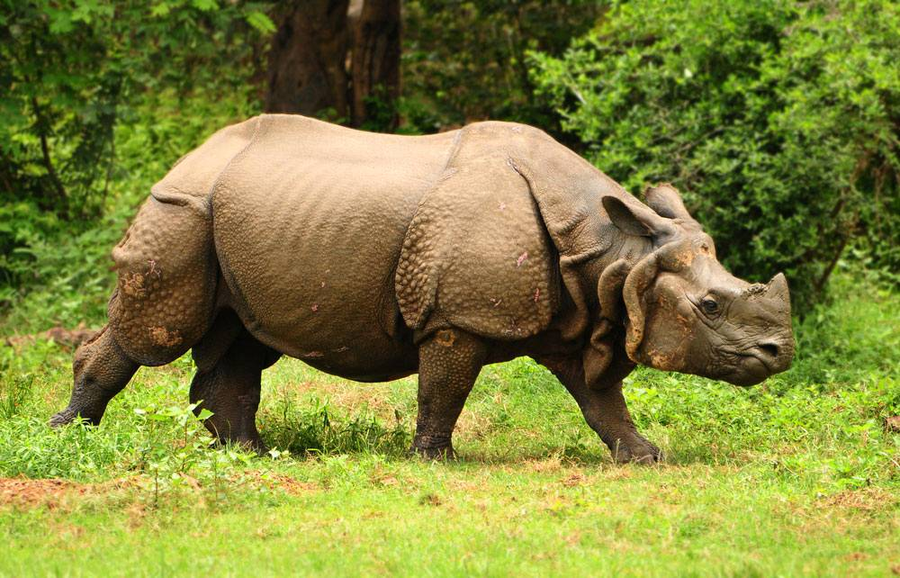
- Indian Rhinoceros Same family
- Rhinoceros Same family
- Black Rhinoceros Same family
- Sumatran Rhinoceros Same family
Range & geography
Did you know? White Rhinoceros facts
- The white rhinoceros is the largest rhino species, with a broad square lip adapted for grazing short grass.
- Probably from the Afrikaans 'wyd' (wide), describing the square lip — mistranslated as 'white'. The hide is grey like other rhinos.
- Over 15,000 southern white rhinos remain; the northern subspecies has only two living females, both under 24-hour guard.
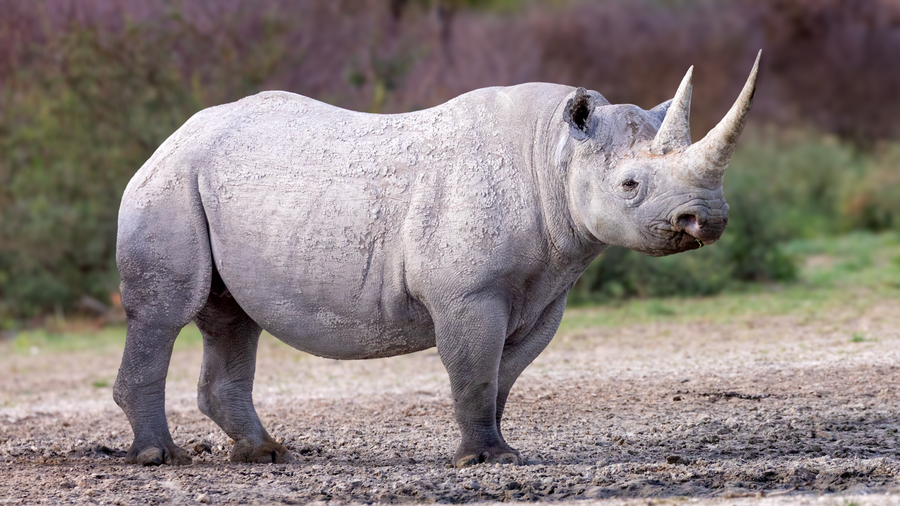
- White rhinos are larger grazers with a square lip and more social habits. Black rhinos are smaller browsers with a hooked lip and more solitary temperament.
- Yes — despite recovery, hundreds are poached annually for horn, especially in South Africa. Anti-poaching costs millions of dollars each year.
- Conservation: Near Threatened (IUCN).
Diet & feeding
White Rhinoceros feeds primarily as a herbivore — short grasses and occasionally browse. White rhinos crop grass with a wide muscular lip, spending half the day feeding. Their head is held low near the ground — unlike browsing black rhinos. Poor eyesight is offset by excellent smell; mud wallows cool the skin and deter
Adaptations
- White rhinos crop grass with a wide muscular lip, spending half the day feeding. Their head is held low near the ground — unlike browsing black rhinos. Poor eyesight is offset by excellent smell; mud wallows cool the skin and deter parasites.
- White rhinos are more social than black rhinos, with cows and subadults sometimes forming loose groups. Territorial bulls mark with dung piles and defend access to females. Calves walk behind the mother for up to three years.
Behaviour & ecology
- White rhinos crop grass with a wide muscular lip, spending half the day feeding. Their head is held low near the ground — unlike browsing black rhinos. Poor eyesight is offset by excellent smell; mud wallows cool the skin and deter parasites.
- White rhinos are more social than black rhinos, with cows and subadults sometimes forming loose groups. Territorial bulls mark with dung piles and defend access to females. Calves walk behind the mother for up to three years.
- Southern white rhinos (Ceratotherium simum simum) fell to roughly 50 animals in the early 1900s in South Africa's KwaZulu-Natal. Protection and translocation rebuilt the population to over 15,000 — one of conservation's greatest recoveries — though poaching pressure continues.
Communication
- White Rhinoceros uses scent, posture, and vocal signals to mark territory and coordinate social behaviour.
- Communication intensity often peaks during breeding seasons and territorial disputes.
Habitat & range
Open savanna grasslands and woodland of southern and eastern Africa
Ecological role
White Rhinoceros shapes vegetation through grazing or browsing and serves as prey for larger predators where ranges overlap.
Conservation status of the White Rhinoceros
The white rhinoceros (Ceratotherium simum) is listed as Near Threatened on the IUCN Red List. Near Threatened (NT) means a species does not yet qualify as threatened but is close to it, or likely to become so in the near future without ongoing conservation. It is a watch-list category just below Vulnerable.
Main threats to the white rhinoceros
- Poaching for horn
- Illegal international horn trade
- Habitat loss
White Rhinoceros (Ceratotherium simum) was most recently assessed for the IUCN Red List in 2020. View the full IUCN assessment .
Frequently asked questions about the White Rhinoceros
Why is it called a white rhino?
Probably from the Afrikaans 'wyd' (wide), describing the square lip — mistranslated as 'white'. The hide is grey like other rhinos.
How many white rhinos are left?
Over 15,000 southern white rhinos remain; the northern subspecies has only two living females, both under 24-hour guard.
White rhino vs black rhino?
White rhinos are larger grazers with a square lip and more social habits. Black rhinos are smaller browsers with a hooked lip and more solitary temperament.
Are white rhinos still poached?
Yes — despite recovery, hundreds are poached annually for horn, especially in South Africa. Anti-poaching costs millions of dollars each year.
Where do white rhinos live?
Southern white rhinos mainly in South Africa, Namibia, Zimbabwe, and Kenya (reintroduced). Northern whites existed in DRC, South Sudan, and Uganda.
What is a group of white rhinoceroses called?
A group of White Rhinoceroses is called a crash.
What is a baby white rhinoceros called?
A baby White Rhinoceros is called a calf.
Sources & references
This guide is compiled and reviewed against established zoological and conservation references. Key sources for the White Rhinoceros:
-
IUCN Red List of Threatened Species
Conservation status (Near Threatened) reflects the IUCN Red List category for Ceratotherium simum, most recently assessed in 2020.
-
iNaturalist — observations & photos
Search citizen-science observations and community IDs for Ceratotherium simum. Useful for range checks and recent sightings — not a substitute for formal Red List status.
-
GBIF — occurrence data
Global Biodiversity Information Facility species search for Ceratotherium simum. Explore published occurrence records used in range research.
- IUCN Red List — Ceratotherium simum.
Conservation status (Near Threatened) and population trends.
- Animal Diversity Web — Ceratotherium simum. University of Michigan Museum of Zoology.
Life history, morphology, and range.
- Wikipedia — White Rhinoceros.
General taxonomy and overview (cross-check primary sources).
-
Global Animal Guide editorial standards
How we research, source, review, and update every guide for accuracy.
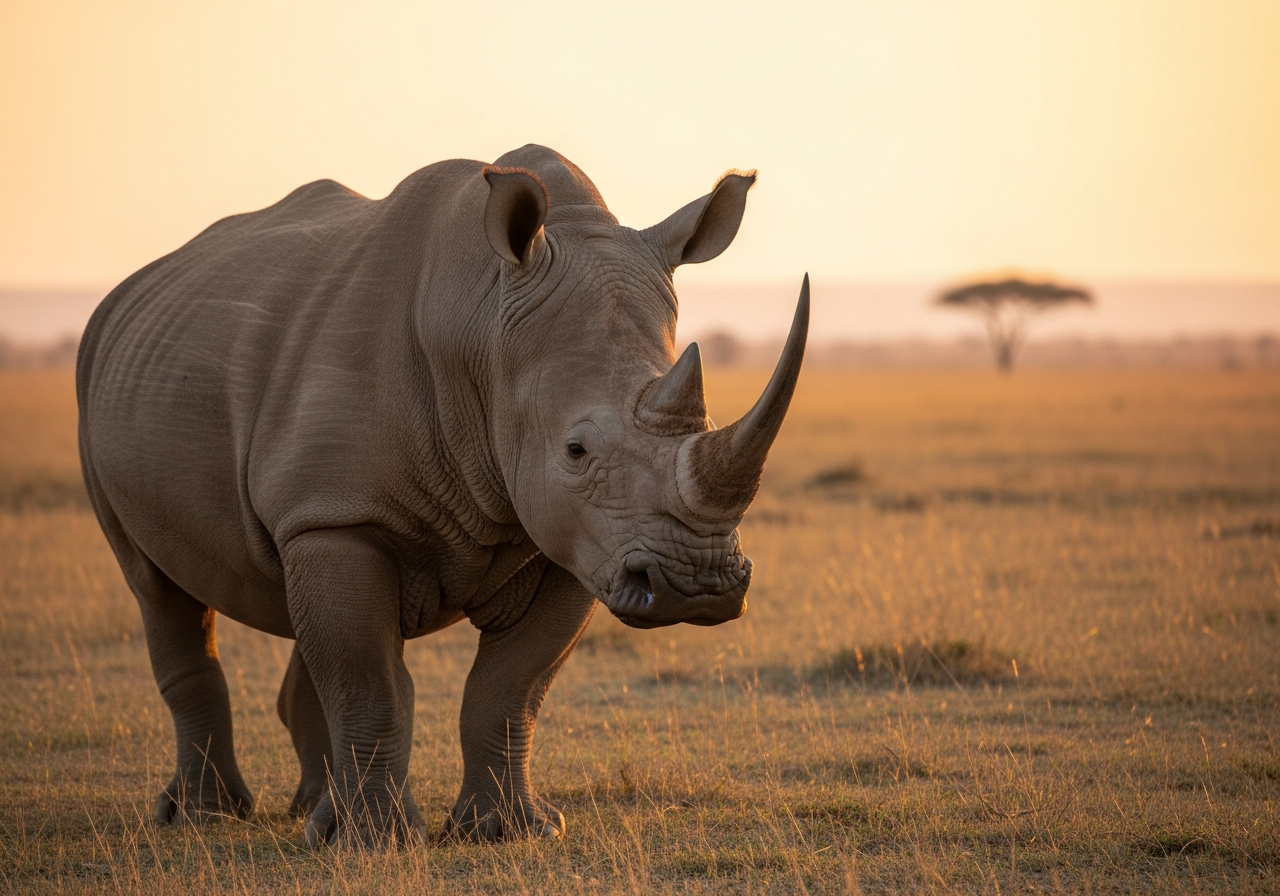
Social groups
White rhinos are more social than black rhinos, with cows and subadults sometimes forming loose groups. Territorial bulls mark with dung piles and defend access to females. Calves walk behind the mother for up to three years.