The grey seal (Halichoerus grypus) is a mammal of the true seal family, Phocidae, in the order Carnivora.
Quick answer
The grey seal (Halichoerus grypus) is a large North Atlantic seal named for its long, horse-like muzzle. It swims after fish, squid, and crustaceans along rocky coasts, islands, and ice edges, and a big bull can weigh up to 230 kg. Powerful swimmers, grey seals reach about 24 km/h in the water and can live 25 to 35 years. The IUCN lists the species as Least Concern.
Top questions about the Grey Seal
Grey Seal facts at a glance
- Weight 230 kg
- Length 2.3 m
- Top speed 24 km/h
- Lifespan 35 years
| Scientific name | Halichoerus grypus |
|---|---|
| Diet | Carnivore — fish, squid, and crustaceans |
| Habitat | North Atlantic coasts, islands, and ice edges |
| Lifespan | 25–35 years in the wild |
| Weight | 100–230 kg (220–510 lb); males larger |
| Top speed | Up to 24 km/h (15 mph) swimming |
| Conservation status | Least Concern (IUCN) |
| Kingdom | Animalia |
|---|---|
| Phylum | Chordata |
| Class | Mammalia |
| Order | Carnivora |
| Family | Phocidae |
| Genus | Halichoerus |
Where it lives
The grey seal (Halichoerus grypus) is native to North Atlantic coasts — Britain, Ireland, Scandinavia, eastern Canada, and New England; half the world population breeds in the UK. — recorded across Europe, North America in this guide’s range summary.
For occurrence records, see GBIF species search and sources below.
How big is a grey seal?
An adult grey seal measures 2.3 m long — about 1.3× the height of an average adult person (1.73 m) — and weighs around 230 kg, about 3.3× an average adult’s body weight (70 kg).
Length vs an average adult’s height (to scale)
What is a group of grey seals called?
Group name (collective noun)
A group of Grey Seals is called a colony.
Baby name
A baby Grey Seal is called a pup.
Explore more animal collective nouns and baby animal names .
Swimming and diving
Grey seals are strong, agile swimmers, driving themselves through the water with their hind flippers at speeds of up to 24 km/h. They routinely dive to depths of tens of metres and can stay submerged for well over ten minutes while hunting on or near the seabed. A thick layer of blubber keeps them warm in cold Atlantic water and stores energy for the breeding season. On land they are far clumsier, hauling out onto rocks and beaches to rest, moult, and breed.
Diet and hunting
As carnivores, grey seals take a wide range of fish, along with squid and crustaceans. Sandeels, cod, and other bottom-dwelling fish feature heavily in the diet, and prey choice shifts with the seasons and what is locally abundant. Sensitive whiskers help them detect the movements of fish in dark or murky water. A large adult may eat several kilograms of food each day to fuel its bulk.
Telling grey seals apart
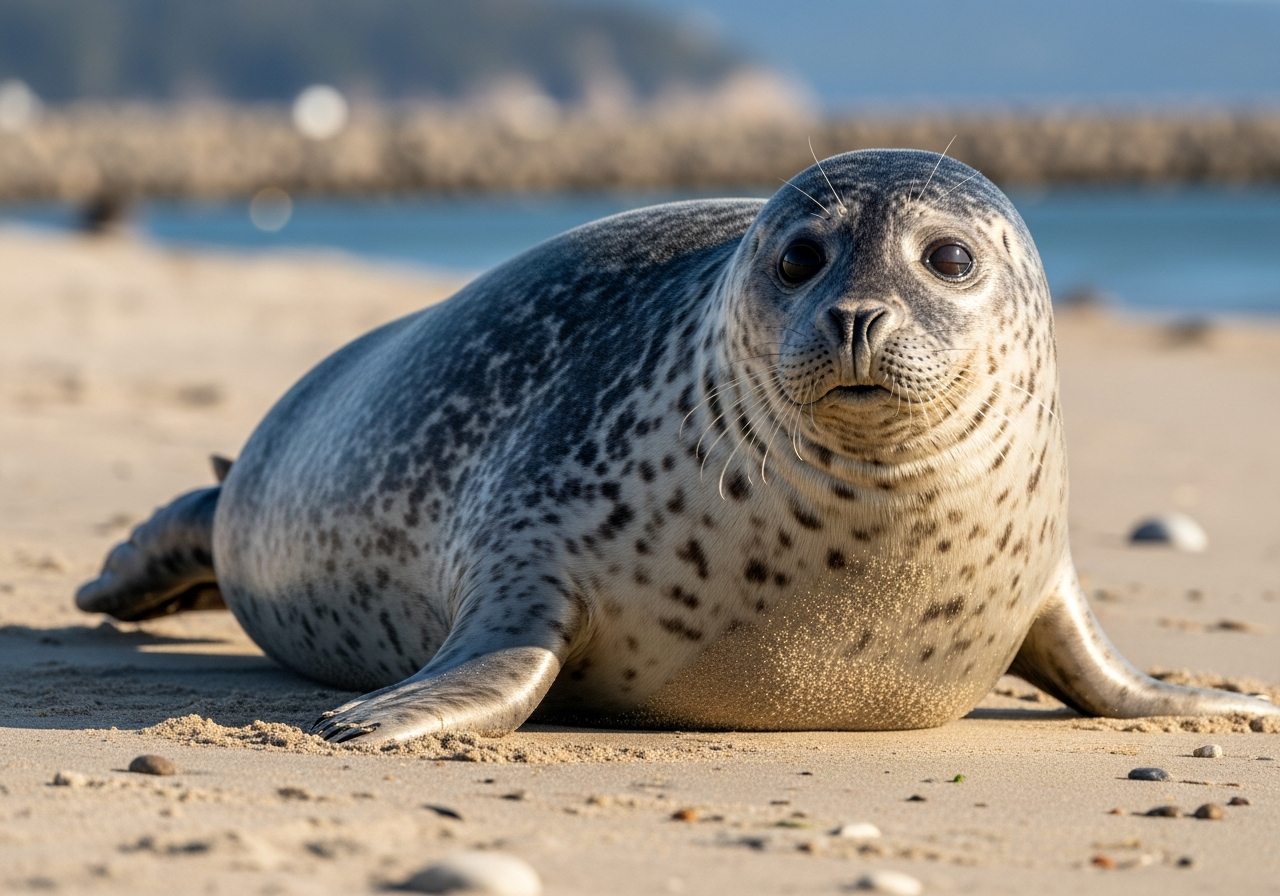
Grey seals are easily confused with the smaller common (harbour) seal, but a few features set them apart. The grey seal has a long, straight, horse-like muzzle with nostrils that sit almost parallel, whereas the common seal has a shorter, dog-like face and V-shaped nostrils. Grey seals are also noticeably bigger, with bulls far larger than cows. Coat patterns are blotchy rather than neatly spotted.
Breeding colonies and pups
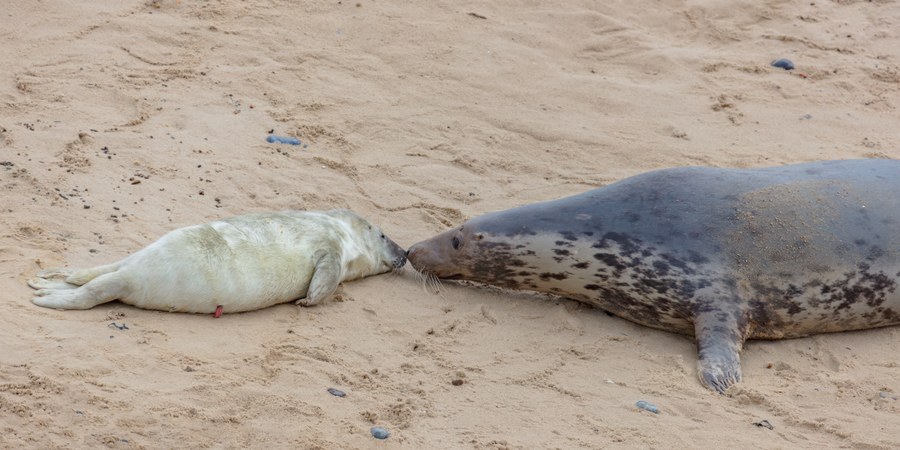
Grey seals gather in large, noisy colonies to breed, with bulls competing to control stretches of beach and the females on them. Each cow gives birth to a single pup with a fluffy white coat, which she nurses on extremely rich milk. The pup piles on weight rapidly over about three weeks, then is weaned abruptly and left to moult its white fur and take to the sea on its own. Adults may live 25 to 35 years, so a colony contains many long-established animals.
Where grey seals live
Grey seals are animals of North Atlantic coasts, islands, and ice edges, on both the European and North American sides of the ocean. The coasts of Britain and Ireland are a global stronghold, holding a large share of the world's grey seals, which makes them a familiar sight to UK sea-watchers. They favour remote rocky shores, sandbanks, and offshore islands where they can haul out undisturbed. Individuals may range widely at sea between these haul-out sites.
Conservation
The grey seal is listed as Least Concern by the IUCN, and numbers in the North Atlantic have generally been stable or increasing. In Britain the species is legally protected, and its populations have grown since the days of heavy hunting. Entanglement in fishing gear, disturbance at breeding beaches, and conflict with fisheries remain the main concerns. Careful monitoring of colonies helps track the health of the wider population.
Dig deeper into the Grey Seal
- Grey Seal: Key Facts
The grey seal is a large Atlantic pinniped with a straight 'Roman' profile, weighing up to 230 kg and living about 35 years.
- How Big Is A Grey Seal?
Grey Seal size and weight: typical 100–230 kg (220–510 lb); males larger, dimorphism, and growth.
- How Long Do Grey Seals Live?
Grey Seal lifespan is typically 25–35 years in the wild. What shortens or extends life, life stages, and status (Least Concern).
- What Do Grey Seals Eat?
What grey seals eat: Carnivore — fish, squid, and crustaceans, foraging style, and seasonal shifts in North Atlantic coasts, islands, and ice edges.
- Where Do Grey Seals Live?
Where grey seals live: North Atlantic coasts, islands, and ice edges, native range cues, and human overlap. Status Least Concern.
Explore the Grey Seal
Compare
Close relatives
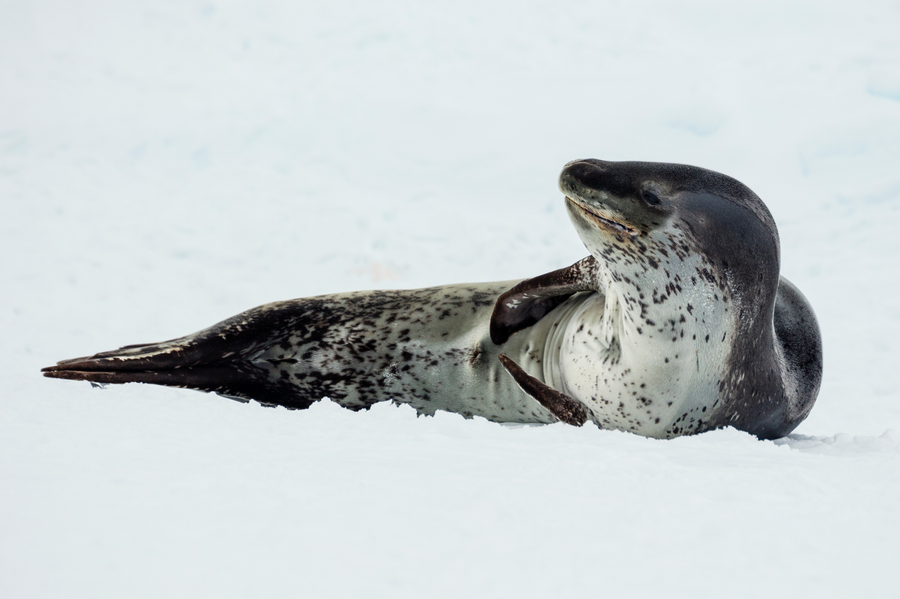
- Leopard Seal Same family
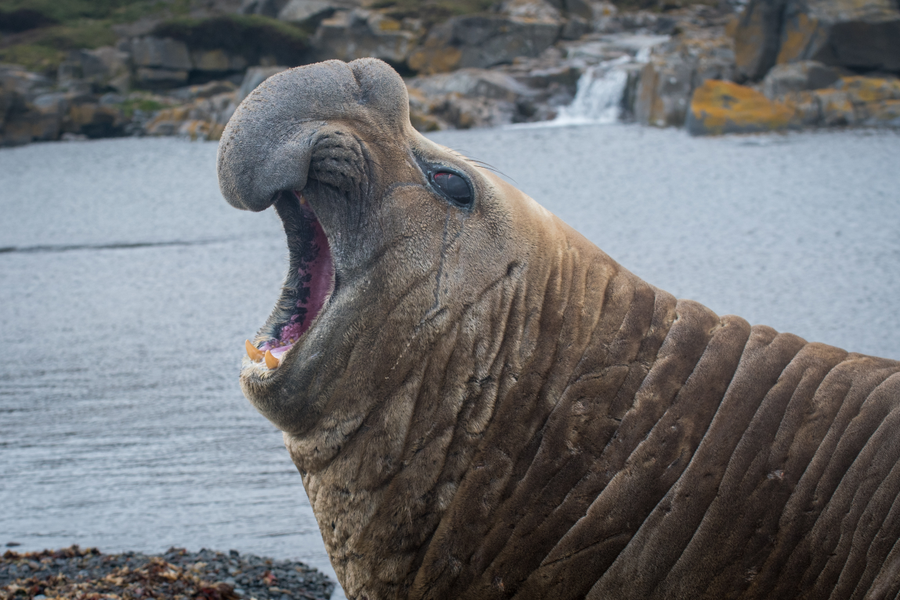
- Northern Elephant Seal Same family
- Harbor Seal Same family
- Lion Same order
Did you know? Grey Seal facts
- Grey seals are large Atlantic pinnipeds with straight profiles often called 'horse-faced'.
- Grey seals are larger with a longer straight nose; harbour seals are smaller and rounder-faced.
- Autumn to winter in the UK — avoid disturbing colonies.
- Conservation: Least Concern.
Diet & feeding
Grey Seal feeds primarily as a fish and squid.
Adaptations
- White-coated pups fast on land while mothers forage at sea.
- Seals follow trawlers and sometimes damage nets — conflict with fishers persists.
Behaviour & ecology
- White-coated pups fast on land while mothers forage at sea.
- Seals follow trawlers and sometimes damage nets — conflict with fishers persists.
Communication
- Grey Seal uses scent, posture, and vocal signals to mark territory and coordinate social behaviour.
- Communication intensity often peaks during breeding seasons and territorial disputes.
Habitat & range
North Atlantic coasts and islands
Ecological role
Grey Seal plays a recognised ecological role in north atlantic coasts and islands.
Conservation status of the Grey Seal
The grey seal (Halichoerus grypus) is listed as Least Concern on the IUCN Red List. Least Concern (LC) is the IUCN's lowest-risk category, assigned to widespread, abundant species that have been evaluated and found not to be threatened. It does not mean a species faces no pressures — only that it is not currently at risk of extinction.
The grey seal (Halichoerus grypus) is assessed on the IUCN Red List. Look up on the IUCN Red List .
Frequently asked questions about the Grey Seal
How fast can a grey seal swim?
Grey seals can swim at up to about 24 km/h, propelling themselves with their hind flippers. They are agile in the water and can dive to considerable depths, but they move slowly and awkwardly on land.
What do grey seals eat?
Grey seals are carnivores that feed on fish, squid, and crustaceans. Sandeels, cod, and other bottom-living fish are important, and their diet shifts with the seasons and local abundance. A large adult eats several kilograms a day.
How can you tell a grey seal from a common seal?
A grey seal has a long, straight, horse-like muzzle with near-parallel nostrils and is noticeably larger. The common (harbour) seal has a shorter, dog-like face with V-shaped nostrils. Grey seals also have blotchy rather than neatly spotted coats.
How big do grey seals get?
Grey seals weigh from around 100 kg up to 230 kg, with bulls much larger than cows. They reach roughly 2.3 m in length, making them one of the largest seals in the North Atlantic.
Where do grey seals live in the UK?
Grey seals breed all around the coasts of Britain and Ireland, favouring remote rocky shores, sandbanks, and offshore islands. The UK holds a large share of the world's grey seals, so they are a common sight for coastal wildlife watchers.
How long do grey seals live?
Grey seals typically live 25 to 35 years in the wild. Females often live longer than the heavily competing bulls, and long-established colonies contain many older, experienced animals.
What is a group of grey seals called?
A group of Grey Seals is called a colony.
What is a baby grey seal called?
A baby Grey Seal is called a pup.
Sources & references
This guide is compiled and reviewed against established zoological and conservation references. Key sources for the Grey Seal:
-
IUCN Red List of Threatened Species
Conservation status (Least Concern) reflects the IUCN Red List category for Halichoerus grypus.
-
iNaturalist — observations & photos
Search citizen-science observations and community IDs for Halichoerus grypus. Useful for range checks and recent sightings — not a substitute for formal Red List status.
-
GBIF — occurrence data
Global Biodiversity Information Facility species search for Halichoerus grypus. Explore published occurrence records used in range research.
- IUCN Red List — Halichoerus grypus.
Conservation status (Least Concern) and population trends.
- Animal Diversity Web — Halichoerus grypus. University of Michigan Museum of Zoology.
Life history, morphology, and range.
-
Global Animal Guide editorial standards
How we research, source, review, and update every guide for accuracy.