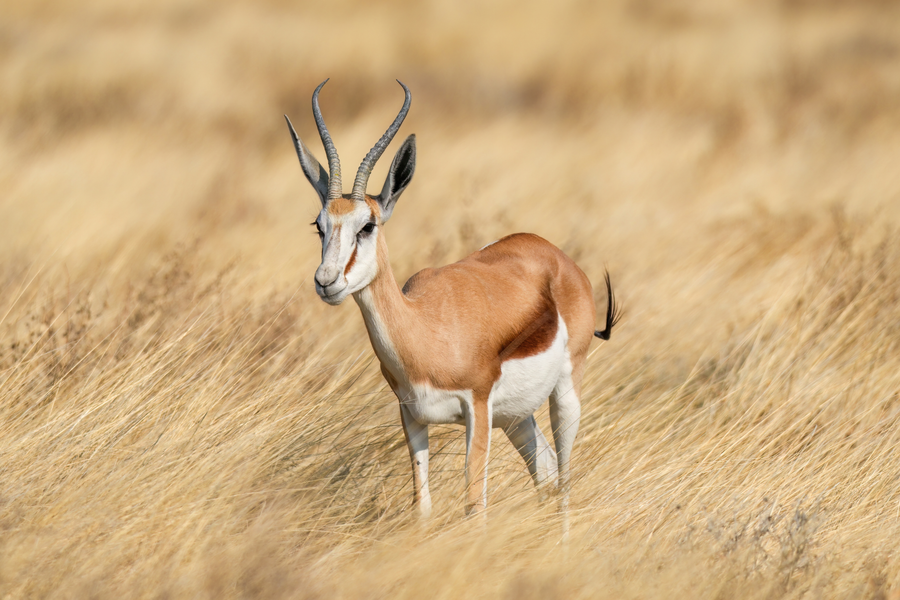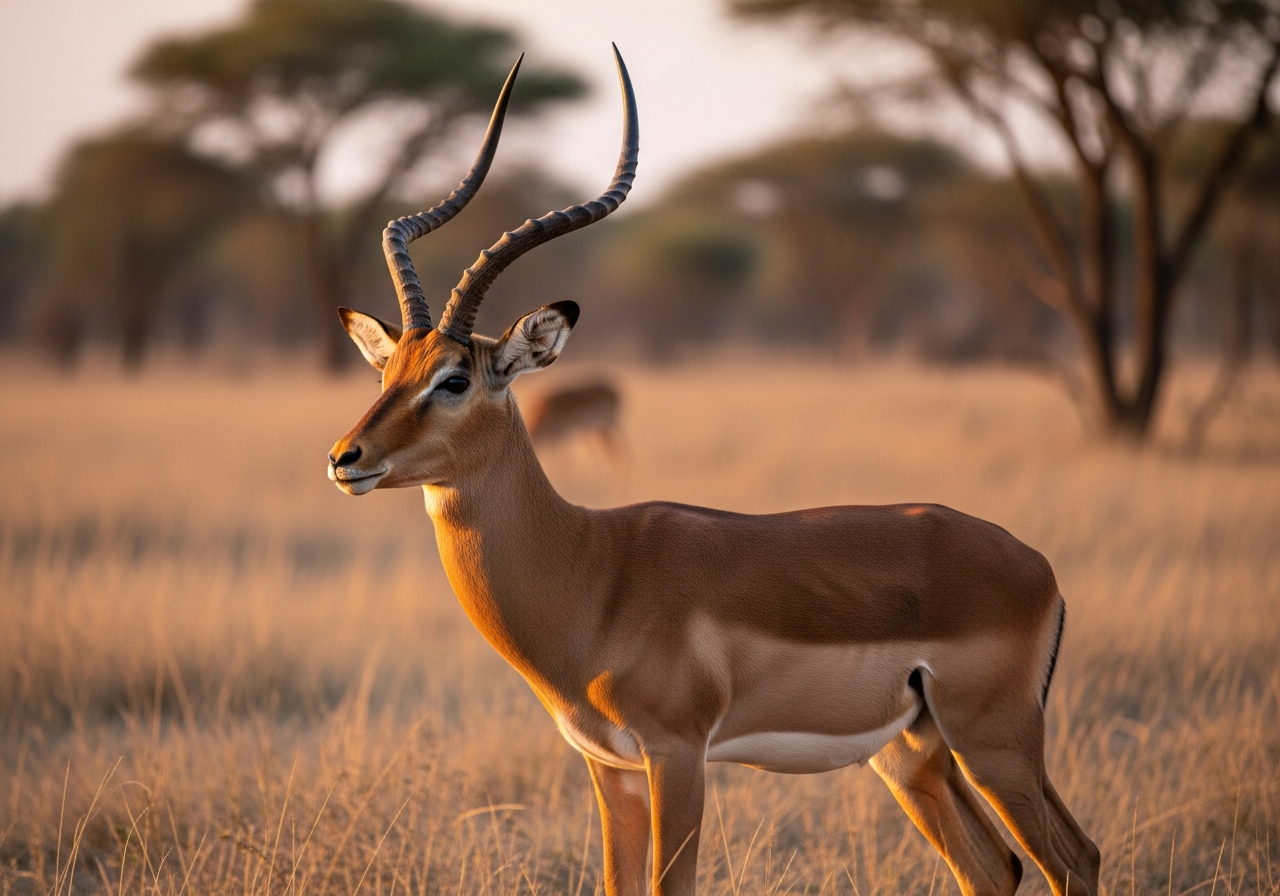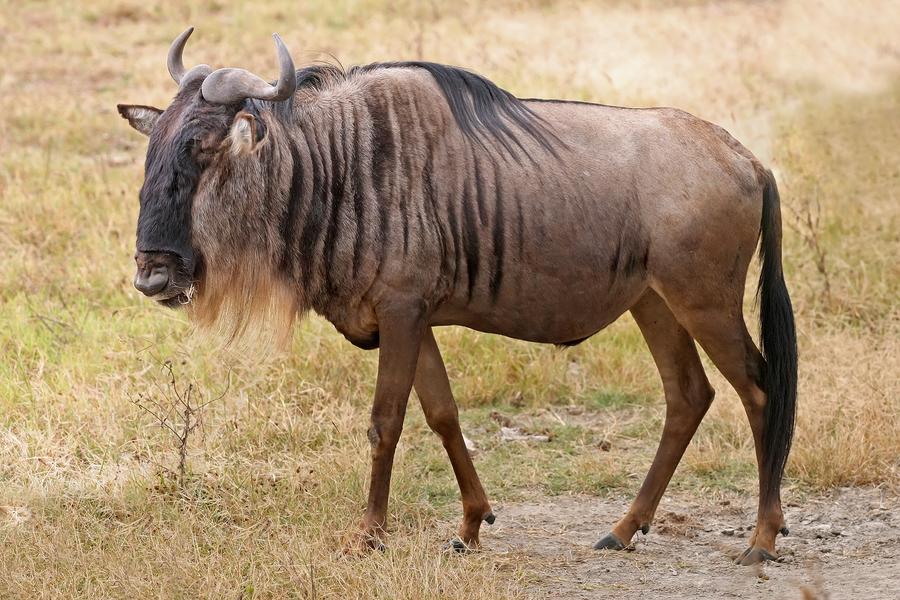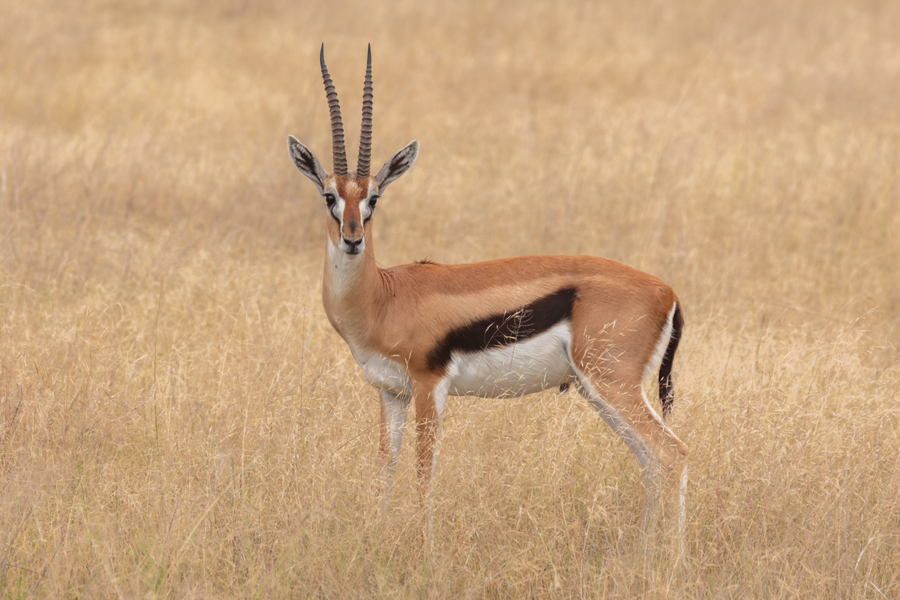
The Thomson's gazelle (Eudorcas thomsonii) is a mammal of the family Bovidae, in the order Artiodactyla.
Quick answer
Thomson's gazelle (Eudorcas thomsonii) is a small, swift antelope of East Africa's grasslands and savannas, instantly known by the bold black stripe along its flanks. It grazes on short grasses and tender shoots, weighs 15 to 30 kg, and can sprint at up to 80 km/h while making sharp turns to escape cheetahs. Wild gazelles live around 10 to 12 years, and the IUCN lists the species as Near Threatened.
Top questions about the Thomson's Gazelle
Thomson's Gazelle facts at a glance
- Weight 25 kg
- Length 1 m
- Top speed 80 km/h
- Lifespan 12 years
| Scientific name | Eudorcas thomsonii |
|---|---|
| Diet | Herbivore — short grasses and tender shoots |
| Habitat | East African grasslands and savannas |
| Lifespan | 10–12 years in the wild |
| Weight | 15–30 kg (33–66 lb); males carry longer horns |
| Top speed | Up to 80 km/h (50 mph); sharp turns evade cheetahs |
| Conservation status | Near Threatened (IUCN) |
| Kingdom | Animalia |
|---|---|
| Phylum | Chordata |
| Class | Mammalia |
| Order | Artiodactyla |
| Family | Bovidae |
| Genus | Eudorcas |
Where it lives
The thomson's gazelle (Eudorcas thomsonii) is native to Thomson's gazelle in Kenya and Tanzania's Serengeti–Mara and adjacent grasslands; related gazelles across East Africa. — recorded across Africa in this guide’s range summary.
For occurrence records, see GBIF species search and sources below.
How big is a thomson's gazelle?
An adult thomson's gazelle measures 1 m long — about 58% of the height of an average adult person (1.73 m) — and weighs around 25 kg, about 36% of an average adult’s body weight (70 kg).
Length vs an average adult’s height (to scale)
What is a group of thomson's gazelles called?
Group name (collective noun)
A group of Thomson's Gazelles is called a herd.
Baby name
A baby Thomson's Gazelle is called a fawn.
Explore more animal collective nouns and baby animal names .
Speed and escaping predators
Thomson's gazelle is built for open-country speed, reaching up to 80 km/h in a flat-out sprint. Because it cannot outrun a cheetah over the first hundred metres, its real defence is agility: it zig-zags and cuts at sharp angles that a heavier predator struggles to follow. This constant threat from cheetahs, lions, wild dogs, and hyenas shapes almost everything about how the gazelle lives and moves. Even at rest, herds stay alert and rarely let a predator approach unnoticed.
Grazing and diet
Thomson's gazelles are grazers that feed mainly on short grasses and fresh green shoots. They follow the growth of new grass after rain and often move onto areas that larger grazers such as zebra and wildebeest have already cropped down. This preference for short, nutritious turf lets them extract enough moisture from their food to go long periods without drinking. When grass is scarce they will also browse on low herbs and foliage.
Range and the great migration
The species is closely tied to the grasslands and savannas of East Africa, above all the Serengeti-Mara ecosystem. Large numbers travel alongside the wildebeest and zebra of the great migration, exploiting the flush of new grass that follows the herds and the rains. Outside migration, gazelles form loosely structured herds that shift across the plains as grazing conditions change. Males often hold small territories that they mark and defend during the breeding season.
Stotting behaviour
One of the gazelle's most striking habits is stotting, sometimes called pronking, in which it springs stiffly into the air with all four legs held straight. This eye-catching leap is thought to signal to a predator that the gazelle is fit, alert, and not worth chasing. It may also warn the rest of the herd that danger is near. A cheetah that sees strong, energetic stotting will often break off before a chase even begins.
Reproduction and young
Females can breed year-round, though births often peak with the rains when grazing is richest. After a gestation of roughly five to six months a single fawn is born and hidden in tall grass, lying motionless while its mother grazes nearby and returns to nurse. This hiding strategy keeps the vulnerable newborn out of sight of predators during its first weeks. Once strong enough, the fawn joins the herd and must quickly learn to run with the group.
Why it is Near Threatened
Although still numerous, Thomson's gazelle is listed as Near Threatened by the IUCN because its numbers have been falling. Expanding farmland, fences, and settlements break up the open plains it depends on and cut off migration routes. Competition with livestock for grazing and localised hunting add further pressure. Well-managed reserves in the Serengeti and Maasai Mara remain vital strongholds for the species.
Dig deeper into the Thomson's Gazelle
- How Fast Is A Thomson's Gazelle?
Thomson's Gazelle top speed is up to about 80 km/h (50 mph); sharp turns evade cheetahs. Sprint vs endurance and what limits pace.
- How Fast Is A Thomson's Gazelle?
Thomson's Gazelle top speed is up to about 80 km/h (50 mph); sharp turns evade cheetahs. Sprint vs endurance and what limits pace.
- How Long Do Thomson's Gazelles Live?
Thomson's Gazelle lifespan is typically 10–12 years in the wild. What shortens or extends life, life stages, and status (Near Threatened).
- What Do Thomson's Gazelles Eat?
What Thomson's gazelles eat: Herbivore — short grasses and tender shoots, foraging style, and seasonal shifts in East African grasslands and savannas.
- Where Do Thomson's Gazelles Live?
Where Thomson's gazelles live: East African grasslands and savannas, native range cues, and human overlap. Status Near Threatened.
Explore the Thomson's Gazelle
Close relatives
- Cow Same family
- Wildebeest Same family
- Domestic Goat Same family
- Saiga Antelope Same family
Range & geography
Did you know? Thomson's Gazelle facts
- Thomson's gazelles are small, fast antelope with a distinctive black side stripe.
- Gazelles are a group within antelopes — slender, fast, and often with side stripes.
- About 10–12 years in the wild.
- Conservation: Near Threatened.
Diet & feeding
Thomson's Gazelle feeds primarily as a short grasses.
Adaptations
- Gazelles use sudden turns and leaps to evade cheetahs at close range.
- Numbers have declined with habitat conversion and poaching.
Behaviour & ecology
- Gazelles use sudden turns and leaps to evade cheetahs at close range.
- Numbers have declined with habitat conversion and poaching.
Communication
- Thomson's Gazelle uses scent, posture, and vocal signals to mark territory and coordinate social behaviour.
- Communication intensity often peaks during breeding seasons and territorial disputes.
Habitat & range
East African grasslands
Ecological role
Thomson's Gazelle plays a recognised ecological role in east african grasslands.
Conservation status of the Thomson's Gazelle
The thomson's gazelle (Eudorcas thomsonii) is listed as Near Threatened on the IUCN Red List. Near Threatened (NT) means a species does not yet qualify as threatened but is close to it, or likely to become so in the near future without ongoing conservation. It is a watch-list category just below Vulnerable.
The thomson's gazelle (Eudorcas thomsonii) is assessed on the IUCN Red List. Look up on the IUCN Red List .
Frequently asked questions about the Thomson's Gazelle
How fast can a Thomson's gazelle run?
A Thomson's gazelle can reach up to 80 km/h in a sprint. Just as important as raw speed is its agility: it makes sharp, sudden turns that help it shake off faster predators such as cheetahs.
What do Thomson's gazelles eat?
They are herbivores that graze mainly on short grasses and tender green shoots. They favour the fresh regrowth that follows rain and grazing by larger animals, and will browse on low herbs when grass is scarce.
Why do gazelles jump straight up in the air?
This stiff-legged leap is called stotting or pronking. It signals to a predator that the gazelle is healthy and hard to catch, and can warn the rest of the herd of danger. Predators often give up when they see strong stotting.
How big is a Thomson's gazelle?
Adults weigh between 15 and 30 kg and stand only about knee-high to a person, roughly 1 m in body length. Males are similar in size to females but carry longer, more strongly ringed horns.
Where do Thomson's gazelles live?
They live on the grasslands and savannas of East Africa, especially the Serengeti-Mara ecosystem. Many move with the great migration of wildebeest and zebra, following fresh grass across the plains.
Are Thomson's gazelles endangered?
They are listed as Near Threatened by the IUCN. They remain common in protected areas, but numbers are declining as farmland, fences, and livestock fragment the open plains and block their migration routes.
What is a group of thomson's gazelles called?
A group of Thomson's Gazelles is called a herd.
What is a baby thomson's gazelle called?
A baby Thomson's Gazelle is called a fawn.
Sources & references
This guide is compiled and reviewed against established zoological and conservation references. Key sources for the Thomson's Gazelle:
-
IUCN Red List of Threatened Species
Conservation status (Near Threatened) reflects the IUCN Red List category for Eudorcas thomsonii.
-
iNaturalist — observations & photos
Search citizen-science observations and community IDs for Eudorcas thomsonii. Useful for range checks and recent sightings — not a substitute for formal Red List status.
-
GBIF — occurrence data
Global Biodiversity Information Facility species search for Eudorcas thomsonii. Explore published occurrence records used in range research.
- IUCN Red List — Eudorcas thomsonii.
Conservation status (Near Threatened) and population trends.
- Animal Diversity Web — Eudorcas thomsonii. University of Michigan Museum of Zoology.
Life history, morphology, and range.
-
Global Animal Guide editorial standards
How we research, source, review, and update every guide for accuracy.