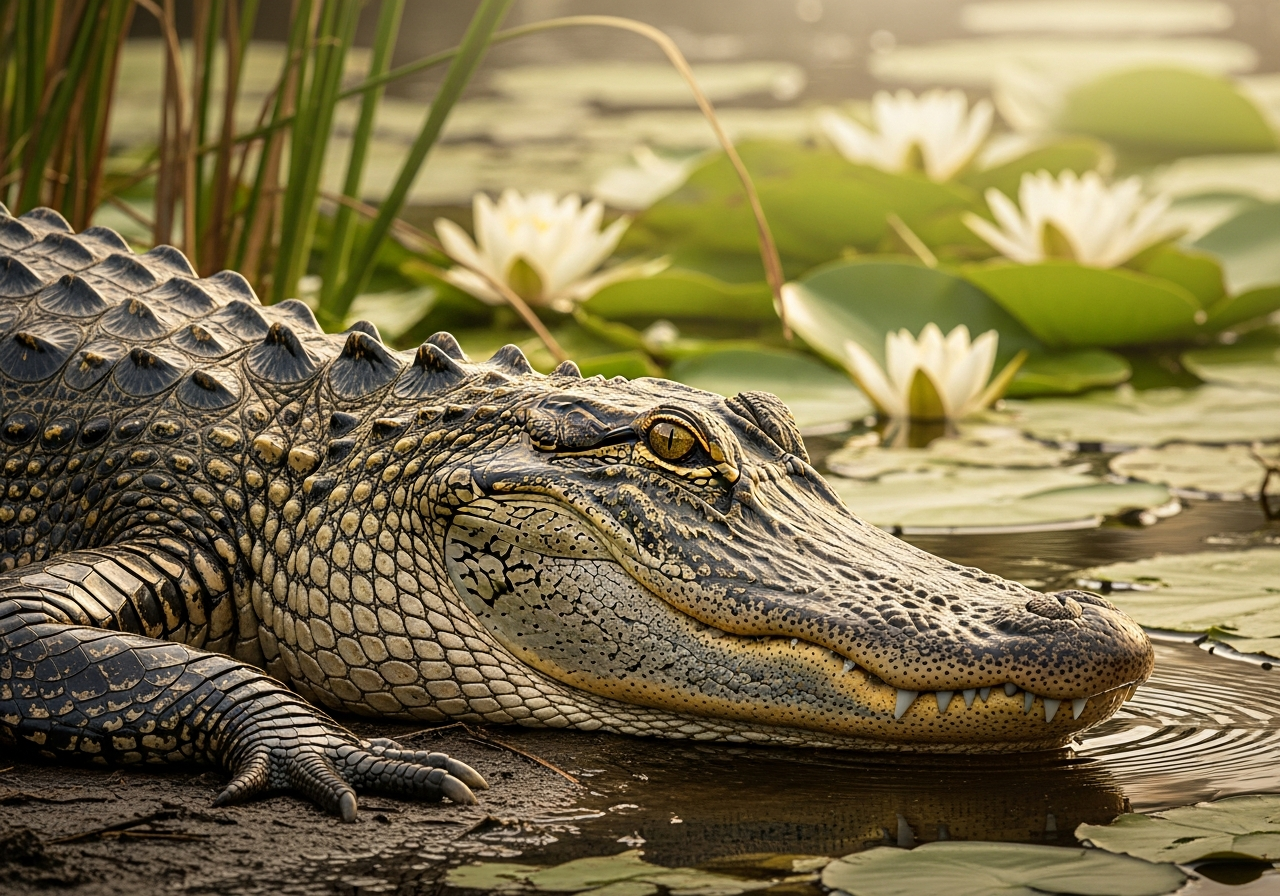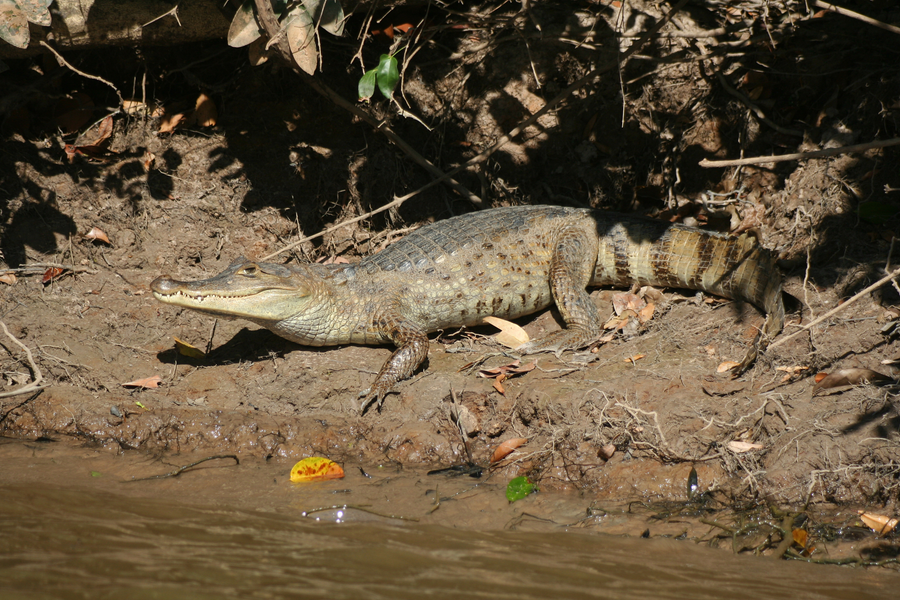
The spectacled caiman (Caiman crocodilus) is a reptile of the family Alligatoridae, in the order Crocodilia.
Quick answer
Spectacled caimans are medium-sized crocodilians named for a bony ridge between the eyes resembling spectacles. They inhabit wetlands from Central America to northern Argentina, weigh up to 40 kg (88 lb), and are the most widespread crocodilian in the Americas.
Top questions about the Spectacled Caiman
Spectacled Caiman facts at a glance
- Weight 40 kg
- Length 2 m
- Top speed 30 km/h
- Lifespan 40 years
| Scientific name | Caiman crocodilus |
|---|---|
| Diet | Fish, birds, mammals, and amphibians |
| Habitat | Freshwater wetlands, rivers, and lakes of Central and South America |
| Lifespan | Up to 40 years in the wild |
| Weight | 7–40 kg (15–88 lb); larger in captivity |
| Top speed | Up to 30 km/h (19 mph) in short bursts on land |
| Conservation status | Least Concern (IUCN) |
| Kingdom | Animalia |
|---|---|
| Phylum | Chordata |
| Class | Reptilia |
| Order | Crocodilia |
| Family | Alligatoridae |
| Genus | Caiman |
Where it lives
The spectacled caiman (Caiman crocodilus) is native to Freshwater wetlands from Central America through the Amazon basin to northern Argentina and Trinidad. — recorded across South America, North America in this guide’s range summary.
For occurrence records, see GBIF species search and sources below.
How big is a spectacled caiman?
An adult spectacled caiman measures 2 m long — about 1.2× the height of an average adult person (1.73 m) — and weighs around 40 kg, about 57% of an average adult’s body weight (70 kg).
Length vs an average adult’s height (to scale)
What is a group of spectacled caimans called?
Group name (collective noun)
A group of Spectacled Caimans is called a bask.
Baby name
A baby Spectacled Caiman is called a hatchling.
Explore more animal collective nouns and baby animal names .
Adaptable survivor
Spectacled caimans tolerate polluted and man-made waterways better than many reptiles, which partly explains their spread. They bask by day and hunt fish and invertebrates at night.
Parental care
Females build mound nests and guard eggs from predators. Hatchlings call from inside eggs; the mother opens the nest and gently carries young to water in her jaws.
Spectacle ridge
The bony bridge between the eyes distinguishes caimans from alligators at a glance. Juveniles have more prominent banding; adults darken with age.
Range and management
Listed Least Concern with large populations across the Amazon and Orinoco basins. Sustainable ranching programs in some countries reduce pressure on wild harvest, though habitat loss remains a local threat.
Explore the Spectacled Caiman
Close relatives
- American Alligator Same family
- Saltwater Crocodile Same order
- Nile Crocodile Same order
- Gharial Same order
Conservation status of the Spectacled Caiman
The spectacled caiman (Caiman crocodilus) is listed as Least Concern on the IUCN Red List. Least Concern (LC) is the IUCN's lowest-risk category, assigned to widespread, abundant species that have been evaluated and found not to be threatened. It does not mean a species faces no pressures — only that it is not currently at risk of extinction.
The spectacled caiman (Caiman crocodilus) is assessed on the IUCN Red List. Look up on the IUCN Red List .
Frequently asked questions about the Spectacled Caiman
Caiman vs alligator — what's the difference?
Caimans are generally smaller with a bony 'spectacle' ridge between the eyes. Alligators lack that ridge and live mainly in the southeastern United States and China.
Are caimans dangerous?
They can bite if provoked or if people approach nests. Respect distance near water in caiman country.
Where do spectacled caimans live?
Freshwater habitats from Costa Rica and Panama through the Amazon to northern Argentina and Trinidad.
What do caimans eat?
Fish, crabs, snails, birds, and small mammals — diet broadens as they grow.
How big do spectacled caimans get?
Most adults reach 1.5–2.5 m (5–8 ft) and weigh up to about 40 kg in the wild.
What is a group of spectacled caimans called?
A group of Spectacled Caimans is called a bask.
What is a baby spectacled caiman called?
A baby Spectacled Caiman is called a hatchling.
Sources & references
This guide is compiled and reviewed against established zoological and conservation references. Key sources for the Spectacled Caiman:
-
IUCN Red List of Threatened Species
Conservation status (Least Concern) reflects the IUCN Red List category for Caiman crocodilus.
-
iNaturalist — observations & photos
Search citizen-science observations and community IDs for Caiman crocodilus. Useful for range checks and recent sightings — not a substitute for formal Red List status.
-
GBIF — occurrence data
Global Biodiversity Information Facility species search for Caiman crocodilus. Explore published occurrence records used in range research.
-
Global Animal Guide editorial standards
How we research, source, review, and update every guide for accuracy.