Image sourcing: see credits & licences
The wildebeest (Connochaetes taurinus) is a mammal of the family Bovidae, in the order Artiodactyla.
Quick answer
The wildebeest, or blue wildebeest, is a large grazing antelope of the savannas and grasslands of East and southern Africa. Also called the gnu, it weighs 120 to 290 kg and can gallop at up to 80 km/h (50 mph) in short bursts. Wildebeest are famous for the annual Serengeti migration, live 15 to 20 years, and are listed as Least Concern.
Top questions about the Wildebeest
Also available in Español (Ñu)
Wildebeest facts at a glance
- Weight 250 kg
- Length 2.3 m
- Top speed 80 km/h
- Lifespan 20 years
| Scientific name | Connochaetes taurinus |
|---|---|
| Diet | Herbivore — short grasses and fresh shoots |
| Habitat | Savannas and grasslands of East and southern Africa |
| Lifespan | 15–20 years in the wild |
| Weight | 120–290 kg (260–640 lb); bulls heavier than cows |
| Top speed | Up to 80 km/h (50 mph) in short bursts |
| Conservation status | Least Concern (IUCN) |
| Kingdom | Animalia |
|---|---|
| Phylum | Chordata |
| Class | Mammalia |
| Order | Artiodactyla |
| Family | Bovidae |
| Genus | Connochaetes |
Where it lives
The wildebeest (Connochaetes taurinus) is native to Blue wildebeest across East and southern Africa from Kenya and Tanzania to Botswana and South Africa; black wildebeest endemic to southern Africa. — recorded across Africa in this guide’s range summary.
For occurrence records, see GBIF species search and sources below.
How big is a wildebeest?
An adult wildebeest measures 2.3 m long — about 1.3× the height of an average adult person (1.73 m) — and weighs around 250 kg, about 3.6× an average adult’s body weight (70 kg).
Length vs an average adult’s height (to scale)
What is a group of wildebeests called?
Group name (collective noun)
A group of Wildebeests is called a herd.
Baby name
A baby Wildebeest is called a calf.
Explore more animal collective nouns and baby animal names .
The great migration
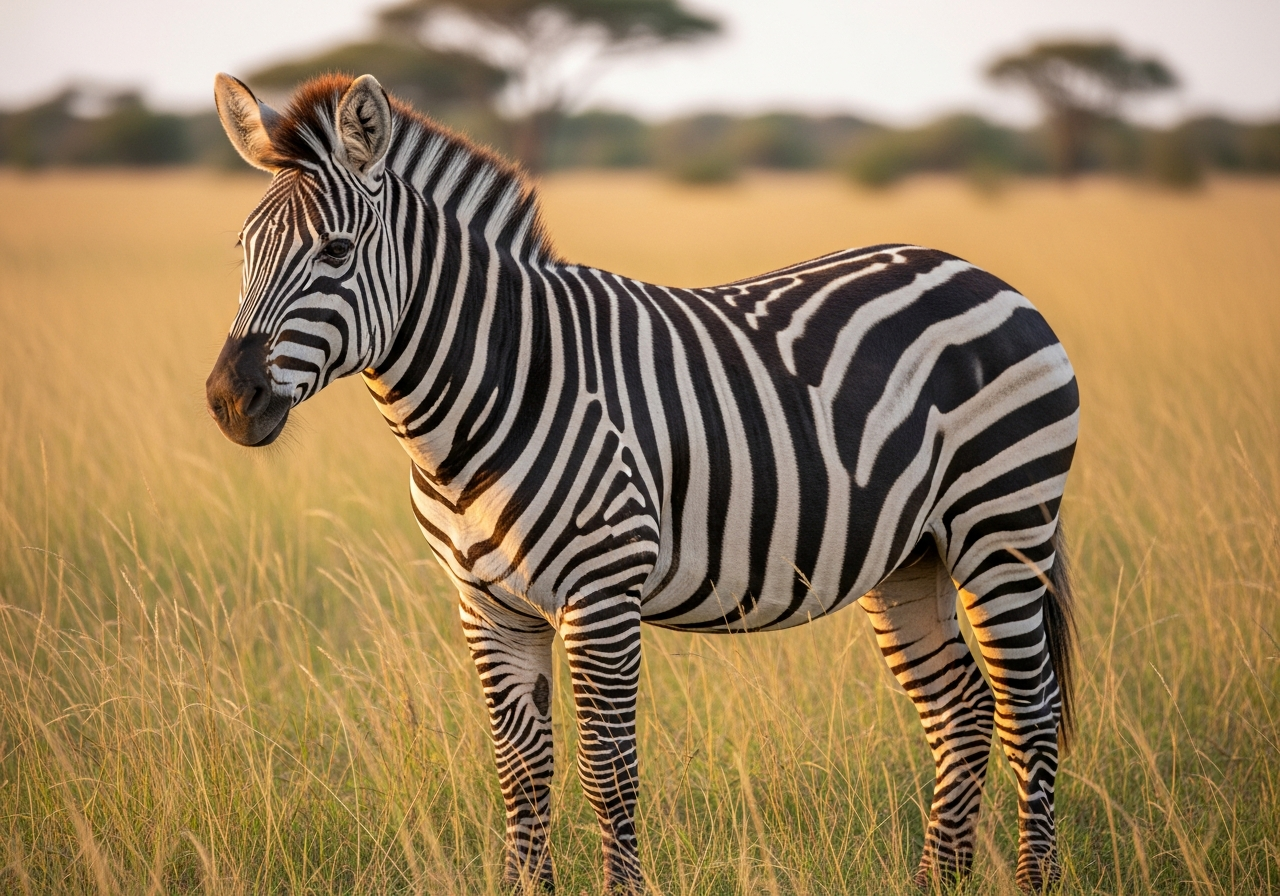
Wildebeest are best known for one of the largest overland migrations on Earth, in which more than a million animals travel a roughly circular route between Tanzania's Serengeti and Kenya's Maasai Mara. The herds follow seasonal rains in search of fresh grass, covering hundreds of kilometres each year. River crossings, especially of the crocodile-filled Mara, are the most dangerous stage of the journey. Zebra and other grazers often travel alongside them, forming vast mixed herds.
Grazing and diet
Wildebeest are specialised grazers that feed almost entirely on short grasses and fresh green shoots. Their broad muzzles and wide rows of teeth are suited to cropping grass close to the ground, and they prefer swards kept short by other herbivores. Because they need to drink regularly, their movements are tightly tied to water and to the flush of new growth after rain. A herd can transform a landscape as it moves through, and its grazing helps maintain the open grasslands it depends on.
Appearance and build
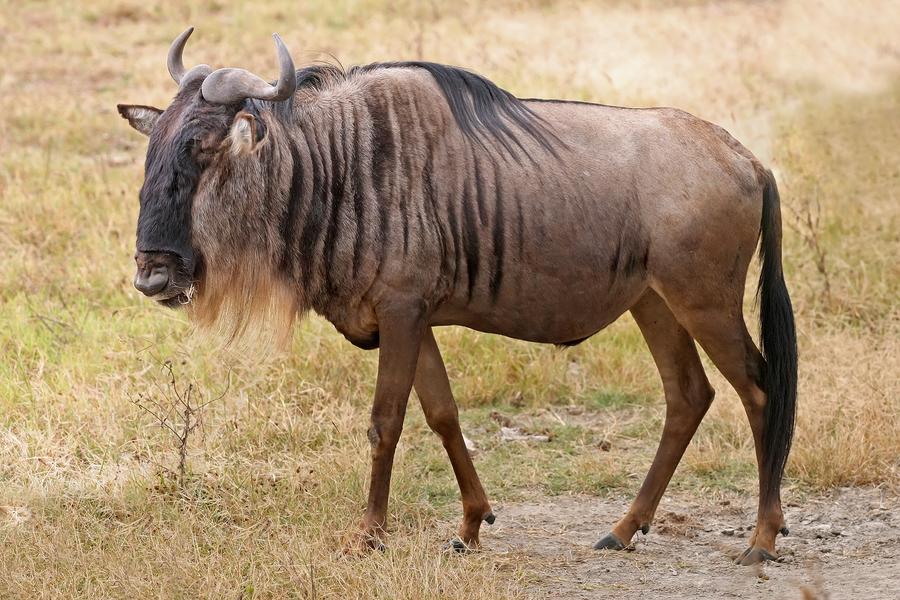
The blue wildebeest has a heavy, front-loaded body with a deep chest, sloping back, and slender legs built for endurance running. Adults stand around 1.2 to 1.4 metres at the shoulder, reach about 2.3 metres in body length, and weigh between 120 and 290 kg, with bulls noticeably heavier than cows. Both sexes carry curved horns and a dark, silvery-grey coat marked with faint vertical stripes on the shoulders. A shaggy mane and beard give the animal its distinctive, slightly unkempt profile.
Herd life and behaviour
Wildebeest are intensely social and gather in herds that can swell into the tens of thousands during migration. Bulls establish and defend temporary territories, grunting and sparring to hold ground and attract cows during the rut. Outside the breeding season the herds are more loosely organised, relying on sheer numbers for safety from lions, hyenas, and wild dogs. Their constant lowing and grunting make a moving herd audible long before it comes into view.
Breeding and calves
Most wildebeest calves are born within the same few weeks at the start of the rainy season, a burst of synchronised births that swamps predators with more young than they can take. A calf can stand and run within minutes of birth, an essential head start in open country. Cows give birth to a single calf after a gestation of around eight and a half months, and the young keep close to their mothers within the herd. In the wild wildebeest typically live 15 to 20 years.
Predators and conservation
Wildebeest are a keystone prey animal for the big predators of the African plains, and lions, spotted hyenas, cheetahs, and crocodiles all rely heavily on them. The species is listed as Least Concern by the IUCN, with the migratory Serengeti population remaining strong. Fences, roads, and expanding farmland are the main threats, because they can cut across the traditional routes the herds must follow. Where migration corridors stay open, wildebeest numbers have proven remarkably resilient.
Dig deeper into the Wildebeest
- How Fast Is A Wildebeest?
Wildebeest top speed is up to about 80 km/h (50 mph) in short bursts. Sprint vs endurance and what limits pace.
- How Long Do Wildebeests Live?
Wildebeest lifespan is typically 15–20 years in the wild. What shortens or extends life, life stages, and status (Least Concern).
- What Do Wildebeests Eat?
What wildebeests eat: Herbivore — short grasses and fresh shoots, foraging style, and seasonal shifts in Savannas and grasslands of East and southern Africa.
- Where Do Wildebeests Live?
Where wildebeests live: Savannas and grasslands of East and southern Africa, native range cues, and human overlap. Status Least Concern.
- Wildebeest: Key Facts
The blue wildebeest is a large African antelope famous for mass migrations across East Africa, following seasonal rains to fresh grass.
Explore the Wildebeest
Compare
Close relatives
- Cow Same family
- Domestic Goat Same family
- Saiga Antelope Same family
- Water Buffalo Same family
Range & geography
Did you know? Wildebeest facts
- Blue wildebeest are large antelope famous for mass migrations across East Africa, following rains to fresh grass.
- Gnu — the name comes from Dutch settlers describing its snorting call.
- Up to 80 km/h in short bursts when fleeing predators.
- Conservation: Least Concern.
Diet & feeding
Wildebeest feeds primarily as a grasses.
Adaptations
- Over a million wildebeest circle the Serengeti–Mara ecosystem annually, crossing crocodile-filled rivers.
- Most calves are born within a few weeks, overwhelming predators with numbers.
Behaviour & ecology
- Over a million wildebeest circle the Serengeti–Mara ecosystem annually, crossing crocodile-filled rivers.
- Most calves are born within a few weeks, overwhelming predators with numbers.
Communication
- Wildebeest uses scent, posture, and vocal signals to mark territory and coordinate social behaviour.
- Communication intensity often peaks during breeding seasons and territorial disputes.
Habitat & range
East and southern African savannas
Ecological role
Wildebeest plays a recognised ecological role in east and southern african savannas.
Conservation status of the Wildebeest
The wildebeest (Connochaetes taurinus) is listed as Least Concern on the IUCN Red List. Least Concern (LC) is the IUCN's lowest-risk category, assigned to widespread, abundant species that have been evaluated and found not to be threatened. It does not mean a species faces no pressures — only that it is not currently at risk of extinction.
The wildebeest (Connochaetes taurinus) is assessed on the IUCN Red List. Look up on the IUCN Red List .
Frequently asked questions about the Wildebeest
What is a wildebeest?
A wildebeest is a large African antelope, also called a gnu, that grazes the savannas and grasslands of East and southern Africa. Despite its ox-like head and shaggy mane, it is a true antelope and one of the most numerous large mammals on the continent.
How fast can a wildebeest run?
A wildebeest can reach up to 80 km/h (50 mph) in short bursts. Combined with excellent stamina, this speed helps herds outrun or outlast predators such as lions and hyenas over open ground.
Why do wildebeest migrate?
Wildebeest migrate to follow seasonal rains and the fresh grass that springs up after them. This drives the famous annual loop between the Serengeti and the Maasai Mara, with more than a million animals moving in search of grazing and water.
How much does a wildebeest weigh?
Adult wildebeest weigh between 120 and 290 kg (260 to 640 lb), with bulls heavier than cows. They stand a little over a metre at the shoulder and measure about 2.3 metres in body length.
What is the difference between a wildebeest and a gnu?
There is no difference; "gnu" and "wildebeest" are two names for the same animal. "Wildebeest" comes from Afrikaans meaning "wild beast", while "gnu" imitates the animal's grunting call.
Are wildebeest endangered?
No, wildebeest are listed as Least Concern by the IUCN and remain abundant across their range. The main risks come from fences, roads, and farmland that block migration routes, rather than from any overall population decline.
What is a group of wildebeests called?
A group of Wildebeests is called a herd.
What is a baby wildebeest called?
A baby Wildebeest is called a calf.
Sources & references
This guide is compiled and reviewed against established zoological and conservation references. Key sources for the Wildebeest:
-
IUCN Red List of Threatened Species
Conservation status (Least Concern) reflects the IUCN Red List category for Connochaetes taurinus.
-
iNaturalist — observations & photos
Search citizen-science observations and community IDs for Connochaetes taurinus. Useful for range checks and recent sightings — not a substitute for formal Red List status.
-
GBIF — occurrence data
Global Biodiversity Information Facility species search for Connochaetes taurinus. Explore published occurrence records used in range research.
- IUCN Red List — Connochaetes taurinus.
Conservation status (Least Concern) and population trends.
- Animal Diversity Web — Connochaetes taurinus. University of Michigan Museum of Zoology.
Life history, morphology, and range.
-
Global Animal Guide editorial standards
How we research, source, review, and update every guide for accuracy.