Image sourcing: see credits & licences
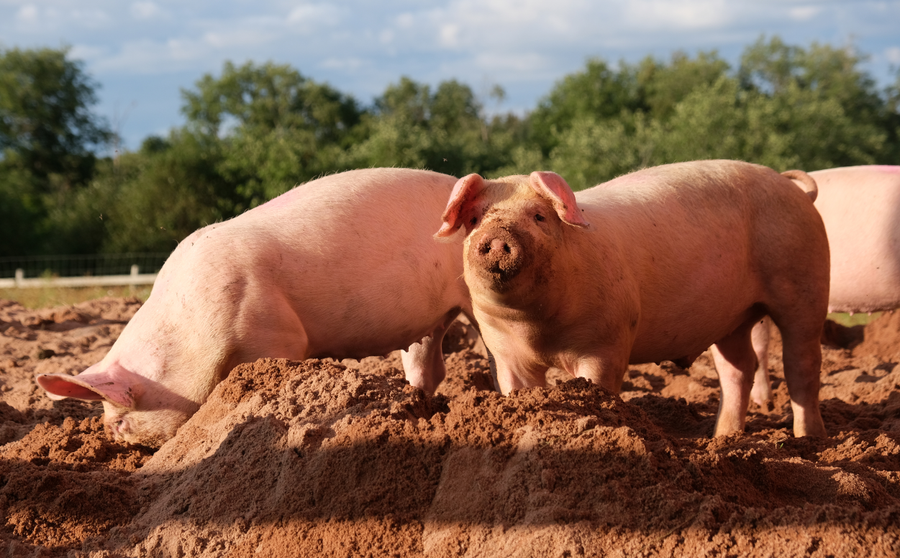
The domestic pig (Sus scrofa domesticus) is a mammal of the family Suidae, in the order Artiodactyla.
Quick answer
The domestic pig is a highly intelligent farm mammal descended from the Eurasian wild boar and kept worldwide for meat, and increasingly as a pet. A typical pig weighs 60 to 150 kg, stands on four short legs, and lives 10 to 15 years, though commercial pigs are raised for far shorter periods. Pigs are social, curious, and among the smartest of all domesticated animals.
Top questions about the Domestic Pig
Also available in Español (Cerdo doméstico)
Domestic Pig facts at a glance
- Weight 100 kg
- Length 1.5 m
- Top speed 17 km/h
- Lifespan 15 years
| Scientific name | Sus scrofa domesticus |
|---|---|
| Diet | Omnivore — grain, vegetables, forage, and scraps |
| Habitat | Farms worldwide; wild boar ancestry in Eurasia |
| Lifespan | 10–15 years (commercial pigs shorter) |
| Weight | 60–150 kg (130–330 lb); commercial breeds vary |
| Top speed | Up to 17 km/h (11 mph) over short distances |
| Conservation status | Domesticated (IUCN) |
| Kingdom | Animalia |
|---|---|
| Phylum | Chordata |
| Class | Mammalia |
| Order | Artiodactyla |
| Family | Suidae |
| Genus | Sus |
Where it lives
The domestic pig (Sus scrofa domesticus) is native to Domesticated worldwide; wild boar (Sus scrofa) native across Eurasia and North Africa; feral populations globally. — recorded across Africa, Asia, Europe, North America, Oceania, South America in this guide’s range summary.
For occurrence records, see GBIF species search and sources below.
How big is a domestic pig?
An adult domestic pig measures 1.5 m long — about 87% of the height of an average adult person (1.73 m) — and weighs around 100 kg, about 1.4× an average adult’s body weight (70 kg).
Length vs an average adult’s height (to scale)
What is a group of domestic pigs called?
Group name (collective noun)
A group of Domestic Pigs is called a sounder.
Baby name
A baby Domestic Pig is called a piglet.
Explore more animal collective nouns and baby animal names .
Origins and domestication
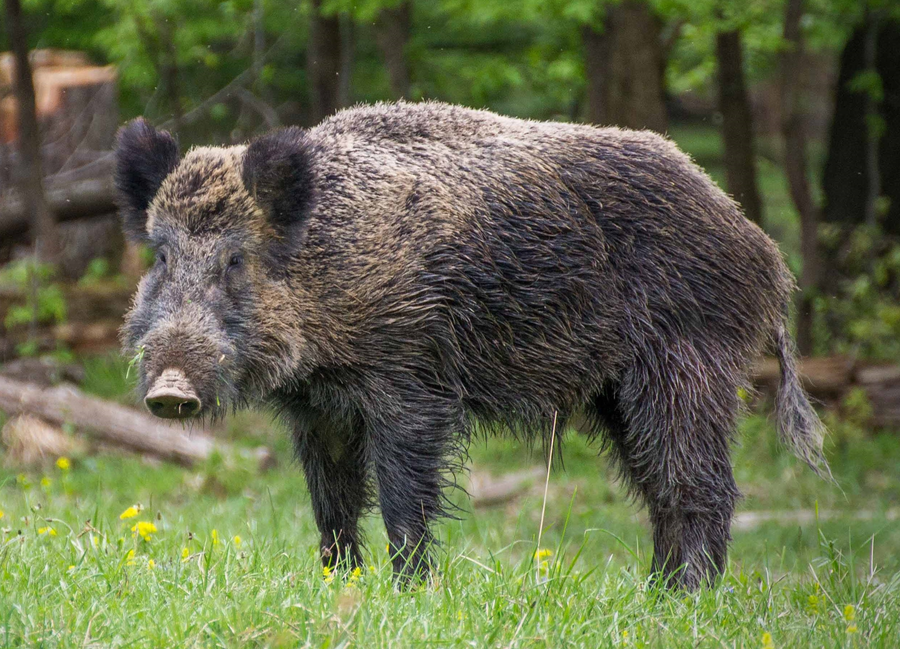
The domestic pig descends from the wild boar, Sus scrofa, and was domesticated independently in several parts of Eurasia at least 9,000 years ago. Centuries of selective breeding have produced hundreds of breeds, from the pink Large White and Landrace of commercial farms to hardy traditional types such as the Tamworth and Gloucestershire Old Spots. Compared with their wild ancestors, farm pigs tend to be larger, faster-growing, and less hairy. Feral pigs that escape captivity readily revert to a boar-like appearance within a few generations.
Intelligence and behaviour
Pigs are widely regarded as one of the most intelligent domestic animals, often ranked alongside dogs and above cats in problem-solving tests. They can learn their names, respond to commands, use simple tools, and even manipulate levers or joysticks in laboratory experiments. They are naturally social, living in stable groups and communicating through an extensive range of grunts, squeals, and barks. Far from being dirty, pigs are clean animals that keep separate areas for sleeping and toileting when given the space.
Diet and rooting
Pigs are omnivores with a famously varied appetite, eating grain, vegetables, forage, roots, and kitchen scraps. Their most distinctive feeding behaviour is rooting, in which they use a tough, mobile snout tipped with a special prenasal bone to dig through soil for tubers, worms, and grubs. This rooting instinct is strong even in pampered pet pigs and helps them turn over and aerate ground. On farms their diet is usually a carefully balanced feed to support steady growth.
Wallowing and keeping cool
Pigs cannot sweat effectively, so they wallow in mud or water to regulate their body temperature in warm weather. A coating of mud also shields their skin from sunburn and helps deter biting insects and parasites. This need to cool down, rather than any love of filth, is the real reason pigs seek out wet ground. Providing shade, water, and a place to wallow is an important part of good pig husbandry.
Farming and human uses
Pork is one of the most widely eaten meats in the world, and pigs are farmed on every inhabited continent. A domestic pig typically weighs 60 to 150 kg and can live 10 to 15 years, although commercial pigs are usually raised for only a matter of months. Beyond meat, pigs provide leather, and their physiology is close enough to ours that they are used in medical research and even as organ-transplant donors. Miniature breeds are increasingly kept as household pets.
Piglets and reproduction
A sow can produce two or more litters a year, each typically containing eight to twelve piglets after a gestation of about three months, three weeks, and three days. Piglets are born with their eyes open and quickly establish a "teat order", each returning to its own preferred nipple. They grow rapidly on their mother's rich milk and are usually weaned within a few weeks. Sows are attentive mothers and build nests from straw or vegetation before farrowing when allowed to do so.
Dig deeper into the Domestic Pig
- How Big Is A Domestic Pig?
Domestic Pig size and weight: typical 60–150 kg (130–330 lb); commercial breeds vary, dimorphism, and growth.
- How Long Do Domestic Pigs Live?
Domestic Pig lifespan is typically 10–15 years (commercial pigs shorter). What shortens or extends life, life stages, and status (Domesticated).
- Domestic Pig: Key Facts
Domestic pigs descend from wild boars and rank among the smartest farm animals, weighing about 100 kg, living 15 years, and running 17 km/h.
- What Do Domestic Pigs Eat?
What domestic pigs eat: Omnivore — grain, vegetables, forage, and scraps, foraging style, and seasonal shifts in Farms worldwide; wild boar ancestry in Eurasia.
- Where Do Domestic Pigs Live?
Where domestic pigs live: Farms worldwide; wild boar ancestry in Eurasia, native range cues, and human overlap. Status Domesticated.
Explore the Domestic Pig
Close relatives
- Wild Boar Same genus
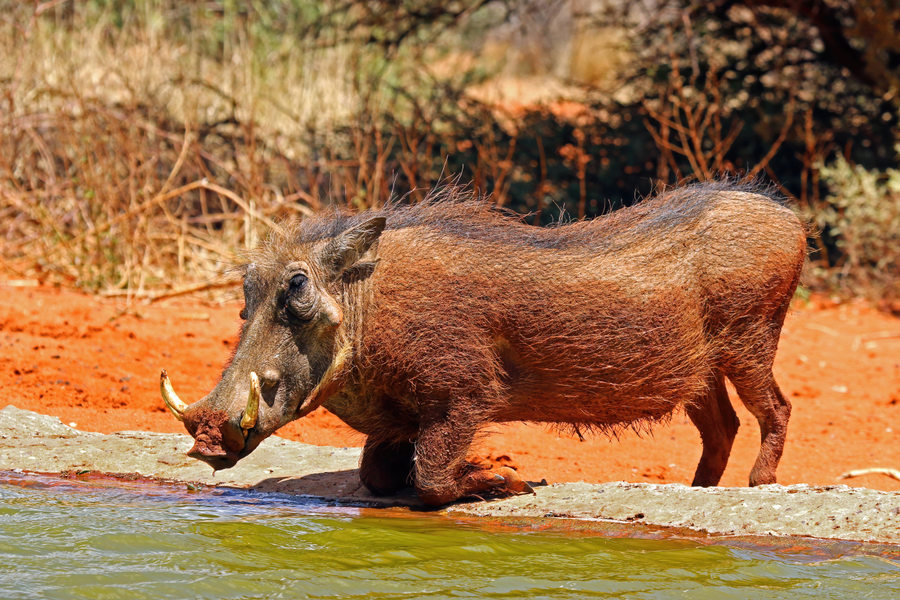
- Warthog Same family
- Giraffe Same order
- Pygmy Hippopotamus Same order
Did you know? Domestic Pig facts
- Domestic pigs descend from wild boars and rank among the smartest farm animals.
- They wallow to cool off, not from dirtiness — given space they toilet away from sleeping areas.
- Surprisingly quick over short distances — up to 17 km/h.
- Conservation: Domesticated.
Diet & feeding
Domestic Pig feeds primarily as a omnivore — grain, vegetables, forage.
Adaptations
- Pigs use mirrors, solve mazes, and play with enrichment toys.
- Feral pigs cause billions in crop and habitat damage when escaped.
Behaviour & ecology
- Pigs use mirrors, solve mazes, and play with enrichment toys.
- Feral pigs cause billions in crop and habitat damage when escaped.
Communication
- Domestic Pig uses scent, posture, and vocal signals to mark territory and coordinate social behaviour.
- Communication intensity often peaks during breeding seasons and territorial disputes.
Habitat & range
Farms worldwide
Ecological role
Domestic Pig plays a recognised ecological role in farms worldwide.
Conservation status of the Domestic Pig
The domestic pig (Sus scrofa domesticus) is listed as Domesticated on the IUCN Red List. Domesticated animals are species kept and selectively bred by humans over many generations, such as dogs, cats, and livestock. They are not assessed for extinction risk in the wild by the IUCN, because their populations are managed by people rather than subject to natural pressures.
The domestic pig (Sus scrofa domesticus) is assessed on the IUCN Red List. Look up on the IUCN Red List .
Frequently asked questions about the Domestic Pig
Are pigs really intelligent?
Yes, pigs are among the most intelligent domestic animals, often compared to dogs and young children in cognitive tests. They can learn their names, solve puzzles, remember locations, and even operate simple joystick-controlled tasks in research settings.
How long do pigs live?
Pet and breeding pigs commonly live 10 to 15 years, and some reach beyond that with good care. Commercial pigs raised for meat, however, are kept for only a few months before slaughter.
Why do pigs roll in mud?
Pigs roll in mud to cool down, because they cannot sweat effectively to lose heat. The mud also protects their skin from sunburn and helps keep biting insects and parasites away, so wallowing is a sign of a healthy, well-adapted pig rather than a dirty one.
What do pigs eat?
Pigs are omnivores and eat grain, vegetables, forage, roots, and scraps. On farms they are given balanced feed, while in the wild or free-range settings they root through soil for tubers, worms, and grubs with their strong snouts.
How much does a pig weigh?
A typical domestic pig weighs between 60 and 150 kg (130 to 330 lb), depending on breed and age. Some large commercial boars grow considerably heavier, while miniature pet breeds stay much smaller.
What is the difference between a pig and a wild boar?
The domestic pig is a bred descendant of the wild boar and belongs to the same species. Farm pigs are generally larger, less hairy, and faster-growing, whereas wild boar are leaner, bristly, and equipped with prominent tusks.
What is a group of domestic pigs called?
A group of Domestic Pigs is called a sounder.
What is a baby domestic pig called?
A baby Domestic Pig is called a piglet.
Sources & references
This guide is compiled and reviewed against established zoological and conservation references. Key sources for the Domestic Pig:
-
IUCN Red List of Threatened Species
Conservation status (Domesticated) reflects the IUCN Red List category for Sus scrofa domesticus.
-
iNaturalist — observations & photos
Search citizen-science observations and community IDs for Sus scrofa domesticus. Useful for range checks and recent sightings — not a substitute for formal Red List status.
-
GBIF — occurrence data
Global Biodiversity Information Facility species search for Sus scrofa domesticus. Explore published occurrence records used in range research.
- IUCN Red List — Sus scrofa domesticus.
Conservation status (Domesticated) and population trends.
- Animal Diversity Web — Sus scrofa domesticus. University of Michigan Museum of Zoology.
Life history, morphology, and range.
-
Global Animal Guide editorial standards
How we research, source, review, and update every guide for accuracy.