Image sourcing: see credits & licences
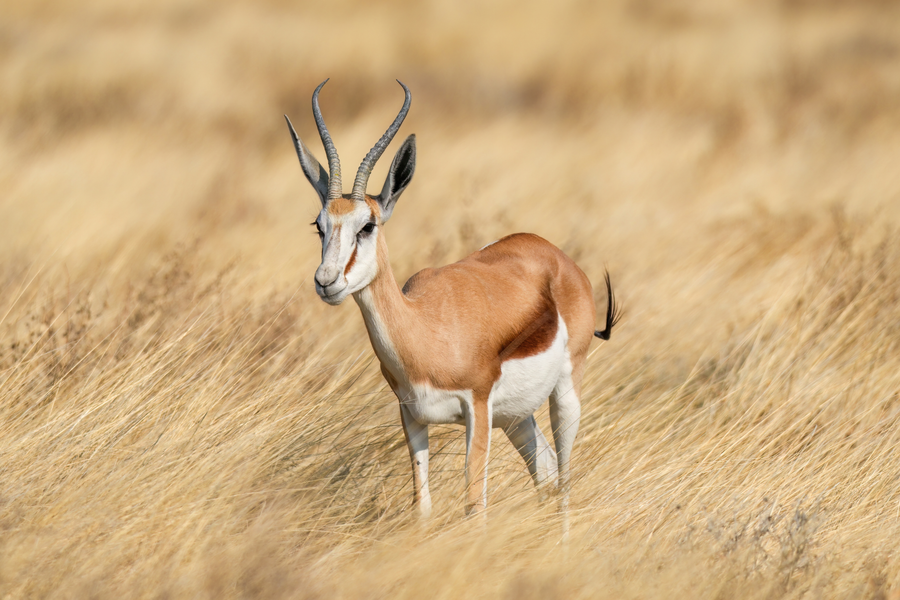
The springbok (Antidorcas marsupialis) is a mammal of the family Bovidae, in the order Artiodactyla.
Quick answer
The springbok is a medium-sized, fawn-and-white antelope of the arid grasslands of southern Africa, and the national animal of South Africa. Standing lightly built at around 1.5 m long and 30 to 50 kg, it is famous for pronking, a stiff-legged leap up to 2 m high. It grazes and browses on grasses, shrubs, and succulents, can sprint up to 88 km/h, and typically lives 10 to 12 years in the wild.
Top questions about the Springbok
Springbok facts at a glance
- Weight 40 kg
- Length 1.5 m
- Top speed 88 km/h
- Lifespan 10 years
| Scientific name | Antidorcas marsupialis |
|---|---|
| Diet | Herbivore — grasses, shrubs, and succulents |
| Habitat | Arid and semi-arid grasslands of southern Africa |
| Lifespan | 10–12 years in the wild |
| Weight | 30–50 kg (66–110 lb); rams slightly heavier |
| Top speed | Up to 88 km/h (55 mph); pronking leaps up to 2 m high |
| Conservation status | Least Concern (IUCN) |
| Kingdom | Animalia |
|---|---|
| Phylum | Chordata |
| Class | Mammalia |
| Order | Artiodactyla |
| Family | Bovidae |
| Genus | Antidorcas |
Where it lives
The springbok (Antidorcas marsupialis) is native to Arid grasslands and shrublands of Namibia, Botswana, South Africa, and Angola — national symbol of South Africa. — recorded across Africa in this guide’s range summary.
For occurrence records, see GBIF species search and sources below.
How big is a springbok?
An adult springbok measures 1.5 m long — about 87% of the height of an average adult person (1.73 m) — and weighs around 40 kg, about 57% of an average adult’s body weight (70 kg).
Length vs an average adult’s height (to scale)
What is a group of springboks called?
Group name (collective noun)
A group of Springboks is called a herd.
Baby name
A baby Springbok is called a lamb.
Explore more animal collective nouns and baby animal names .
Pronking, the signature leap
The springbok takes its name from its habit of pronking, also called stotting: a series of stiff-legged, arch-backed bounds that can carry it up to 2 m off the ground. When it pronks, the animal fans out a fold of white skin along its back, flashing a crest of long white hairs. Biologists think pronking signals fitness to predators, effectively telling a lion or cheetah that this individual is too alert and fit to be worth chasing. It may also serve to alarm the herd and confuse an attacker.
Speed and survival
Springbok are among the fastest land animals, able to sprint at up to 88 km/h over open ground. That raw speed, combined with sharp senses and sudden changes of direction, is their main defence against cheetahs, lions, and hunting dogs. They are also remarkably agile, capable of leaping long distances at full gallop. Living in herds adds safety in numbers, with many eyes watching for danger across the open plains.
Diet and desert adaptation
Springbok are mixed feeders that graze on grasses when they are green and browse on shrubs, leaves, and succulents when grass is scarce. This flexibility lets them thrive in the dry, unpredictable environment of the Karoo, Kalahari, and Namib fringes. They are well adapted to going without free-standing water, drawing much of their moisture from the plants they eat, and they often feed at dawn, dusk, and even at night to avoid the worst heat. Succulent tubers and roots dug from the ground provide extra water in the driest months.
Breeding and young
Breeding can occur at various times of year but often peaks to coincide with the rains, when food is most plentiful. After a gestation of around six months, a female gives birth to a single lamb, which she hides in vegetation for the first days of life. Lambs are up and running remarkably quickly, an essential ability in open country full of predators. Within a few weeks they join the herd, where the safety of numbers improves their chances of reaching adulthood.
Status and importance
The springbok is listed as Least Concern by the IUCN and remains common across much of southern Africa, particularly in South Africa, Namibia, and Botswana. It is farmed on private ranches and game reserves and hunted both for meat and as a game animal, which gives it strong economic value. As the national animal of South Africa, it lends its name to the country's rugby team, the Springboks. Well-managed populations on protected and private land help keep the species secure.
Dig deeper into the Springbok
- How Fast Is A Springbok?
Springbok top speed is up to about 88 km/h (55 mph); pronking leaps up to 2 m high. Sprint vs endurance and what limits pace.
- How Long Do Springboks Live?
Springbok lifespan is typically 10–12 years in the wild. What shortens or extends life, life stages, and status (Least Concern).
- Springbok: Key Facts
The springbok is a medium-sized antelope and South Africa's national animal, known for pronking — stiff-legged leaps that flash a white rump patch.
- What Do Springboks Eat?
What springboks eat: Herbivore — grasses, shrubs, and succulents, foraging style, and seasonal shifts in Arid and semi-arid grasslands of southern Africa.
- Where Do Springboks Live?
Where springboks live: Arid and semi-arid grasslands of southern Africa, native range cues, and human overlap. Status Least Concern.
Explore the Springbok
Close relatives
- Cow Same family
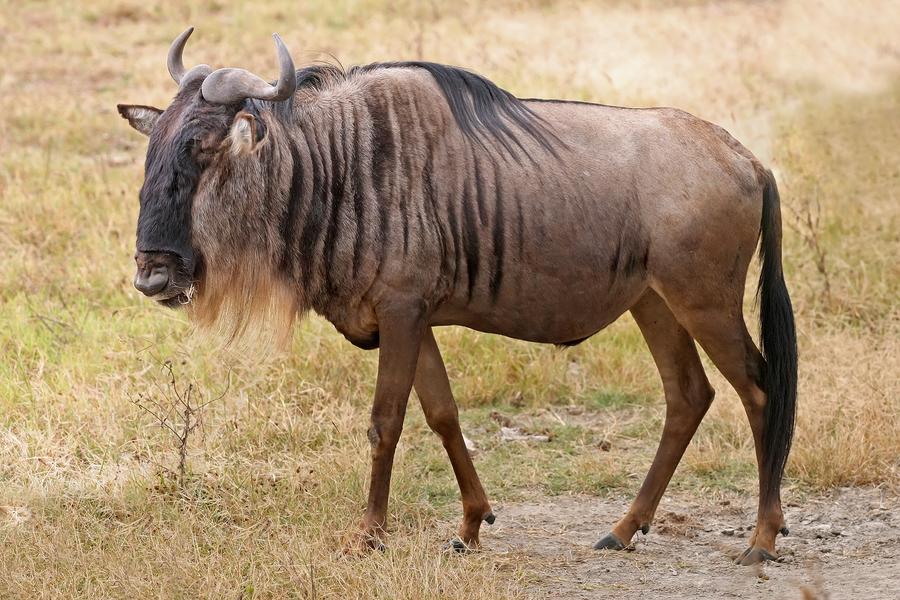
- Wildebeest Same family
- Domestic Goat Same family
- Saiga Antelope Same family
Range & geography
Did you know? Springbok facts
- Springbok are medium-sized antelope known for pronking — stiff-legged leaps that may signal fitness to predators.
- Pronking may warn predators the chase is not worth it, or signal to the herd.
- Listed Least Concern — large populations remain on farms and reserves.
- Conservation: Least Concern.
Diet & feeding
Springbok feeds primarily as a grasses and shrubs.
Adaptations
- The flashing white rump patch is raised during leaps, possibly confusing predators.
- Springbok can survive with limited water by selecting moisture-rich plants.
Behaviour & ecology
- The flashing white rump patch is raised during leaps, possibly confusing predators.
- Springbok can survive with limited water by selecting moisture-rich plants.
Communication
- Springbok uses scent, posture, and vocal signals to mark territory and coordinate social behaviour.
- Communication intensity often peaks during breeding seasons and territorial disputes.
Habitat & range
Arid grasslands of southern Africa
Ecological role
Springbok plays a recognised ecological role in arid grasslands of southern africa.
Conservation status of the Springbok
The springbok (Antidorcas marsupialis) is listed as Least Concern on the IUCN Red List. Least Concern (LC) is the IUCN's lowest-risk category, assigned to widespread, abundant species that have been evaluated and found not to be threatened. It does not mean a species faces no pressures — only that it is not currently at risk of extinction.
The springbok (Antidorcas marsupialis) is assessed on the IUCN Red List. Look up on the IUCN Red List .
Frequently asked questions about the Springbok
What is pronking?
Pronking is the springbok's signature stiff-legged leap, in which it bounds up to 2 m into the air with an arched back and flared white crest. It is thought to signal fitness to predators and to alert the rest of the herd to danger.
How fast can a springbok run?
Springbok can sprint at up to 88 km/h, making them one of the fastest land animals. Their speed and agility are their main defences against predators such as cheetahs and lions.
Where do springbok live?
They inhabit the arid and semi-arid grasslands of southern Africa, especially South Africa, Namibia, and Botswana. They are well suited to dry areas like the Karoo and Kalahari, where they can survive with little standing water.
What do springbok eat?
Springbok are mixed feeders that graze on grasses and browse on shrubs, leaves, and succulents. They can go long periods without drinking, getting much of their water from the plants they eat.
How much does a springbok weigh?
Adult springbok weigh roughly 30 to 50 kg and measure about 1.5 m in length, with rams slightly heavier than ewes. They are lightly built, which helps them reach their high speeds.
Why is the springbok important to South Africa?
The springbok is South Africa's national animal and lends its name to the national rugby team. It is also economically important, farmed and hunted for its meat across private reserves and ranches.
What is a group of springboks called?
A group of Springboks is called a herd.
What is a baby springbok called?
A baby Springbok is called a lamb.
Sources & references
This guide is compiled and reviewed against established zoological and conservation references. Key sources for the Springbok:
-
IUCN Red List of Threatened Species
Conservation status (Least Concern) reflects the IUCN Red List category for Antidorcas marsupialis.
-
iNaturalist — observations & photos
Search citizen-science observations and community IDs for Antidorcas marsupialis. Useful for range checks and recent sightings — not a substitute for formal Red List status.
-
GBIF — occurrence data
Global Biodiversity Information Facility species search for Antidorcas marsupialis. Explore published occurrence records used in range research.
- IUCN Red List — Antidorcas marsupialis.
Conservation status (Least Concern) and population trends.
- Animal Diversity Web — Antidorcas marsupialis. University of Michigan Museum of Zoology.
Life history, morphology, and range.
-
Global Animal Guide editorial standards
How we research, source, review, and update every guide for accuracy.