Image sourcing: see credits & licences
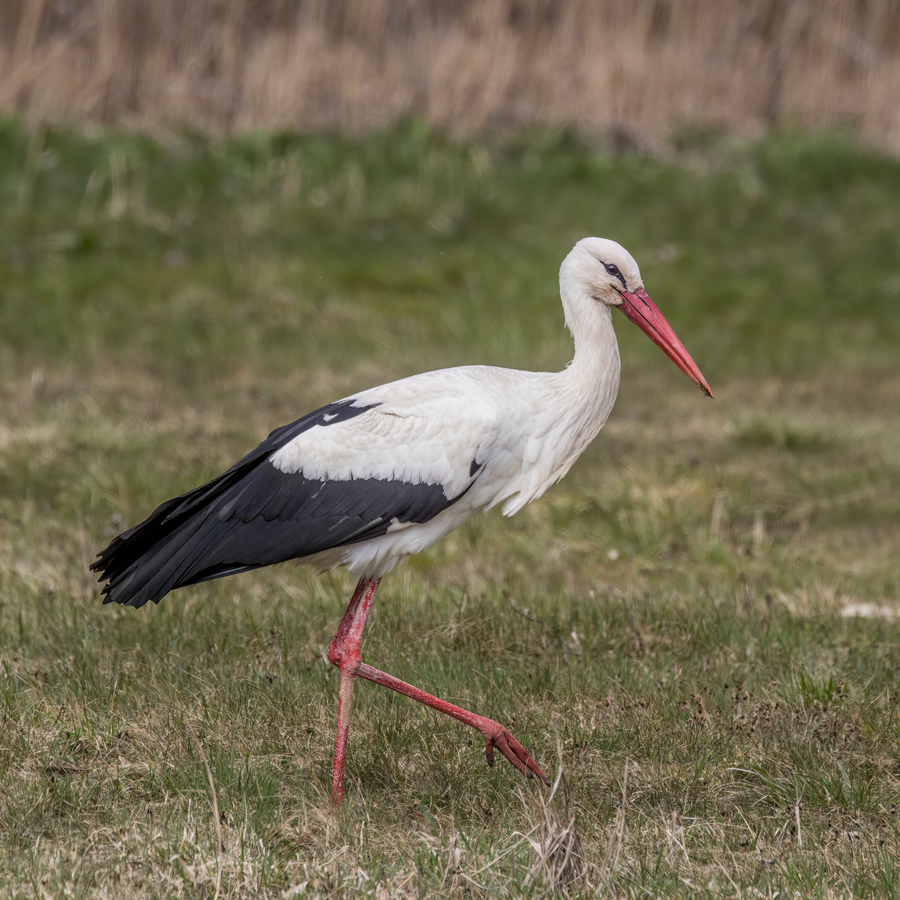
The white stork (Ciconia ciconia) is a bird of the family Ciconiidae, in the order Ciconiiformes.
Quick answer
The white stork is a tall, long-legged wading bird of wet meadows, farmland, and wetlands across Eurasia, instantly recognisable by its white plumage, black wing tips, and bright red bill and legs. Standing over a metre tall and weighing up to about 4.5 kg, it is a powerful soaring migrant that winters in Africa. It feeds on frogs, insects, rodents, and fish, and can live 20 to 25 years in the wild.
Top questions about the White Stork
White Stork facts at a glance
- Weight 4 kg
- Length 1.1 m
- Top speed 45 km/h
- Lifespan 25 years
| Scientific name | Ciconia ciconia |
|---|---|
| Diet | Carnivore — frogs, insects, rodents, and fish |
| Habitat | Wet meadows, farmland, and wetlands across Eurasia |
| Lifespan | 20–25 years in the wild |
| Weight | 2.5–4.5 kg (5.5–10 lb) |
| Top speed | Up to 45 km/h (28 mph) soaring on thermals |
| Conservation status | Least Concern (IUCN) |
| Kingdom | Animalia |
|---|---|
| Phylum | Chordata |
| Class | Aves |
| Order | Ciconiiformes |
| Family | Ciconiidae |
| Genus | Ciconia |
Where it lives
The white stork (Ciconia ciconia) is native to White stork breeding across Europe from Portugal to Kazakhstan; winters in sub-Saharan Africa from Senegal to South Africa. — recorded across Africa, Asia, Europe in this guide’s range summary.
For occurrence records, see GBIF species search and sources below.
How big is a white stork?
An adult white stork measures 1.1 m long — about 64% of the height of an average adult person (1.73 m) — and weighs around 4.0 kg, about 6% of an average adult’s body weight (70 kg).
Length vs an average adult’s height (to scale)
What is a group of white storks called?
Group name (collective noun)
A group of White Storks is called a muster.
Baby name
A baby White Stork is called a chick.
Explore more animal collective nouns and baby animal names .
Appearance and flight
The white stork is a striking bird with snow-white body feathers, black flight feathers, and a long, straight red bill matched by long red legs. It stands well over a metre tall with a wingspan approaching two metres, yet in the air it is graceful, soaring on broad wings with its neck outstretched and legs trailing behind. Rather than flap continuously, storks ride rising columns of warm air called thermals, gliding for long distances to save energy. On thermals they cruise at around 45 km/h.
Diet and feeding
Storks are carnivores that hunt a wide variety of small animals, including frogs, insects, earthworms, lizards, rodents, and fish. They forage by striding slowly through meadows, marshes, and shallow water, watching the ground and snapping up prey with a quick jab of the bill. Freshly mown or ploughed fields are a favourite hunting ground, where disturbed insects and small mammals are easy to catch. Their varied, opportunistic diet lets them thrive alongside farming across much of their range.
Nesting on rooftops
White storks are famous for building their large stick nests on chimneys, rooftops, church towers, and specially provided platforms in towns and villages. These bulky nests are reused and added to year after year, sometimes growing to a huge size and lasting for decades. The birds have a long tradition of nesting close to people, and in much of Europe a stork's nest on the house is regarded as a sign of good luck. Because they lack a true voice box, storks communicate at the nest mainly by loudly clattering their bills.
Migration
White storks are long-distance migrants that breed in Europe and western Asia and spend the winter in Africa, some reaching as far south as the southern tip of the continent. Because they rely on thermals that form over land, they avoid long sea crossings and funnel through narrow points such as the Strait of Gibraltar and the Bosphorus. The round trip can cover thousands of kilometres each year. In recent decades some populations, particularly in Spain and Portugal, have begun wintering closer to home, feeding at landfills instead of migrating all the way to Africa.
Breeding and chicks
Pairs typically return to the same nest each spring, greeting one another with elaborate bill-clattering displays. The female lays a clutch of around three to five eggs, which both parents take turns to incubate for roughly a month. The chicks are fed regurgitated food and remain in the nest for about two months before they can fly. Not all survive, as parents may fail to feed the weakest chicks when food is short, but successful young join the autumn migration south.
Status and folklore
The white stork is listed as Least Concern by the IUCN, and after mid-century declines many European populations have recovered thanks to protection and nest platforms. Loss of wet meadows and feeding habitat, along with collisions with power lines, remain the main pressures on the species. Culturally, the stork is one of Europe's most beloved birds, tied to the age-old legend that storks deliver babies. Its return each spring has long been welcomed as a herald of the changing season.
Dig deeper into the White Stork
- How Fast Is A White Stork?
White Stork top speed is up to about 45 km/h (28 mph) soaring on thermals. Sprint vs endurance and what limits pace.
- How Long Do White Storks Live?
White Stork lifespan is typically 20–25 years in the wild. What shortens or extends life, life stages, and status (Least Concern).
- White Stork: Key Facts
The white stork is a large wading bird nesting on rooftops across Europe, migrating thousands of kilometres to Africa each winter.
- What Do White Storks Eat?
What white storks eat: Carnivore — frogs, insects, rodents, and fish, foraging style, and seasonal shifts in Wet meadows, farmland, and wetlands across Eurasia.
- Where Do White Storks Live?
Where white storks live: Wet meadows, farmland, and wetlands across Eurasia, native range cues, and human overlap. Status Least Concern.
Explore the White Stork
Close relatives
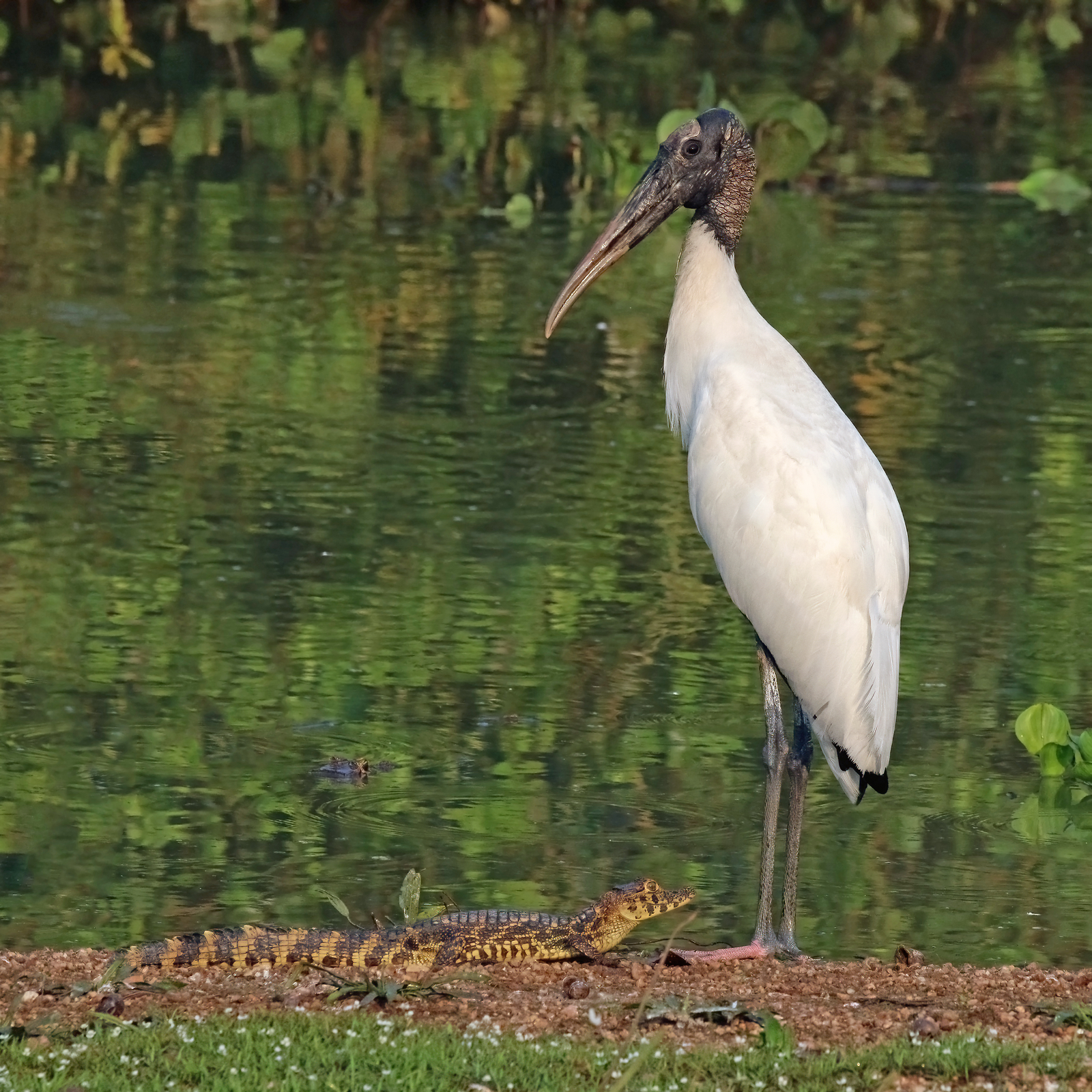
- Wood Stork Same family
- Jabiru Same family
- Chicken Same class
- Wandering Albatross Same class
Did you know? White Stork facts
- White storks are large wading birds that nest on rooftops and poles across Europe.
- No — folklore only; storks simply became symbols of domestic happiness.
- Large stick nests on chimneys, trees, and platforms near wetlands.
- Conservation: Least Concern.
Diet & feeding
White Stork feeds primarily as a frogs, insects, small mammals.
Adaptations
- Storks cross the Strait of Gibraltar and Sahara to wintering grounds.
- Baby-delivering myths likely arose from human affection for rooftop nests.
Behaviour & ecology
- Storks cross the Strait of Gibraltar and Sahara to wintering grounds.
- Baby-delivering myths likely arose from human affection for rooftop nests.
Communication
- White Stork uses calls and visual displays to communicate territory, alarm, and breeding status.
- Vocal repertoires vary by species and are often learned or refined during development.
Habitat & range
Wet meadows and farmland across Eurasia
Ecological role
White Stork contributes to seed dispersal, insect control, or nutrient cycling depending on diet and foraging habits.
Conservation status of the White Stork
The white stork (Ciconia ciconia) is listed as Least Concern on the IUCN Red List. Least Concern (LC) is the IUCN's lowest-risk category, assigned to widespread, abundant species that have been evaluated and found not to be threatened. It does not mean a species faces no pressures — only that it is not currently at risk of extinction.
The white stork (Ciconia ciconia) is assessed on the IUCN Red List. Look up on the IUCN Red List .
Frequently asked questions about the White Stork
How big is a white stork?
White storks stand over a metre tall with a wingspan of nearly two metres, and weigh up to about 4.5 kg. Their long red legs and bill make them look even taller as they wade through meadows and marshes.
What do white storks eat?
They are carnivores that eat frogs, insects, earthworms, lizards, rodents, and fish. Storks hunt by walking slowly through fields and shallow water, snapping up prey with a quick jab of the bill.
Where do white storks migrate?
White storks breed in Europe and western Asia and winter in Africa, some travelling all the way to the south of the continent. They rely on thermals over land, so they funnel through narrow crossings like Gibraltar and the Bosphorus rather than fly over open sea.
Why do storks nest on chimneys and rooftops?
Rooftops, chimneys, and towers offer tall, stable platforms for their heavy stick nests, safe from ground predators. Storks have nested near people for centuries, and in many parts of Europe a nest on the house is thought to bring good luck.
How long do white storks live?
In the wild, white storks typically live 20 to 25 years. Their longevity, combined with their habit of returning to the same nest each year, means individual birds can become well known in a village.
Do storks make any sound?
White storks have almost no voice because they lack a proper syrinx, or bird voice box. Instead they communicate by loudly clattering their bills, especially during greeting displays at the nest.
What is a group of white storks called?
A group of White Storks is called a muster.
What is a baby white stork called?
A baby White Stork is called a chick.
Sources & references
This guide is compiled and reviewed against established zoological and conservation references. Key sources for the White Stork:
-
IUCN Red List of Threatened Species
Conservation status (Least Concern) reflects the IUCN Red List category for Ciconia ciconia.
-
iNaturalist — observations & photos
Search citizen-science observations and community IDs for Ciconia ciconia. Useful for range checks and recent sightings — not a substitute for formal Red List status.
-
GBIF — occurrence data
Global Biodiversity Information Facility species search for Ciconia ciconia. Explore published occurrence records used in range research.
-
eBird — bird observations
Cornell Lab eBird target search for White Stork. Check recent checklists and seasonal abundance where birders report this species.
- IUCN Red List — Ciconia ciconia.
Conservation status (Least Concern) and population trends.
- Animal Diversity Web — Ciconia ciconia. University of Michigan Museum of Zoology.
Life history, morphology, and range.
-
Global Animal Guide editorial standards
How we research, source, review, and update every guide for accuracy.