Image sourcing: see credits & licences
The sandhill crane (Antigone canadensis) is a bird of the family Gruidae, in the order Gruiformes.
Quick answer
The sandhill crane is a tall grey wading bird of North America and eastern Siberia, known for its elaborate courtship dancing and bugling calls. It stands with a long neck and legs, reaches about 1.2 m in length, and weighs 3 to 6 kg. An omnivore of wetlands and prairies, it can fly at up to 56 km/h and live 20 to 25 years. The species is listed as Least Concern.
Top questions about the Sandhill Crane
Sandhill Crane facts at a glance
- Weight 5 kg
- Length 1.2 m
- Top speed 56 km/h
- Lifespan 25 years
| Scientific name | Antigone canadensis |
|---|---|
| Diet | Omnivore — grains, insects, amphibians, and small mammals |
| Habitat | Wetlands and prairies of North America and Siberia |
| Lifespan | 20–25 years in the wild |
| Weight | 3–6 kg (6.6–13 lb) |
| Top speed | Up to 56 km/h (35 mph) in flight |
| Conservation status | Least Concern (IUCN) |
| Kingdom | Animalia |
|---|---|
| Phylum | Chordata |
| Class | Aves |
| Order | Gruiformes |
| Family | Gruidae |
| Genus | Antigone |
Where it lives
The sandhill crane (Antigone canadensis) is native to North America from Siberia ( nesting populations) through Canada and US to Cuba; Platte River Nebraska staging critical. — recorded across North America, Asia in this guide’s range summary.
For occurrence records, see GBIF species search and sources below.
How big is a sandhill crane?
An adult sandhill crane measures 1.2 m long — about 69% of the height of an average adult person (1.73 m) — and weighs around 5.0 kg, about 7% of an average adult’s body weight (70 kg).
Length vs an average adult’s height (to scale)
What is a group of sandhill cranes called?
Group name (collective noun)
A group of Sandhill Cranes is called a sedge.
Baby name
A baby Sandhill Crane is called a colt.
Explore more animal collective nouns and baby animal names .
Appearance and identification
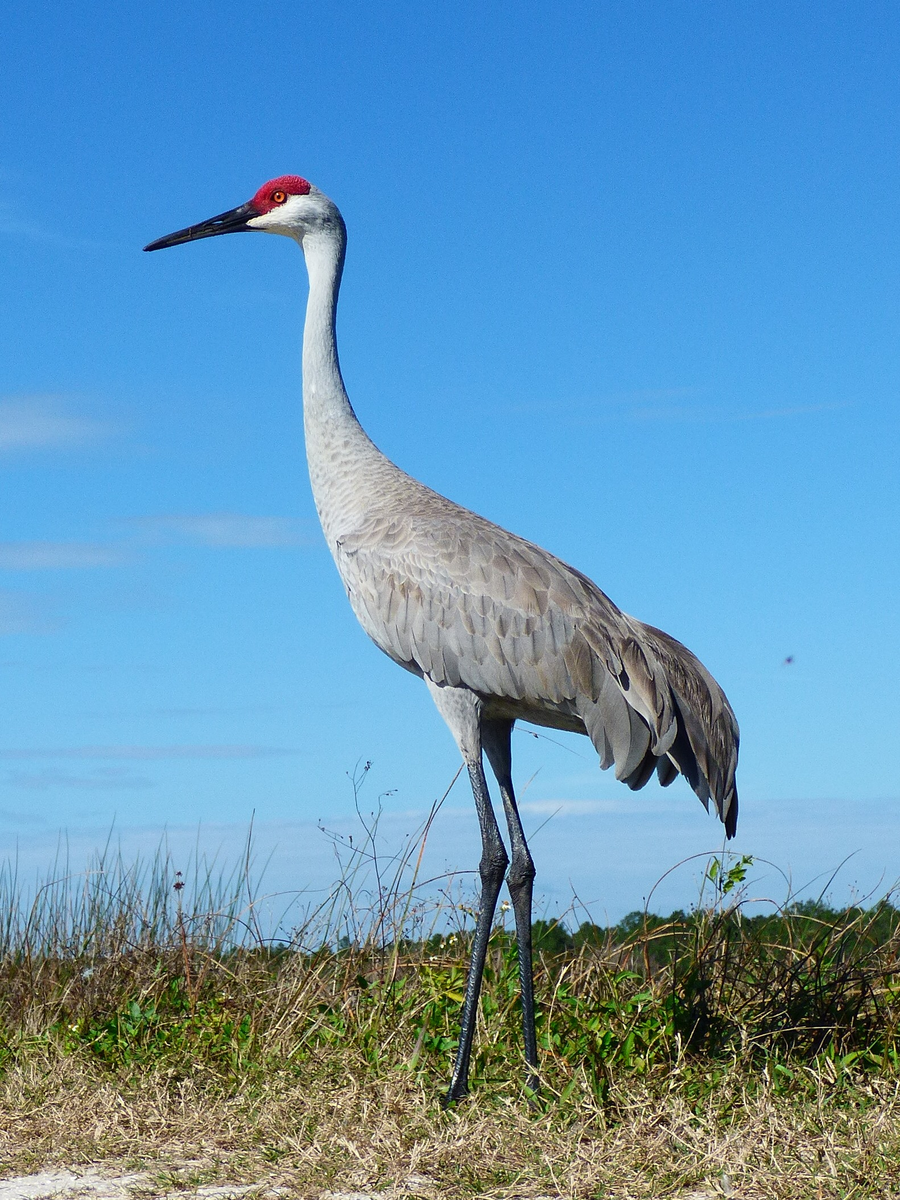
The sandhill crane is a large, elegant bird with slate-grey plumage, a long neck, and long dark legs, standing over a metre tall. A patch of bare red skin caps the forehead and crown, one of its most reliable field marks. Adults measure around 1.2 m in length and weigh between 3 and 6 kg, with a wingspan wide enough to make their flight unmistakable. Many birds show a rusty wash on the body, stained by the iron-rich mud they preen into their feathers.
Dancing and courtship
Sandhill cranes are celebrated for their dramatic dances, in which pairs leap into the air with wings spread, bow, and toss tufts of grass and sticks. Although dancing peaks during courtship, birds of all ages dance throughout the year, and it helps strengthen the bond between mates. Cranes form long-lasting pair bonds and often stay together for many years. Their loud, rattling bugle carries far across open country and is a signature sound of northern wetlands.
Migration and flocks
Many sandhill cranes are long-distance migrants, breeding across the northern United States, Canada, and Siberia and wintering as far south as the southern United States and Mexico. They fly at speeds up to 56 km/h, riding rising columns of warm air to save energy on their journeys. Each spring, hundreds of thousands gather along Nebraska's Platte River in one of North America's greatest wildlife spectacles. Not all populations migrate; some in the far south stay in one area year-round.
Diet and feeding
The sandhill crane is an omnivore with a broad diet that shifts with the seasons and habitat. It probes soil and mud for plant tubers, seeds, and waste grain, and also takes insects, snails, amphibians, and small mammals. On migration and in winter, waste corn and other grains in farm fields become an important food source. This flexibility lets the crane thrive across a wide range of wetland and grassland habitats.
Nesting and chicks
Sandhill cranes nest on the ground, building a large mound of plant material in or beside shallow wetlands. The female usually lays two eggs, and both parents share incubation for around a month. Newly hatched chicks, known as colts, can leave the nest and follow their parents within a day of hatching. Typically only one chick survives to fledge, and young birds stay with their parents through their first migration.
Conservation status
The sandhill crane is listed as Least Concern by the IUCN, and most populations are healthy or increasing thanks to wetland protection and careful management. This marks a strong recovery from the early twentieth century, when hunting and habitat drainage had reduced some populations sharply. A few small, isolated populations in the far south remain vulnerable and receive special protection. Wild sandhill cranes can live 20 to 25 years.
Dig deeper into the Sandhill Crane
- How Fast Is A Sandhill Crane?
Sandhill Crane top speed is up to about 56 km/h (35 mph) in flight. Sprint vs endurance and what limits pace.
- How Long Do Sandhill Cranes Live?
Sandhill Crane lifespan is typically 20–25 years in the wild. What shortens or extends life, life stages, and status (Least Concern).
- Sandhill Crane: Key Facts
Sandhill cranes are tall grey birds famous for dancing displays and rattling trumpeting calls, weighing about 5 kg and living 25 years.
- What Do Sandhill Cranes Eat?
What sandhill cranes eat: Omnivore — grains, insects, amphibians, and small mammals, foraging style, and seasonal shifts in Wetlands and prairies of North America and Siberia.
- Where Do Sandhill Cranes Live?
Where sandhill cranes live: Wetlands and prairies of North America and Siberia, native range cues, and human overlap. Status Least Concern.
Explore the Sandhill Crane
Compare
Close relatives
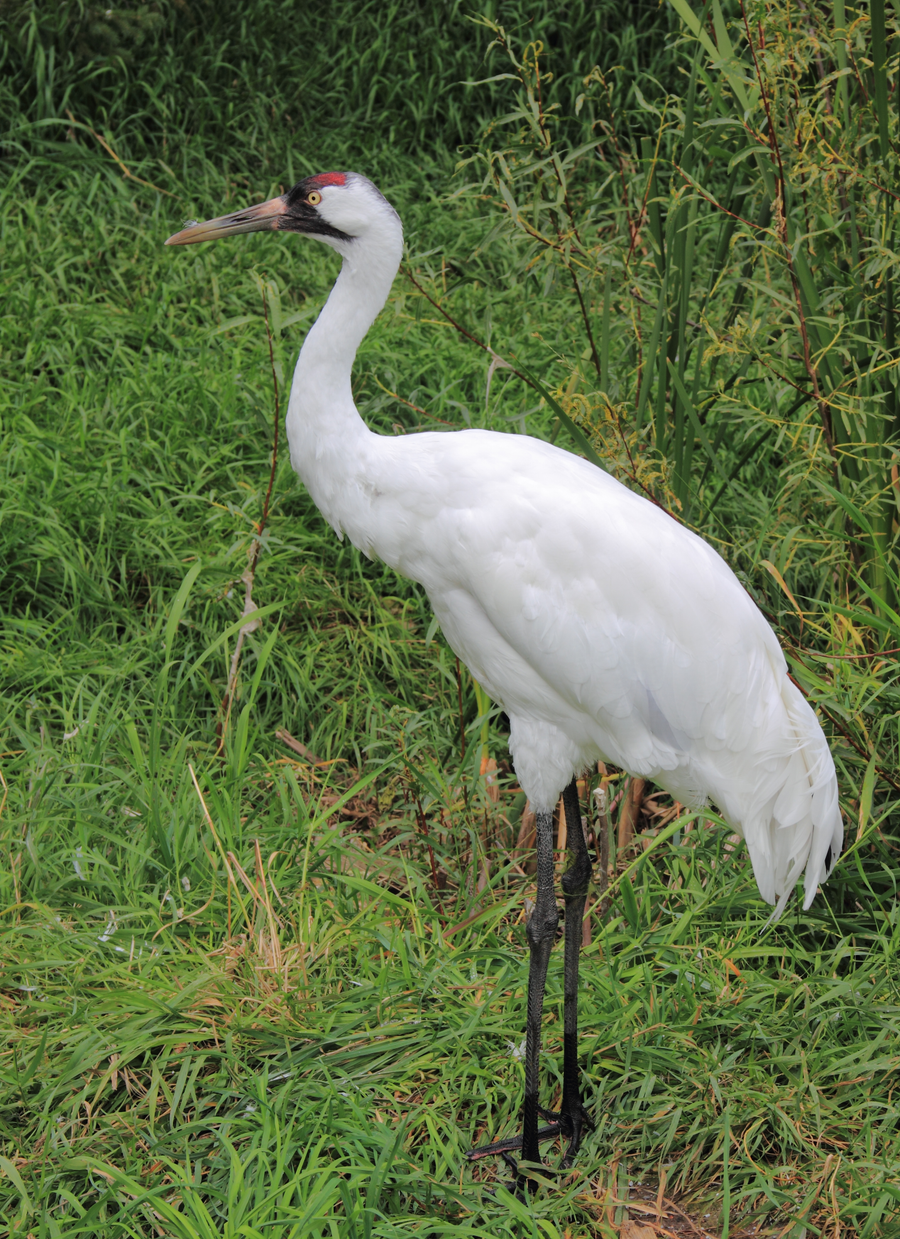
- Whooping Crane Same family
- South Island Takahe Same order
- Chicken Same class
- Wandering Albatross Same class
Range & geography
Did you know? Sandhill Crane facts
- Sandhill cranes are tall grey birds known for elaborate dancing displays and loud trumpeting calls.
- Cranes fly with necks extended; herons tuck necks into S-shapes in flight.
- Their rattling calls carry several kilometres across open marsh.
- Conservation: Least Concern.
Diet & feeding
Sandhill Crane feeds primarily as a grains, insects, small animals.
Adaptations
- Leaping, bowing, and wing-spreading reinforce pair bonds and territory.
- Staging cranes fatten on waste corn before flying to Arctic nesting grounds.
Behaviour & ecology
- Leaping, bowing, and wing-spreading reinforce pair bonds and territory.
- Staging cranes fatten on waste corn before flying to Arctic nesting grounds.
Communication
- Sandhill Crane uses calls and visual displays to communicate territory, alarm, and breeding status.
- Vocal repertoires vary by species and are often learned or refined during development.
Habitat & range
North American wetlands and prairies
Ecological role
Sandhill Crane contributes to seed dispersal, insect control, or nutrient cycling depending on diet and foraging habits.
Conservation status of the Sandhill Crane
The sandhill crane (Antigone canadensis) is listed as Least Concern on the IUCN Red List. Least Concern (LC) is the IUCN's lowest-risk category, assigned to widespread, abundant species that have been evaluated and found not to be threatened. It does not mean a species faces no pressures — only that it is not currently at risk of extinction.
The sandhill crane (Antigone canadensis) is assessed on the IUCN Red List. Look up on the IUCN Red List .
Frequently asked questions about the Sandhill Crane
How big is a sandhill crane?
Sandhill cranes stand over a metre tall, measure about 1.2 m in length, and weigh between 3 and 6 kg. Their broad wingspan makes them easy to recognise in flight.
Why do sandhill cranes dance?
Dancing helps sandhill cranes court mates and reinforce their long-term pair bonds. Birds of all ages dance year-round, leaping, bowing, and tossing vegetation into the air.
What do sandhill cranes eat?
They are omnivores. Their diet includes plant tubers, seeds, and waste grain, along with insects, snails, amphibians, and small mammals, depending on the season and location.
Where do sandhill cranes migrate?
Many breed across Canada, the northern United States, and Siberia and winter in the southern United States and Mexico. Huge numbers stop over along Nebraska's Platte River each spring.
How fast do sandhill cranes fly?
Sandhill cranes fly at speeds of up to 56 km/h (35 mph). They often ride rising columns of warm air, gliding to conserve energy on long migrations.
How long do sandhill cranes live?
Sandhill cranes can live 20 to 25 years in the wild. They are long-lived birds that form lasting pair bonds, with pairs often staying together for many breeding seasons.
What is a group of sandhill cranes called?
A group of Sandhill Cranes is called a sedge.
What is a baby sandhill crane called?
A baby Sandhill Crane is called a colt.
Sources & references
This guide is compiled and reviewed against established zoological and conservation references. Key sources for the Sandhill Crane:
-
IUCN Red List of Threatened Species
Conservation status (Least Concern) reflects the IUCN Red List category for Antigone canadensis.
-
iNaturalist — observations & photos
Search citizen-science observations and community IDs for Antigone canadensis. Useful for range checks and recent sightings — not a substitute for formal Red List status.
-
GBIF — occurrence data
Global Biodiversity Information Facility species search for Antigone canadensis. Explore published occurrence records used in range research.
-
eBird — bird observations
Cornell Lab eBird target search for Sandhill Crane. Check recent checklists and seasonal abundance where birders report this species.
- IUCN Red List — Antigone canadensis.
Conservation status (Least Concern) and population trends.
- Animal Diversity Web — Antigone canadensis. University of Michigan Museum of Zoology.
Life history, morphology, and range.
-
Global Animal Guide editorial standards
How we research, source, review, and update every guide for accuracy.