The wandering albatross (Diomedea exulans) is a bird of the family Diomedeidae, in the order Procellariiformes.
Quick answer
The wandering albatross (Diomedea exulans) is a giant seabird of the Southern Ocean, boasting the widest wingspan of any living bird. It weighs around 8 to 12 kg (18 to 26 lb) and glides across the waves at up to 80 km/h (50 mph) with barely a wingbeat. Feeding on squid, fish, and carrion snatched from the sea surface, it is one of the longest-lived birds, reaching 40 to 50 years. The IUCN lists it as Vulnerable.
Top questions about the Wandering Albatross
Also available in Español (Albatros viajero)
Wandering Albatross facts at a glance
- Weight 10 kg
- Length 1.3 m
- Top speed 80 km/h
- Lifespan 50 years
| Scientific name | Diomedea exulans |
|---|---|
| Diet | Carnivore — squid, fish, and carrion |
| Habitat | Southern Ocean and sub-Antarctic islands |
| Lifespan | 40–50 years (longest-lived birds) |
| Weight | 8–12 kg (18–26 lb); males larger |
| Top speed | Up to 80 km/h (50 mph) wind-assisted gliding |
| Conservation status | Vulnerable (IUCN) |
| Kingdom | Animalia |
|---|---|
| Phylum | Chordata |
| Class | Aves |
| Order | Procellariiformes |
| Family | Diomedeidae |
| Genus | Diomedea |
Where it lives
The wandering albatross (Diomedea exulans) is native to Southern Ocean — breeding on sub-Antarctic islands including South Georgia, Crozet, Kerguelen, and Macquarie. — recorded across Antarctica, Oceania, Oceans, South America in this guide’s range summary.
For occurrence records, see GBIF species search and sources below.
How big is a wandering albatross?
An adult wandering albatross measures 1.3 m long — about 75% of the height of an average adult person (1.73 m) — and weighs around 10 kg, about 14% of an average adult’s body weight (70 kg).
Length vs an average adult’s height (to scale)
What is a group of wandering albatrosses called?
Group name (collective noun)
A group of Wandering Albatrosses is called a rookery.
Baby name
A baby Wandering Albatross is called a chick.
Explore more animal collective nouns and baby animal names .
The widest wings on Earth
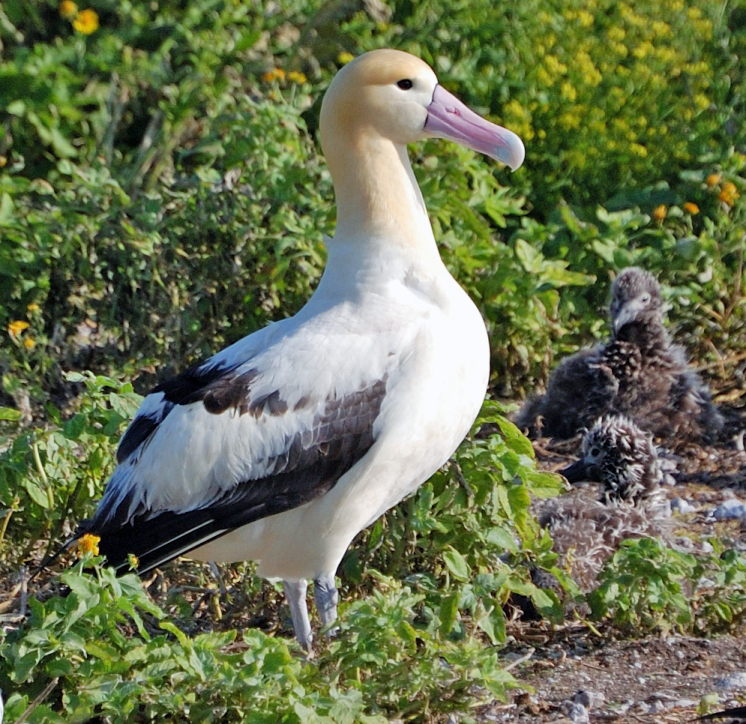
The wandering albatross has the largest wingspan of any living bird, with the longest individuals stretching over three metres from tip to tip. Its body measures around 1.3 m (over 4 ft) in length and weighs roughly 8 to 12 kg (18 to 26 lb), with males larger than females. Adults are mostly white with black-tipped wings, growing whiter with age, while young birds start out chocolate brown. Those enormous, narrow wings are built not for flapping but for effortless gliding.
Masters of gliding flight
Wandering albatrosses are among the most efficient fliers in the animal kingdom, riding ocean winds for hours or even days with barely a wingbeat. Using a technique called dynamic soaring, they harvest energy from the difference in wind speed near the sea surface, sweeping up and down across the waves at up to 80 km/h (50 mph). A special tendon can lock the wing in the outstretched position, so holding it open costs almost no muscular effort. A single foraging trip can cover thousands of kilometres of open ocean.
Feeding at sea
Wandering albatrosses are carnivores that feed mainly on squid, fish, and carrion taken from the surface of the sea. They forage over vast stretches of the Southern Ocean, seizing prey while sitting on the water or in shallow surface dives. Their keen sense of smell helps them locate food across huge distances, and they will readily follow ships and fishing boats for scraps. This scavenging habit, however, exposes them to one of their greatest dangers.
Breeding and long life
Wandering albatrosses breed on remote sub-Antarctic islands, where pairs form lasting bonds reinforced by elaborate courtship dances. A pair raises just a single chick, and because the chick takes so long to fledge, successful pairs breed only once every two years. Birds do not begin breeding until they are around a decade old, and they are among the longest-lived of all birds, reaching 40 to 50 years. This slow, unhurried life history is possible only because adults face few natural predators at sea.
Why it is vulnerable
The IUCN classifies the wandering albatross as Vulnerable, largely because of longline fishing. Birds diving for baited hooks are dragged under and drowned in large numbers, a toll their slow breeding cannot easily replace. Introduced predators such as mice and rats on some breeding islands, along with plastic pollution at sea, add further pressure. Seabird-friendly fishing measures, such as weighting lines and setting them at night, have helped reduce deaths where they are used.
Dig deeper into the Wandering Albatross
- Wandering Albatross: Key Facts
Wandering albatrosses have wingspans up to 3.5 metres — the longest of any living bird — weighing about 10 kg and living 50 years.
- Are Wandering Albatrosss Endangered?
Are wandering albatrosss endangered? Status Vulnerable, main threats, and what protection means.
- How Long Do Wandering Albatrosss Live?
Wandering Albatross lifespan is typically 40–50 years (longest-lived birds). What shortens or extends life, life stages, and status (Vulnerable).
- What Do Wandering Albatrosss Eat?
What wandering albatrosss eat: Carnivore — squid, fish, and carrion, foraging style, and seasonal shifts in Southern Ocean and sub-Antarctic islands.
- Where Do Wandering Albatrosss Live?
Where wandering albatrosss live: Southern Ocean and sub-Antarctic islands, native range cues, and human overlap. Status Vulnerable.
Explore the Wandering Albatross
Close relatives
- Chicken Same class
- Southern Cassowary Same class
- California Condor Same class
- Kakapo Same class
Collections
Range & geography
Did you know? Wandering Albatross facts
- Wandering albatrosses have wingspans up to 3.5 metres — the longest of any living bird.
- 50+ years — they delay breeding until age 10–15.
- Pairs bond for years with elaborate courtship dances.
- Conservation: Vulnerable.
Diet & feeding
Wandering Albatross feeds primarily as a squid, fish, carrion.
Adaptations
- Albatrosses harness wind shear above waves to fly with minimal energy.
- Fishing hooks kill tens of thousands annually — mitigation devices help.
Behaviour & ecology
- Albatrosses harness wind shear above waves to fly with minimal energy.
- Fishing hooks kill tens of thousands annually — mitigation devices help.
Communication
- Wandering Albatross uses calls and visual displays to communicate territory, alarm, and breeding status.
- Vocal repertoires vary by species and are often learned or refined during development.
Habitat & range
Southern Ocean islands
Ecological role
Wandering Albatross contributes to seed dispersal, insect control, or nutrient cycling depending on diet and foraging habits.
Conservation status of the Wandering Albatross
The wandering albatross (Diomedea exulans) is listed as Vulnerable on the IUCN Red List. Vulnerable (VU) means a species faces a high risk of extinction in the medium-term future. It is the lowest-risk of the three 'threatened' IUCN categories — one step below Endangered, which is itself below Critically Endangered — and is often an early warning that a population is in trouble.
The wandering albatross (Diomedea exulans) is assessed on the IUCN Red List. Look up on the IUCN Red List .
Frequently asked questions about the Wandering Albatross
How big is a wandering albatross's wingspan?
The wandering albatross has the largest wingspan of any living bird, with the longest individuals exceeding three metres from wingtip to wingtip. Its body is around 1.3 m long, and it weighs roughly 8 to 12 kg (18 to 26 lb).
How long do wandering albatrosses live?
Wandering albatrosses are among the longest-lived birds, typically reaching 40 to 50 years of age. They mature slowly and do not usually begin breeding until they are around ten years old.
How fast can a wandering albatross fly?
Wandering albatrosses can glide at up to about 80 km/h (50 mph) when wind conditions are favourable. They use a technique called dynamic soaring to travel vast distances with barely a wingbeat.
What do wandering albatrosses eat?
Wandering albatrosses are carnivores that feed mainly on squid, fish, and carrion taken from the sea surface. They forage over huge areas of the Southern Ocean and often follow ships and fishing boats to scavenge scraps.
Why are wandering albatrosses endangered?
Wandering albatrosses are listed as Vulnerable, chiefly because of longline fishing, in which birds are hooked and drowned. Introduced predators on breeding islands and plastic pollution add further pressure, and their slow breeding makes recovery difficult.
How often do wandering albatrosses breed?
A successful pair of wandering albatrosses breeds only once every two years, because their single chick takes so long to raise. They nest on remote sub-Antarctic islands and form long-lasting pair bonds.
What is a group of wandering albatrosses called?
A group of Wandering Albatrosses is called a rookery.
What is a baby wandering albatross called?
A baby Wandering Albatross is called a chick.
Sources & references
This guide is compiled and reviewed against established zoological and conservation references. Key sources for the Wandering Albatross:
-
IUCN Red List of Threatened Species
Conservation status (Vulnerable) reflects the IUCN Red List category for Diomedea exulans.
-
iNaturalist — observations & photos
Search citizen-science observations and community IDs for Diomedea exulans. Useful for range checks and recent sightings — not a substitute for formal Red List status.
-
GBIF — occurrence data
Global Biodiversity Information Facility species search for Diomedea exulans. Explore published occurrence records used in range research.
-
eBird — bird observations
Cornell Lab eBird target search for Wandering Albatross. Check recent checklists and seasonal abundance where birders report this species.
- IUCN Red List — Diomedea exulans.
Conservation status (Vulnerable) and population trends.
- Animal Diversity Web — Diomedea exulans. University of Michigan Museum of Zoology.
Life history, morphology, and range.
-
Global Animal Guide editorial standards
How we research, source, review, and update every guide for accuracy.