Image sourcing: see credits & licences
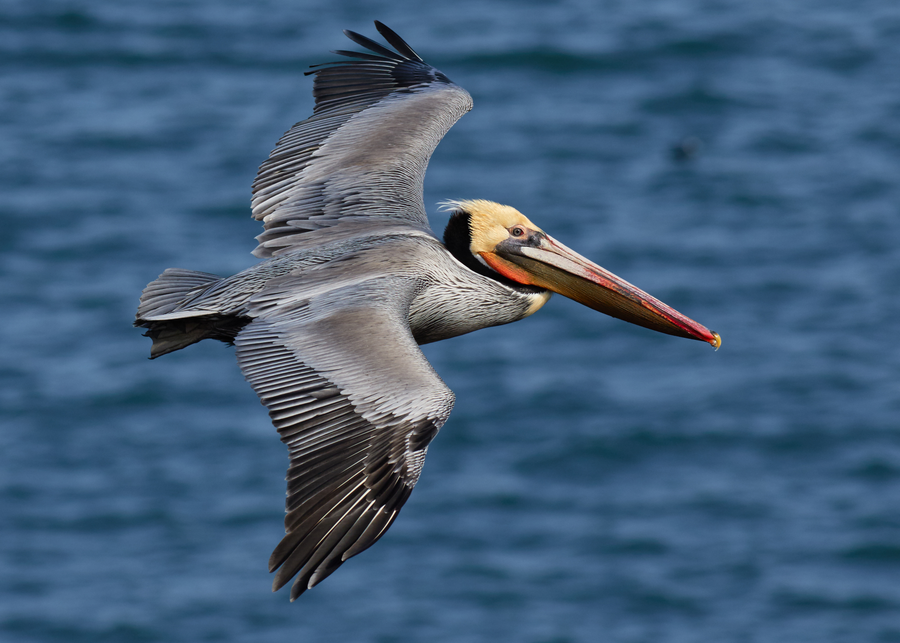
The brown pelican (Pelecanus occidentalis) is a bird of the family Pelecanidae, in the order Pelecaniformes.
Quick answer
The brown pelican (Pelecanus occidentalis) is a large coastal seabird of the Americas, found from the United States down through the Caribbean and around the Galápagos. It is famous for plunge-diving from up to 20 m to catch fish such as anchovies and sardines in its stretchy throat pouch. Adults weigh 2 to 5 kg, span roughly 1.4 m, and can live 20 to 25 years. The IUCN lists it as Least Concern.
Top questions about the Brown Pelican
Brown Pelican facts at a glance
- Weight 4 kg
- Length 1.4 m
- Top speed 48 km/h
- Lifespan 25 years
| Scientific name | Pelecanus occidentalis |
|---|---|
| Diet | Piscivore — mainly fish such as anchovies and sardines |
| Habitat | Coastal Americas, Caribbean, and Galápagos |
| Lifespan | 20–25 years in the wild |
| Weight | 2–5 kg (4.4–11 lb); males slightly larger |
| Top speed | Up to 48 km/h (30 mph) in flight; plunge dives from 20 m |
| Conservation status | Least Concern (IUCN) |
| Kingdom | Animalia |
|---|---|
| Phylum | Chordata |
| Class | Aves |
| Order | Pelecaniformes |
| Family | Pelecanidae |
| Genus | Pelecanus |
Where it lives
The brown pelican (Pelecanus occidentalis) is native to Coastal Americas from British Columbia and Chesapeake Bay to Chile and the Galápagos; Caribbean coasts. — recorded across North America, South America in this guide’s range summary.
For occurrence records, see GBIF species search and sources below.
How big is a brown pelican?
An adult brown pelican measures 1.4 m long — about 81% of the height of an average adult person (1.73 m) — and weighs around 4.0 kg, about 6% of an average adult’s body weight (70 kg).
Length vs an average adult’s height (to scale)
What is a group of brown pelicans called?
Group name (collective noun)
A group of Brown Pelicans is called a pod.
Baby name
A baby Brown Pelican is called a chick.
Explore more animal collective nouns and baby animal names .
Plunge-diving and feeding
The brown pelican is the only pelican that hunts by plunge-diving, folding its wings and dropping from as high as 20 m to hit the water. The impact stuns small schooling fish, which the bird scoops up along with several litres of seawater in its expandable pouch. Before swallowing, it tips its bill down to drain the water, then jerks its head back to gulp the catch. Anchovies and sardines make up most of its diet, and a hunting bird may dive dozens of times a day.
The throat pouch
The pelican's most recognisable feature is the loose, elastic pouch of skin slung beneath its long bill. It works as a dip-net rather than a storage bag, briefly holding water and fish before the water is squeezed out. The pouch also helps the bird cool down in hot coastal weather, fluttering the bare skin to release heat. During courtship the pouch and bill can flush with bright colours.
Where brown pelicans live
Brown pelicans are birds of warm, shallow seas and rarely stray far from the coast. Their range runs along both coasts of the Americas, through the Caribbean, and out to the Galápagos Islands. They favour estuaries, bays, sandbars, and rocky islets where fish are plentiful and safe roosting sites are close by. Unlike most seabirds, they are equally at home resting on piers, jetties, and mangrove branches.
Flight and flocking
For such a heavy bird, the brown pelican is a superb and economical flier, cruising at up to 48 km/h. Flocks travel in tidy single-file lines or V-formations, alternating a few slow wingbeats with long glides. They are experts at ground-effect soaring, skimming just centimetres above the waves to ride the cushion of air pushed up by the swell. This saves energy on long coastal commutes between feeding and roosting grounds.
Breeding and nesting
Brown pelicans nest in colonies on islands and in mangroves, safe from ground predators. Depending on the location, a pair builds a stick platform in a tree or a simple scrape on the ground, where the female lays two or three eggs. Both parents share incubation, warming the eggs with the blood-rich skin of their feet. Chicks are naked and helpless at first and depend on regurgitated fish for several weeks before they can fledge.
Recovery and conservation
The brown pelican is one of conservation's great comeback stories. Through the mid-20th century the pesticide DDT thinned their eggshells so badly that colonies collapsed across much of their range. After DDT was banned, populations rebounded strongly, and the species is now listed as Least Concern by the IUCN. Oil spills, fishing-line entanglement, and disturbance at nesting islands remain the main local threats.
Dig deeper into the Brown Pelican
- How Fast Is A Brown Pelican?
Brown Pelican top speed is up to about 48 km/h (30 mph) in flight; plunge dives from 20 m. Sprint vs endurance and what limits pace.
- How Long Do Brown Pelicans Live?
Brown Pelican lifespan is typically 20–25 years in the wild. What shortens or extends life, life stages, and status (Least Concern).
- Brown Pelican: Key Facts
The brown pelican dives from heights into fish schools, scooping prey in an expandable throat pouch.
- What Do Brown Pelicans Eat?
What brown pelicans eat: Piscivore — mainly fish such as anchovies and sardines, foraging style, and seasonal shifts in Coastal Americas, Caribbean, and Galápagos.
- Where Do Brown Pelicans Live?
Where brown pelicans live: Coastal Americas, Caribbean, and Galápagos, native range cues, and human overlap. Status Least Concern.
Explore the Brown Pelican
Close relatives
- Shoebill Same order
- Grey Heron Same order
- Roseate Spoonbill Same order
- American White Ibis Same order
Range & geography
Did you know? Brown Pelican facts
- Brown pelicans dive from heights into schools of fish, scooping prey in expandable throat pouches.
- The pouch catches fish temporarily — pelicans drain water then swallow.
- Up to several kilograms — but usually one large fish per dive.
- Conservation: Least Concern.
Diet & feeding
Brown Pelican feeds primarily as a fish.
Adaptations
- Air sacs cushion impact as pelicans hit water at high speed.
- DDT caused eggshell thinning — banning it allowed pelican recovery.
Behaviour & ecology
- Air sacs cushion impact as pelicans hit water at high speed.
- DDT caused eggshell thinning — banning it allowed pelican recovery.
Communication
- Brown Pelican uses calls and visual displays to communicate territory, alarm, and breeding status.
- Vocal repertoires vary by species and are often learned or refined during development.
Habitat & range
Coastal Americas and Caribbean
Ecological role
Brown Pelican contributes to seed dispersal, insect control, or nutrient cycling depending on diet and foraging habits.
Conservation status of the Brown Pelican
The brown pelican (Pelecanus occidentalis) is listed as Least Concern on the IUCN Red List. Least Concern (LC) is the IUCN's lowest-risk category, assigned to widespread, abundant species that have been evaluated and found not to be threatened. It does not mean a species faces no pressures — only that it is not currently at risk of extinction.
The brown pelican (Pelecanus occidentalis) is assessed on the IUCN Red List. Look up on the IUCN Red List .
Frequently asked questions about the Brown Pelican
How does a brown pelican catch fish?
It plunge-dives, dropping from as high as 20 m and folding its wings to hit the water. The dive stuns small fish, which the pelican scoops into its throat pouch before draining the water and swallowing the catch. It is the only pelican species that hunts this way.
What does a brown pelican eat?
Brown pelicans are piscivores, feeding almost entirely on small schooling fish such as anchovies and sardines. They occasionally take other fish and the odd crustacean. An adult may make dozens of dives a day to meet its needs.
How big is a brown pelican?
Adults weigh between 2 and 5 kg and measure around 1.4 m in length, with males slightly larger than females. Despite that bulk they have a broad wingspan that makes them buoyant, energy-efficient fliers.
How long do brown pelicans live?
In the wild, brown pelicans typically live 20 to 25 years. Survival is lowest in the first year, when young birds are still learning to dive and feed efficiently.
Are brown pelicans endangered?
No. The brown pelican is listed as Least Concern by the IUCN. It was once devastated by the pesticide DDT, but populations recovered strongly after the chemical was banned, making it a well-known conservation success.
What is the pelican's throat pouch for?
The pouch is a dip-net for catching fish, not a place to store them. It briefly holds water and prey, then the water is drained before the bird swallows. It also helps the pelican shed heat in warm coastal weather.
What is a group of brown pelicans called?
A group of Brown Pelicans is called a pod.
What is a baby brown pelican called?
A baby Brown Pelican is called a chick.
Sources & references
This guide is compiled and reviewed against established zoological and conservation references. Key sources for the Brown Pelican:
-
IUCN Red List of Threatened Species
Conservation status (Least Concern) reflects the IUCN Red List category for Pelecanus occidentalis.
-
iNaturalist — observations & photos
Search citizen-science observations and community IDs for Pelecanus occidentalis. Useful for range checks and recent sightings — not a substitute for formal Red List status.
-
GBIF — occurrence data
Global Biodiversity Information Facility species search for Pelecanus occidentalis. Explore published occurrence records used in range research.
-
eBird — bird observations
Cornell Lab eBird target search for Brown Pelican. Check recent checklists and seasonal abundance where birders report this species.
- IUCN Red List — Pelecanus occidentalis.
Conservation status (Least Concern) and population trends.
- Animal Diversity Web — Pelecanus occidentalis. University of Michigan Museum of Zoology.
Life history, morphology, and range.
-
Global Animal Guide editorial standards
How we research, source, review, and update every guide for accuracy.