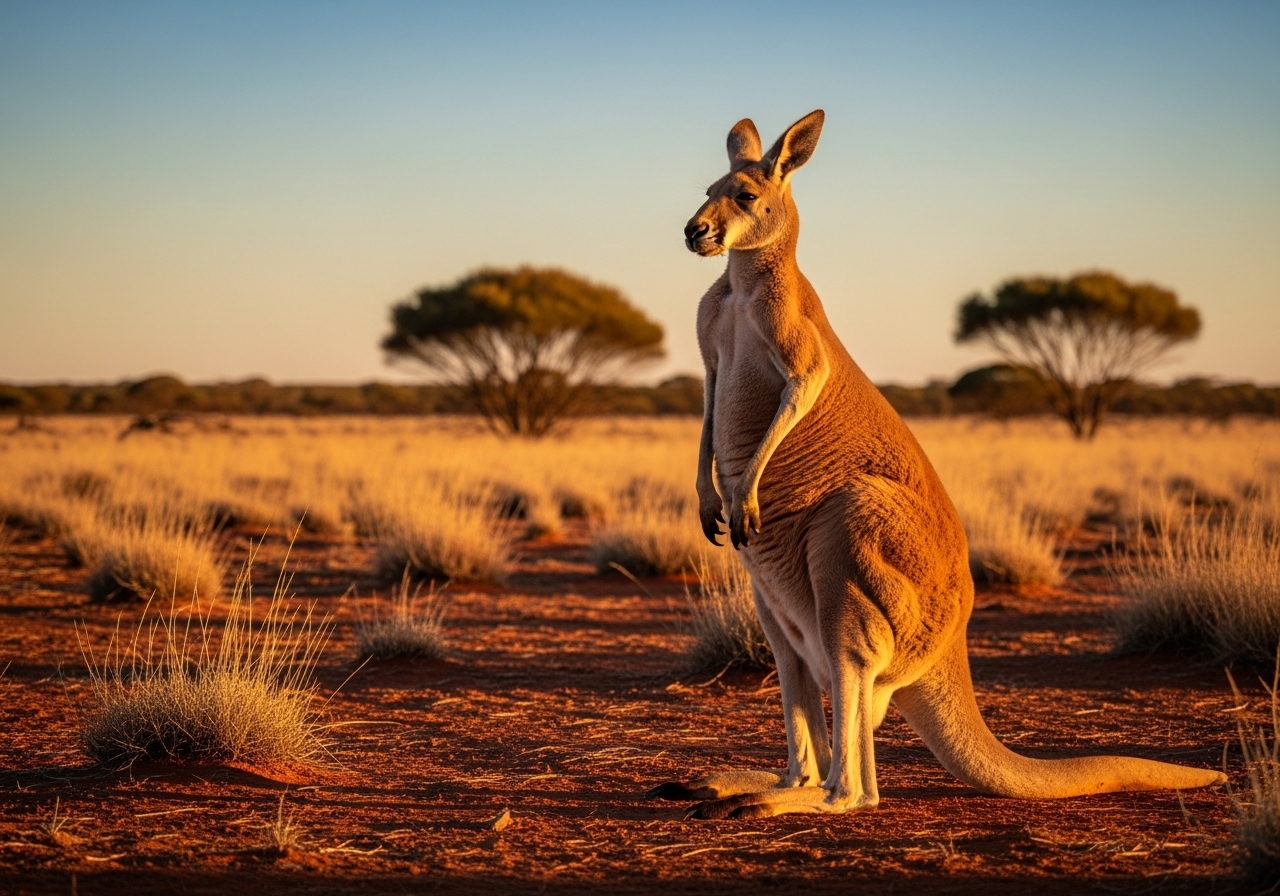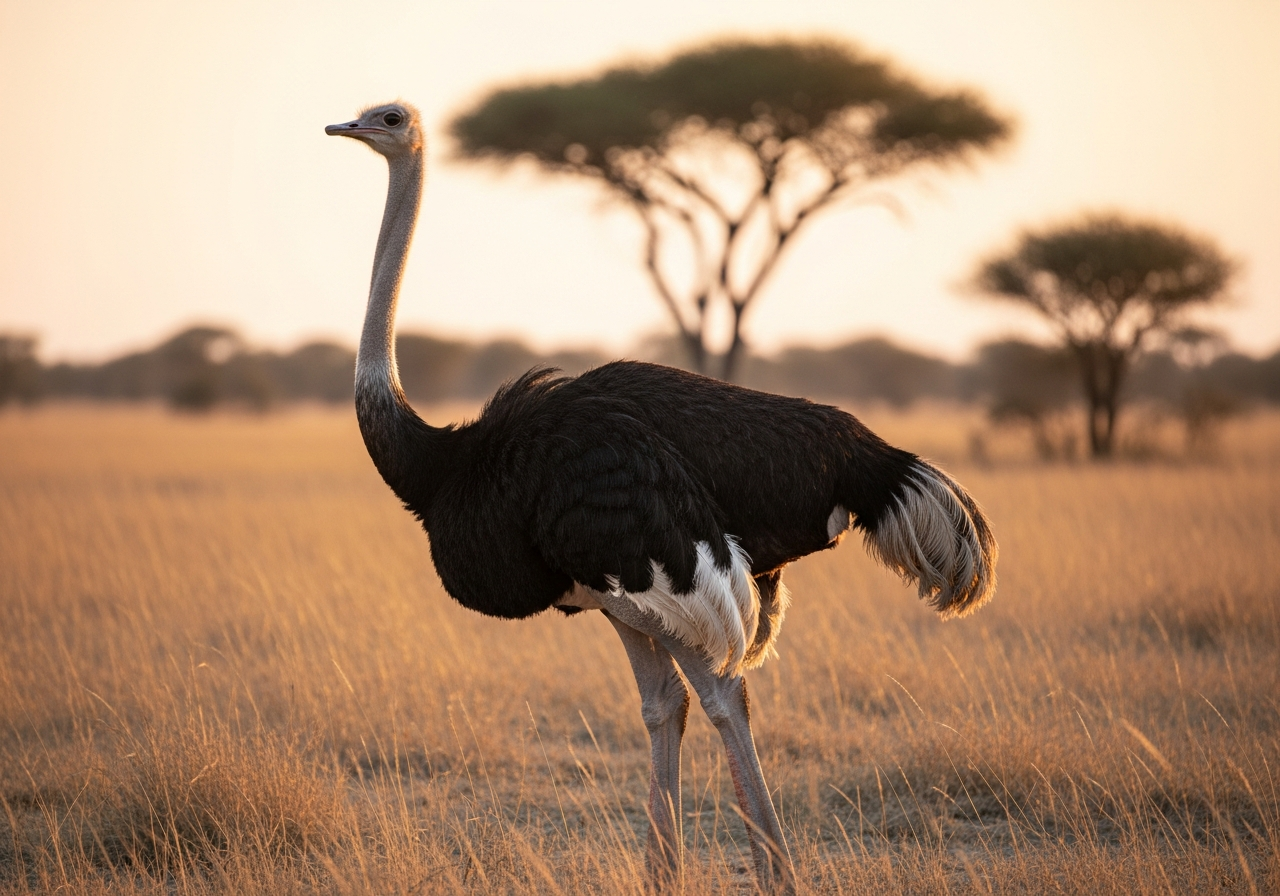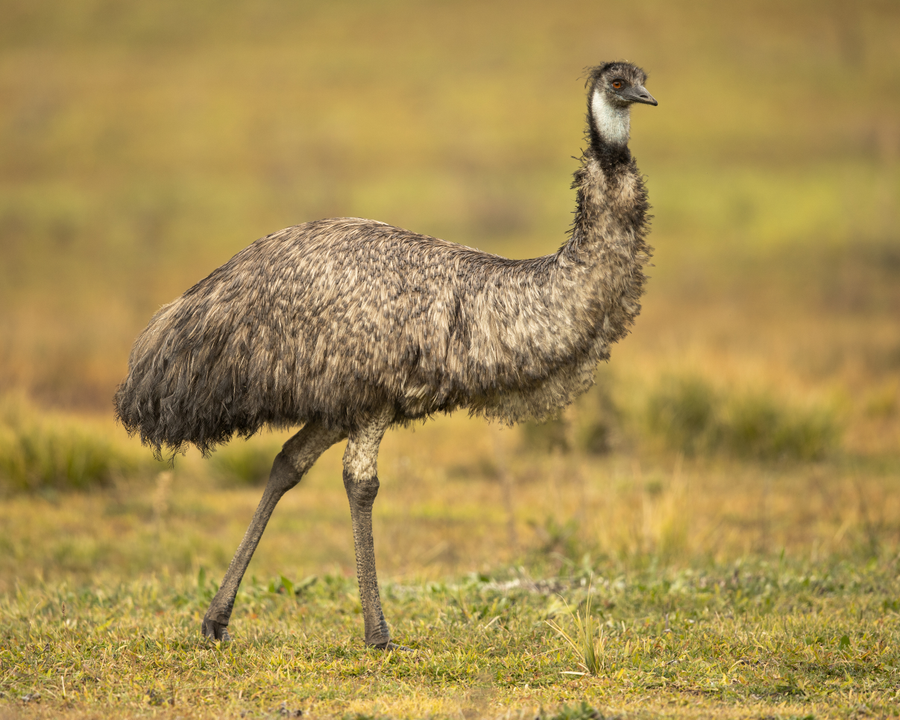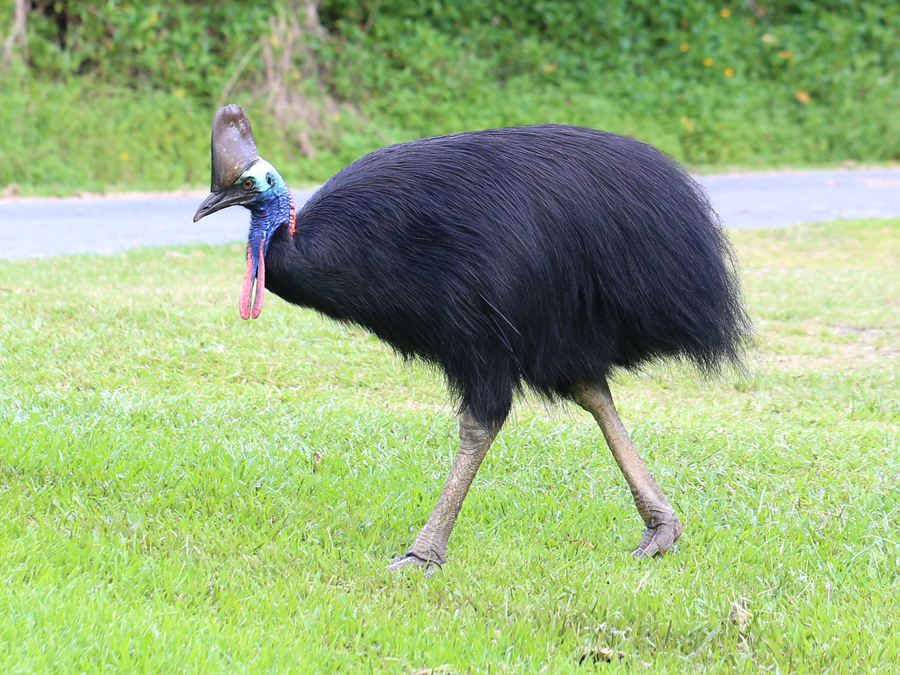
Photo: PaleoNeolitic (montage creator) BS Thurner Hof Kora27 Martin Sordilla · CC BY 2.0 · source · credits
The southern cassowary (Casuarius casuarius) is a bird of the family Casuariidae, in the order Casuariiformes.
Quick answer
The southern cassowary is a large, flightless rainforest bird of Queensland and New Guinea, often called the world's most dangerous bird. It stands up to 1.8 m (6 ft) tall, weighs 40 to 60 kg (88 to 132 lb) and carries a dagger-like claw on each foot. It feeds mainly on fallen fruit and can sprint through dense forest at up to 50 km/h (31 mph). Though listed as Least Concern globally, its Australian population is under pressure, and wild birds live 30 to 40 years.
Top questions about the Southern Cassowary
Also available in Español (Casuario común)
Southern Cassowary facts at a glance
- Weight 60 kg
- Length 1.8 m
- Top speed 50 km/h
- Lifespan 40 years
| Scientific name | Casuarius casuarius |
|---|---|
| Diet | Frugivore — rainforest fruit and fungi |
| Habitat | Tropical rainforest of Queensland and New Guinea |
| Lifespan | 30–40 years in the wild |
| Weight | 40–60 kg (88–132 lb); females larger and more colourful |
| Top speed | Up to 50 km/h (31 mph) through dense forest |
| Conservation status | Least Concern (IUCN) |
| Kingdom | Animalia |
|---|---|
| Phylum | Chordata |
| Class | Aves |
| Order | Casuariiformes |
| Family | Casuariidae |
| Genus | Casuarius |
Where it lives
The southern cassowary (Casuarius casuarius) is native to Tropical rainforest of northern Queensland, New Guinea, and Aru Islands — southern cassowary in Australia and New Guinea. — recorded across Oceania in this guide’s range summary.
For occurrence records, see GBIF species search and sources below.
How big is a southern cassowary?
An adult southern cassowary measures 1.8 m long — about 1.0× the height of an average adult person (1.73 m) — and weighs around 60 kg, about 86% of an average adult’s body weight (70 kg).
Length vs an average adult’s height (to scale)
What is a group of southern cassowaries called?
Group name (collective noun)
A group of Southern Cassowaries is called a mob.
Baby name
A baby Southern Cassowary is called a chick.
Explore more animal collective nouns and baby animal names .
A powerful and dangerous bird
The southern cassowary has earned a reputation as the most dangerous bird in the world, thanks to the long, dagger-like inner claw on each of its powerful feet. When cornered or defending chicks, it can deliver a forward kick strong enough to cause serious injury. Most attacks, however, involve birds that have been fed by people and have lost their natural wariness. Left alone in the forest, cassowaries are shy and prefer to avoid humans altogether.
The rainforest gardener
As a frugivore, the cassowary lives almost entirely on fruit that has fallen to the rainforest floor, along with some fungi. It swallows large fruits whole and passes the seeds unharmed, spreading them far from the parent tree. Many rainforest plants have seeds so big that the cassowary is one of the only animals able to move them, making the bird vital to the forest's regeneration. Some tree species depend on it so heavily that they struggle to spread where cassowaries have vanished.
Casque and appearance
The most striking feature of the cassowary is the tall, helmet-like casque on top of its head, made of a spongy material over a bony core. Its function is still debated, with theories ranging from a tool for pushing through undergrowth to a resonating chamber for deep calls. The bird's glossy black plumage contrasts with vivid blue and red skin on its bare neck and dangling wattles. Females are larger and more brightly coloured than males, the reverse of the pattern seen in many birds.
Breeding and fatherhood
In the cassowary's world it is the male that raises the young. After a female lays a clutch of large green eggs, she leaves to mate with other males, and the father takes over completely. He incubates the eggs for about 50 days, barely eating, then guards and leads the striped chicks for up to nine months. During this time the normally solitary male becomes fiercely protective and will charge anything that threatens his brood.
Speed and movement
Despite its bulk, the cassowary is remarkably fast and agile in thick forest. It can run at up to 50 km/h (31 mph), weaving between trees, and is also a capable jumper and a strong swimmer. When threatened it usually flees rather than fights, crashing through dense undergrowth that would stop a person. Its stout, three-toed feet give it both the traction to sprint and the weaponry to defend itself.
Conservation and threats
Globally the southern cassowary is listed as Least Concern by the IUCN, but its situation in Australia is far more precarious. Clearing of tropical rainforest, collisions with vehicles, dog attacks and feeding by tourists all threaten the northern Queensland population. Because the species reproduces slowly and needs large tracts of connected forest, local declines are hard to reverse. Protecting rainforest corridors and keeping wild birds from becoming used to people are key to their future in Australia.
Dig deeper into the Southern Cassowary
- Are Southern Cassowaries Dangerous?
Are southern cassowaries dangerous? Realistic risk, when incidents rise, and safety basics.
- Southern Cassowary: Key Facts
The southern cassowary is a heavy flightless bird with a dagger-like inner claw capable of fatal kicks, weighing up to 60 kg and living about 40 years.
- How Long Do Southern Cassowaries Live?
Southern Cassowary lifespan is typically 30–40 years in the wild. What shortens or extends life, life stages, and status (Least Concern).
- What Do Southern Cassowaries Eat?
What southern cassowaries eat: Frugivore — rainforest fruit and fungi, foraging style, and seasonal shifts in Tropical rainforest of Queensland and New Guinea.
- Where Do Southern Cassowaries Live?
Where southern cassowaries live: Tropical rainforest of Queensland and New Guinea, native range cues, and human overlap. Status Least Concern.
Explore the Southern Cassowary
Close relatives
- Emu Same family
- Chicken Same class
- Wandering Albatross Same class
- California Condor Same class
Range & geography
Did you know? Southern Cassowary facts
- Southern cassowaries are heavy flightless birds with dagger-like claws capable of fatal kicks.
- Yes — rare fatal encounters occur when birds are provoked or fed.
- Possibly protects head in vegetation or resonates low-frequency calls.
- Conservation: Least Concern.
Diet & feeding
Southern Cassowary feeds primarily as a fruit and fungi.
Adaptations
- The inner toe bears a 12 cm claw used in lethal kicks when cornered.
- Cassowaries swallow large fruit whole, spreading seeds across forests.
Behaviour & ecology
- The inner toe bears a 12 cm claw used in lethal kicks when cornered.
- Cassowaries swallow large fruit whole, spreading seeds across forests.
Communication
- Southern Cassowary uses calls and visual displays to communicate territory, alarm, and breeding status.
- Vocal repertoires vary by species and are often learned or refined during development.
Habitat & range
Tropical rainforests of Australia and New Guinea
Ecological role
Southern Cassowary contributes to seed dispersal, insect control, or nutrient cycling depending on diet and foraging habits.
Conservation status of the Southern Cassowary
The southern cassowary (Casuarius casuarius) is listed as Least Concern on the IUCN Red List. Least Concern (LC) is the IUCN's lowest-risk category, assigned to widespread, abundant species that have been evaluated and found not to be threatened. It does not mean a species faces no pressures — only that it is not currently at risk of extinction.
The southern cassowary (Casuarius casuarius) is assessed on the IUCN Red List. Look up on the IUCN Red List .
Frequently asked questions about the Southern Cassowary
Why is the cassowary called the most dangerous bird?
The cassowary has a long, dagger-like claw on the inner toe of each foot and can deliver a powerful kick. It earns the title because a defensive cassowary can seriously injure a person, though attacks are rare and usually involve birds fed by humans.
How big is a southern cassowary?
Southern cassowaries stand up to 1.8 m (6 ft) tall and weigh between 40 and 60 kg (88 to 132 lb). Females are noticeably larger and more brightly coloured than males.
What do cassowaries eat?
Cassowaries are frugivores that feed mainly on fruit fallen to the rainforest floor, along with some fungi. By swallowing large fruits whole and passing the seeds, they play a vital role in spreading rainforest plants.
How fast can a cassowary run?
A cassowary can run at up to 50 km/h (31 mph) even through dense forest. It is also an agile jumper and a strong swimmer, and usually chooses to flee rather than fight.
What is the casque on a cassowary's head for?
The tall, helmet-like casque is made of spongy tissue over bone, and its exact purpose is still uncertain. Suggested roles include pushing through undergrowth, signalling to other cassowaries, and helping the bird produce its deep, booming calls.
Are cassowaries endangered?
The southern cassowary is listed as Least Concern by the IUCN overall, but its Australian population is threatened. Rainforest clearing, vehicle collisions and dog attacks are the main dangers in northern Queensland.
What is a group of southern cassowaries called?
A group of Southern Cassowaries is called a mob.
What is a baby southern cassowary called?
A baby Southern Cassowary is called a chick.
Sources & references
This guide is compiled and reviewed against established zoological and conservation references. Key sources for the Southern Cassowary:
-
IUCN Red List of Threatened Species
Conservation status (Least Concern) reflects the IUCN Red List category for Casuarius casuarius.
-
iNaturalist — observations & photos
Search citizen-science observations and community IDs for Casuarius casuarius. Useful for range checks and recent sightings — not a substitute for formal Red List status.
-
GBIF — occurrence data
Global Biodiversity Information Facility species search for Casuarius casuarius. Explore published occurrence records used in range research.
-
eBird — bird observations
Cornell Lab eBird target search for Southern Cassowary. Check recent checklists and seasonal abundance where birders report this species.
- IUCN Red List — Casuarius casuarius.
Conservation status (Least Concern) and population trends.
- Animal Diversity Web — Casuarius casuarius. University of Michigan Museum of Zoology.
Life history, morphology, and range.
-
Global Animal Guide editorial standards
How we research, source, review, and update every guide for accuracy.