Image sourcing: see credits & licences
The water buffalo (Bubalus bubalis) is a mammal of the family Bovidae, in the order Artiodactyla.
Quick answer
The water buffalo is a large Asian bovine famous for wallowing in mud and water to stay cool. Domestic animals reach up to 700 kg and about 3 m in length, feeding on grasses and aquatic plants across wetlands, rice paddies, and floodplains. Domestic buffalo can live 20 to 25 years, while the truly wild population is small and scattered. The wild water buffalo is listed as Endangered.
Top questions about the Water Buffalo
Also available in Español (Búfalo de agua)
Water Buffalo facts at a glance
- Weight 700 kg
- Length 3 m
- Top speed 48 km/h
- Lifespan 25 years
| Scientific name | Bubalus bubalis |
|---|---|
| Diet | Herbivore — grasses, aquatic plants, and sedges |
| Habitat | Wetlands, rice paddies, and floodplains in Asia |
| Lifespan | 20–25 years (domestic); wild populations shorter |
| Weight | 300–700 kg (660–1,540 lb); wild bulls largest |
| Top speed | Up to 48 km/h (30 mph) when charging |
| Conservation status | Endangered (IUCN) |
| Kingdom | Animalia |
|---|---|
| Phylum | Chordata |
| Class | Mammalia |
| Order | Artiodactyla |
| Family | Bovidae |
| Genus | Bubalus |
Where it lives
The water buffalo (Bubalus bubalis) is native to Domesticated across Asia and globally; wild Asian buffalo (Bubalus arnee) in scattered reserves of India, Nepal, Bhutan, and Thailand. — recorded across Africa, Asia, Europe, North America, Oceania, South America in this guide’s range summary.
For occurrence records, see GBIF species search and sources below.
How big is a water buffalo?
An adult water buffalo measures 3 m long — about 1.7× the height of an average adult person (1.73 m) — and weighs around 700 kg, about 10× an average adult’s body weight (70 kg).
Length vs an average adult’s height (to scale)
What is a group of water buffalos called?
Group name (collective noun)
A group of Water Buffalos is called a herd.
Baby name
A baby Water Buffalo is called a calf.
Explore more animal collective nouns and baby animal names .
Size and physical features
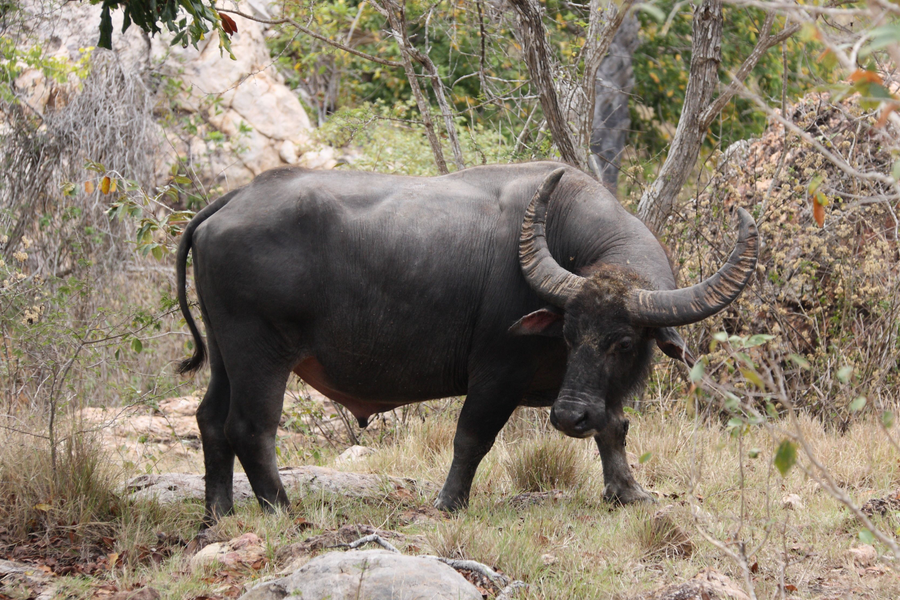
The water buffalo is one of the heaviest of all bovines, with large bulls reaching up to 700 kg and a body length of around 3 m. Both sexes carry sweeping, backward-curving horns, which in wild animals are among the widest of any living cattle. Its wide, splayed hooves and flexible leg joints spread the animal's weight and stop it sinking in soft mud. A sparse coat and dark grey-black skin suit a life spent partly submerged in water.
Wallowing and habitat
True to its name, the water buffalo depends on wetlands, rice paddies, and floodplains, and it wallows in mud and water for hours to cool down and shed parasites. It has few sweat glands, so submerging is essential for regulating body temperature in the tropical heat. Wallowing also coats the skin in mud, which dries into a protective layer against biting insects. This close tie to water shapes where the animal can live and how herds move through the landscape.
Diet and grazing
Water buffalo are herbivores that graze on grasses, sedges, and a wide range of aquatic plants growing in and around water. Like other cattle they are ruminants, digesting tough vegetation in a multi-chambered stomach and chewing the cud to extract more nutrients. Their ability to thrive on coarse wetland plants that other livestock ignore makes them valuable in marshy farming regions. They usually feed in the cooler hours of morning and evening, resting in water through the midday heat.
Domestic buffalo and human use
Domesticated for thousands of years, the water buffalo is a cornerstone of farming across South and Southeast Asia and beyond. It provides milk far richer than cow's milk, the basis for traditional mozzarella and many South Asian dairy products, as well as meat, hides, and dung used as fuel and fertiliser. As a draught animal it ploughs flooded rice fields where tractors struggle, earning the nickname "the living tractor of the East." Domestic buffalo commonly live 20 to 25 years.
Temperament and behaviour
Despite their bulk, domestic water buffalo are generally calm and manageable, and they bond closely with the people who work with them. They are social animals that gather in herds, with strong ties between females and their calves. When threatened, however, they can charge at up to 48 km/h and are capable of driving off predators as large as tigers. Wild buffalo are far more wary and aggressive than their domesticated relatives.
Why wild water buffalo are endangered
While hundreds of millions of domestic buffalo exist worldwide, the genuinely wild water buffalo is listed as Endangered by the IUCN, with only a few thousand animals left. Its numbers have crashed through habitat loss, hunting, and disease, but the greatest long-term threat is interbreeding with domestic and feral buffalo, which dilutes the wild gene pool. Remaining populations survive in scattered reserves in India, Nepal, and Southeast Asia. Protecting these isolated herds from crossbreeding is central to saving the wild form.
Dig deeper into the Water Buffalo
- Are Water Buffalos Endangered?
Are water buffalos endangered? Status Endangered, main threats, and what protection means.
- How Long Do Water Buffalos Live?
Water Buffalo lifespan is typically 20–25 years (domestic); wild populations shorter. What shortens or extends life, life stages, and status (Endangered).
- Water Buffalo: Key Facts
The water buffalo is a massive bovine domesticated across Asia for milk, meat, and draft work, with wild Asian populations wallowing in muddy pools to…
- What Do Water Buffalos Eat?
What water buffalos eat: Herbivore — grasses, aquatic plants, and sedges, foraging style, and seasonal shifts in Wetlands, rice paddies, and floodplains in Asia.
- Where Do Water Buffalos Live?
Where water buffalos live: Wetlands, rice paddies, and floodplains in Asia, native range cues, and human overlap. Status Endangered.
Explore the Water Buffalo
Close relatives
- Cow Same family
- Wildebeest Same family
- Domestic Goat Same family
- Saiga Antelope Same family
Collections
Did you know? Water Buffalo facts
- Water buffalo are large bovines domesticated for milk, meat, and draft work across Asia.
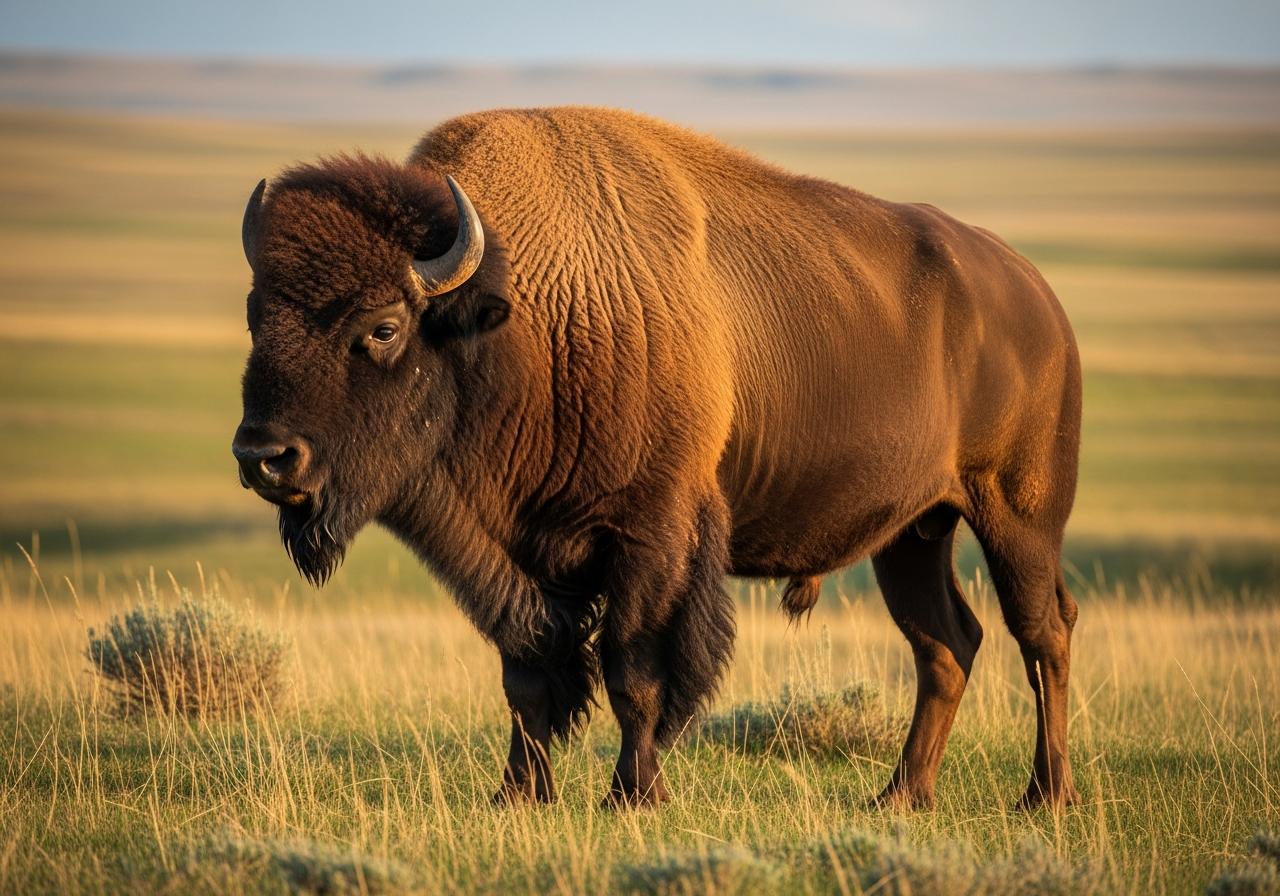
- Buffalo are Asian bovines adapted to wetlands; bison are American grassland specialists.
- Wild bulls can charge if threatened — give them space.
- Conservation: Endangered.
Diet & feeding
Water Buffalo feeds primarily as a grasses and aquatic plants. Wild Asian buffalo are rare and threatened by hybridisation with domestic stock.
Adaptations
- Over 130 million domestic water buffalo support rural economies.
- Wild Asian buffalo are rare and threatened by hybridisation with domestic stock.
Behaviour & ecology
- Over 130 million domestic water buffalo support rural economies.
- Wild Asian buffalo are rare and threatened by hybridisation with domestic stock.
Communication
- Water Buffalo uses scent, posture, and vocal signals to mark territory and coordinate social behaviour.
- Communication intensity often peaks during breeding seasons and territorial disputes.
Habitat & range
Wetlands and rice paddies in Asia
Ecological role
Water Buffalo plays a recognised ecological role in wetlands and rice paddies in asia.
Conservation status of the Water Buffalo
The water buffalo (Bubalus bubalis) is listed as Endangered on the IUCN Red List. Endangered (EN) means a species faces a very high risk of extinction in the wild. Populations are usually declining sharply due to habitat loss, hunting, disease, or climate pressure. It sits one level below Critically Endangered on the IUCN Red List.
The water buffalo (Bubalus bubalis) is assessed on the IUCN Red List. Look up on the IUCN Red List .
Frequently asked questions about the Water Buffalo
How much does a water buffalo weigh?
Large water buffalo weigh up to about 700 kg (1,540 lb), with wild bulls being the biggest. They can reach roughly 3 m in body length.
Why do water buffalo wallow in mud?
Water buffalo have very few sweat glands, so they wallow in mud and water to cool down. The mud also dries on their skin as a protective coat against biting insects and parasites.
What do water buffalo eat?
They are herbivores that graze on grasses, sedges, and aquatic plants in and around wetlands. As ruminants they chew the cud, which helps them digest coarse vegetation that other livestock avoid.
Are water buffalo dangerous?
Domestic water buffalo are usually calm and easy to handle. Wild buffalo are far more aggressive and can charge at up to 48 km/h, making them capable of fending off predators as large as tigers.
Are water buffalo endangered?
Domestic water buffalo are extremely numerous, but the truly wild water buffalo is listed as Endangered by the IUCN. Only a few thousand wild animals remain, threatened mainly by habitat loss and interbreeding with domestic buffalo.
How long do water buffalo live?
Domestic water buffalo typically live 20 to 25 years. Wild populations tend to have shorter lifespans because of predation, disease, and environmental pressures.
What is a group of water buffalos called?
A group of Water Buffalos is called a herd.
What is a baby water buffalo called?
A baby Water Buffalo is called a calf.
Sources & references
This guide is compiled and reviewed against established zoological and conservation references. Key sources for the Water Buffalo:
-
IUCN Red List of Threatened Species
Conservation status (Endangered) reflects the IUCN Red List category for Bubalus bubalis.
-
iNaturalist — observations & photos
Search citizen-science observations and community IDs for Bubalus bubalis. Useful for range checks and recent sightings — not a substitute for formal Red List status.
-
GBIF — occurrence data
Global Biodiversity Information Facility species search for Bubalus bubalis. Explore published occurrence records used in range research.
- IUCN Red List — Bubalus bubalis.
Conservation status (Endangered) and population trends.
- Animal Diversity Web — Bubalus bubalis. University of Michigan Museum of Zoology.
Life history, morphology, and range.
-
Global Animal Guide editorial standards
How we research, source, review, and update every guide for accuracy.