Image sourcing: see credits & licences
The wild turkey (Meleagris gallopavo) is a bird of the family Phasianidae, in the order Galliformes.
Quick answer
The wild turkey (Meleagris gallopavo) is a large ground-dwelling bird native to the forests and fields of North America and the ancestor of the familiar farmyard turkey. Toms can weigh up to 8 kg and are known for their bald, colourful heads and fanned tail displays. They forage on acorns, seeds, insects, and berries, run at up to 40 km/h, and manage strong short bursts of flight. The IUCN lists the species as Least Concern.
Top questions about the Wild Turkey
Wild Turkey facts at a glance
- Weight 8 kg
- Length 1.2 m
- Top speed 40 km/h
- Lifespan 10 years
| Scientific name | Meleagris gallopavo |
|---|---|
| Diet | Omnivore — acorns, seeds, insects, and berries |
| Habitat | Forests and fields of North America |
| Lifespan | 3–10 years in the wild |
| Weight | 3–8 kg (6.6–18 lb); toms larger than hens |
| Top speed | Up to 40 km/h (25 mph) running; strong short flight |
| Conservation status | Least Concern (IUCN) |
| Kingdom | Animalia |
|---|---|
| Phylum | Chordata |
| Class | Aves |
| Order | Galliformes |
| Family | Phasianidae |
| Genus | Meleagris |
Where it lives
The wild turkey (Meleagris gallopavo) is native to Wild turkey native to forests of the United States and northern Mexico — reintroduced across North America. — recorded across North America in this guide’s range summary.
For occurrence records, see GBIF species search and sources below.
How big is a wild turkey?
An adult wild turkey measures 1.2 m long — about 69% of the height of an average adult person (1.73 m) — and weighs around 8.0 kg, about 11% of an average adult’s body weight (70 kg).
Length vs an average adult’s height (to scale)
What is a group of wild turkeys called?
Group name (collective noun)
A group of Wild Turkeys is called a flock.
Baby name
A baby Wild Turkey is called a poult.
Explore more animal collective nouns and baby animal names .
Appearance and displays
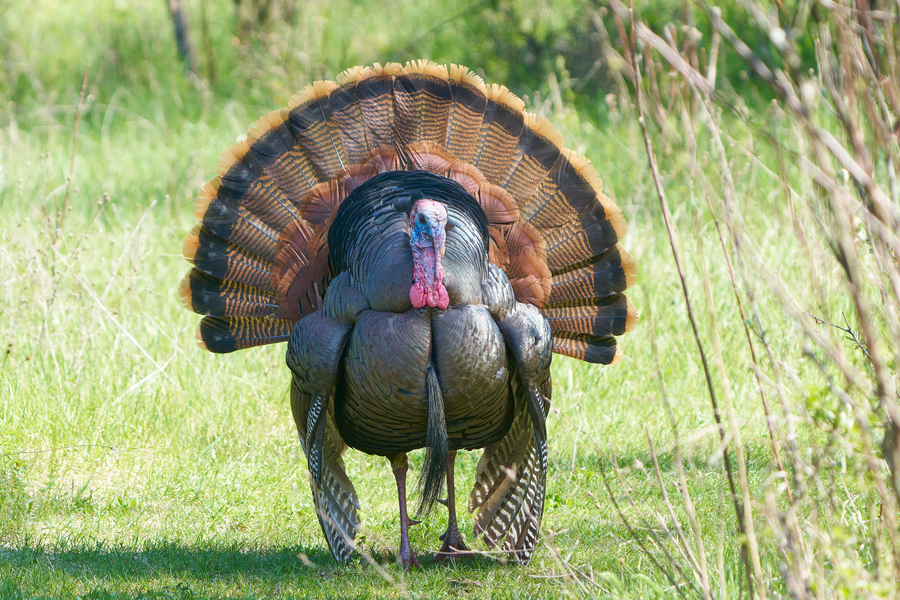
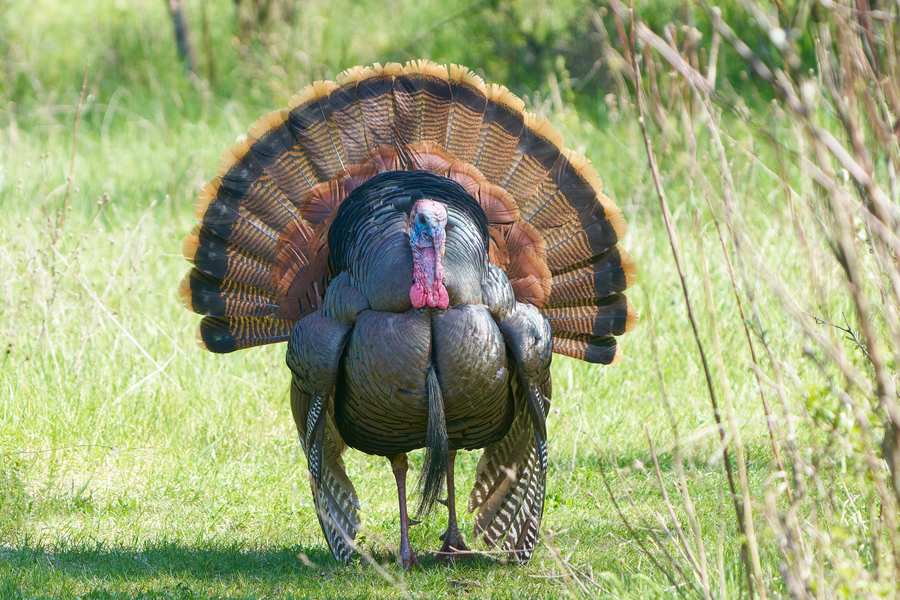
The wild turkey is a big, heavy-bodied bird with dark, iridescent feathers that gleam bronze and green in sunlight. Males, called toms or gobblers, have a bald head that can flush red, white, and blue, a fleshy snood over the bill, and a dangling wattle at the throat. In courtship a tom fans his broad tail, puffs out his body feathers, and struts while gobbling to attract hens and warn off rivals. Females, or hens, are smaller and more drably coloured for camouflage while nesting.
Diet and foraging
Wild turkeys are omnivores that spend much of the day walking and scratching the ground for food. Acorns and other nuts, seeds, and berries form the bulk of their diet, supplemented by insects, and they will scratch through leaf litter to expose hidden morsels. Young poults rely heavily on protein-rich insects in their first weeks of life. Diet shifts with the seasons, leaning on hard mast such as acorns through autumn and winter.
Behaviour and flocks
Wild turkeys are social birds that live in flocks for much of the year, with hens and young forming groups separate from bands of males outside the breeding season. They communicate with a wide range of calls, from the male's carrying gobble to soft yelps and clucks that keep a flock in contact. A pecking order sets which birds feed and roost in the best spots. Sharp eyesight and wariness make them surprisingly difficult to approach in the wild.
Roosting and flight
Although wild turkeys feed on the ground and can run at up to 40 km/h, they are far from flightless. When alarmed they can burst into powerful, short flights to clear obstacles or reach safety. Each evening they fly up to roost in trees, which keeps them out of reach of ground predators through the night. At first light they glide back down to resume feeding.
From wild bird to domestic turkey
The wild turkey is the wild ancestor of the domestic turkey raised for meat around the world. Indigenous peoples of Mesoamerica domesticated turkeys long before European contact, and the domestic bird was later carried to Europe and beyond. Centuries of selective breeding produced the heavier, broad-breasted farm turkey, which looks and behaves quite differently from its lean, agile wild cousin. The wild bird remains fully capable of flight and long days of foraging that farm breeds have largely lost.
Conservation and recovery
The wild turkey is listed as Least Concern by the IUCN, but it was not always secure. Overhunting and forest clearance drove wild populations to very low numbers across much of North America by the early 20th century. Reintroduction programmes, habitat protection, and regulated hunting have since restored the bird to much of its former range and beyond. It is now a common sight in woodlands and on field edges once more.
Dig deeper into the Wild Turkey
- How Fast Is A Wild Turkey?
Wild Turkey top speed is up to about 40 km/h (25 mph) running; strong short flight. Sprint vs endurance and what limits pace.
- How Long Do Wild Turkeys Live?
Wild Turkey lifespan is typically 3–10 years in the wild. What shortens or extends life, life stages, and status (Least Concern).
- Wild Turkey: Key Facts
Wild turkeys are large game birds that roost in trees and fan their tails during courtship, weighing up to 8 kg and living 10 years.
- What Do Wild Turkeys Eat?
What wild turkeys eat: Omnivore — acorns, seeds, insects, and berries, foraging style, and seasonal shifts in Forests and fields of North America.
- Where Do Wild Turkeys Live?
Where wild turkeys live: Forests and fields of North America, native range cues, and human overlap. Status Least Concern.
Explore the Wild Turkey
Close relatives
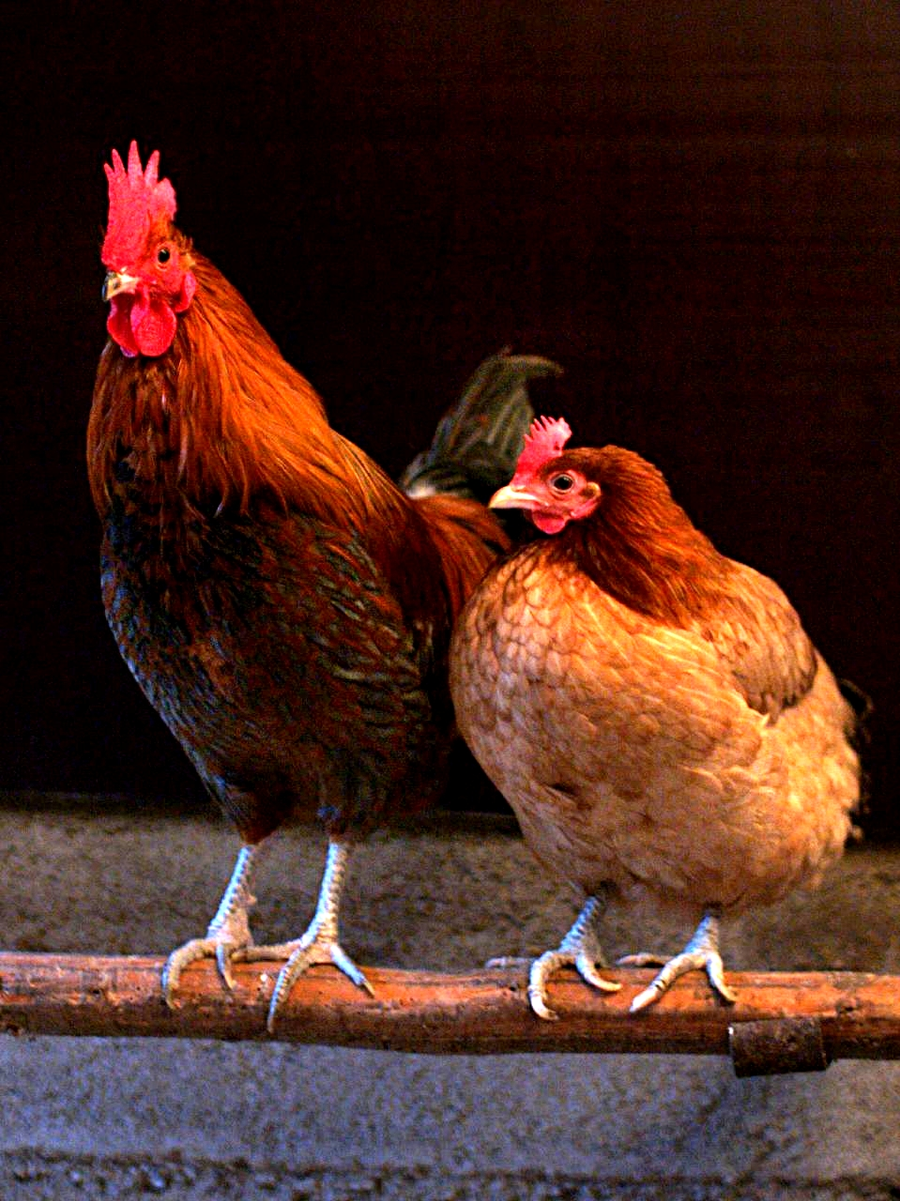
- Chicken Same family
- Rooster Same family
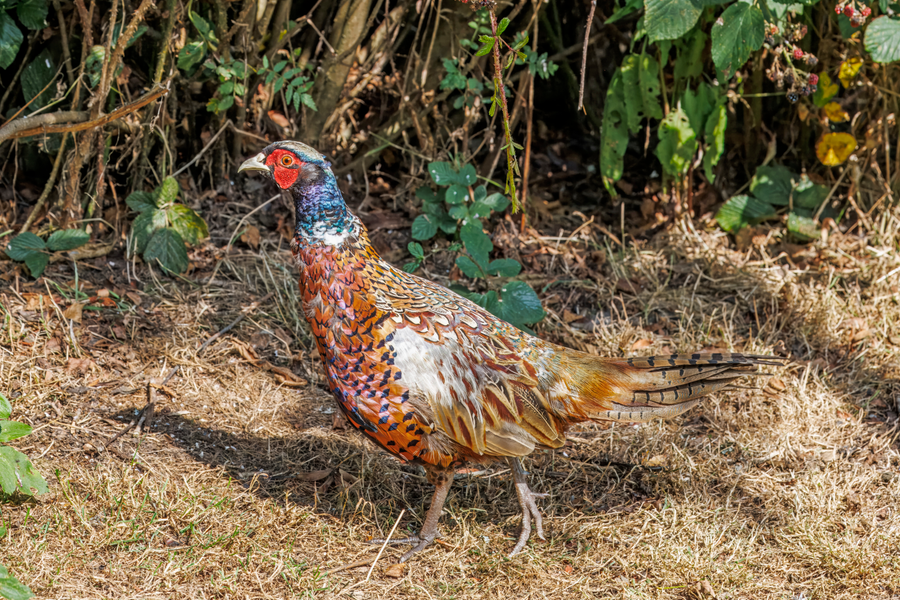
- Common Pheasant Same family
- Peacock Same family
Range & geography
Did you know? Wild Turkey facts
- Wild turkeys are large game birds that roost in trees and fan their tails during courtship.
- Yes — wild turkeys roost high in trees and fly strongly in short bursts.
- Domestic breeds are heavier and cannot fly well.
- Conservation: Least Concern.
Diet & feeding
Wild Turkey feeds primarily as a acorns, seeds, insects.
Adaptations
- Hunted nearly to extinction by 1900, reintroduction restored millions.
- Gobbling males strut with wattles engorged to impress hens.
Behaviour & ecology
- Hunted nearly to extinction by 1900, reintroduction restored millions.
- Gobbling males strut with wattles engorged to impress hens.
Communication
- Wild Turkey uses calls and visual displays to communicate territory, alarm, and breeding status.
- Vocal repertoires vary by species and are often learned or refined during development.
Habitat & range
North American forests and fields
Ecological role
Wild Turkey contributes to seed dispersal, insect control, or nutrient cycling depending on diet and foraging habits.
Conservation status of the Wild Turkey
The wild turkey (Meleagris gallopavo) is listed as Least Concern on the IUCN Red List. Least Concern (LC) is the IUCN's lowest-risk category, assigned to widespread, abundant species that have been evaluated and found not to be threatened. It does not mean a species faces no pressures — only that it is not currently at risk of extinction.
The wild turkey (Meleagris gallopavo) is assessed on the IUCN Red List. Look up on the IUCN Red List .
Frequently asked questions about the Wild Turkey
Can wild turkeys fly?
Yes. Wild turkeys feed and run on the ground but are strong short-distance fliers, bursting into the air to escape danger. Each evening they fly up into trees to roost safely overnight, gliding back down at dawn.
What do wild turkeys eat?
Wild turkeys are omnivores. Their diet is built around acorns and other nuts, seeds, and berries, along with insects, and they scratch through leaf litter to find food. Young poults depend heavily on insects for protein early in life.
How fast can a wild turkey run?
Wild turkeys can run at up to about 40 km/h on the ground. Combined with strong short bursts of flight, this speed makes them surprisingly hard to catch despite their bulk.
How big do wild turkeys get?
Wild turkeys weigh roughly 3 to 8 kg, with toms considerably larger than hens. They measure around 1.2 m in length, making them one of the largest ground birds in North America.
Are wild turkeys the same as farm turkeys?
They are the same species, but not the same bird. The wild turkey is the lean, agile ancestor of the domestic turkey, which has been selectively bred for centuries into a much heavier, broad-breasted farm animal that can barely fly.
What is the fleshy bit on a turkey's head called?
The flap of skin hanging over the bill is the snood, and the loose skin at the throat is the wattle. Both are most developed in males and can flush with bright colour during courtship displays.
What is a group of wild turkeys called?
A group of Wild Turkeys is called a flock.
What is a baby wild turkey called?
A baby Wild Turkey is called a poult.
Sources & references
This guide is compiled and reviewed against established zoological and conservation references. Key sources for the Wild Turkey:
-
IUCN Red List of Threatened Species
Conservation status (Least Concern) reflects the IUCN Red List category for Meleagris gallopavo.
-
iNaturalist — observations & photos
Search citizen-science observations and community IDs for Meleagris gallopavo. Useful for range checks and recent sightings — not a substitute for formal Red List status.
-
GBIF — occurrence data
Global Biodiversity Information Facility species search for Meleagris gallopavo. Explore published occurrence records used in range research.
-
eBird — bird observations
Cornell Lab eBird target search for Wild Turkey. Check recent checklists and seasonal abundance where birders report this species.
- IUCN Red List — Meleagris gallopavo.
Conservation status (Least Concern) and population trends.
- Animal Diversity Web — Meleagris gallopavo. University of Michigan Museum of Zoology.
Life history, morphology, and range.
-
Global Animal Guide editorial standards
How we research, source, review, and update every guide for accuracy.