Quick answer
The jaguar is the largest cat in the Americas and the third largest in the world, weighing up to 120 kg (265 lb). Found from Mexico through Central and South America, it has the strongest bite relative to size of any big cat and often kills by piercing the skull. Wild jaguars typically live 12 to 15 years.
Key takeaway
The jaguar is the largest cat in the Americas and the third largest in the world, weighing up to 120 kg (265 lb). Found from Mexico through Central and South America, it has the strongest bite relative to size of any big cat and often kills by piercing the skull. Wild jaguars typically live 12 to 15 years.
Jaguar overview
Jaguar (Panthera onca) is a mammal listed here as Near Threatened. Typical weight 55–120 kg (120–265 lb); lifespan around 12–15 years in the wild.
Jaguar ecology
Diet: Carnivore. Habitat: Rainforest, wetland, grassland. Movement and social systems reflect those pressures across the native range.
Jaguars and people
Learn before you travel or keep related pets. Wild jaguars are not toys; captive care needs species-specific husbandry.
Status and further reading
Conservation label in our guides: Near Threatened. See the full Jaguar profile for taxonomy, FAQs, and related topic guides on this site.
Bite and hunting style
The jaguar has the most powerful bite of any big cat relative to its size. Unlike lions or tigers, which usually go for the throat, jaguars often kill by biting directly through the skull or the back of the neck. They are ambush hunters and will take prey as varied as capybara, deer, caiman, and turtles.
A cat that loves water
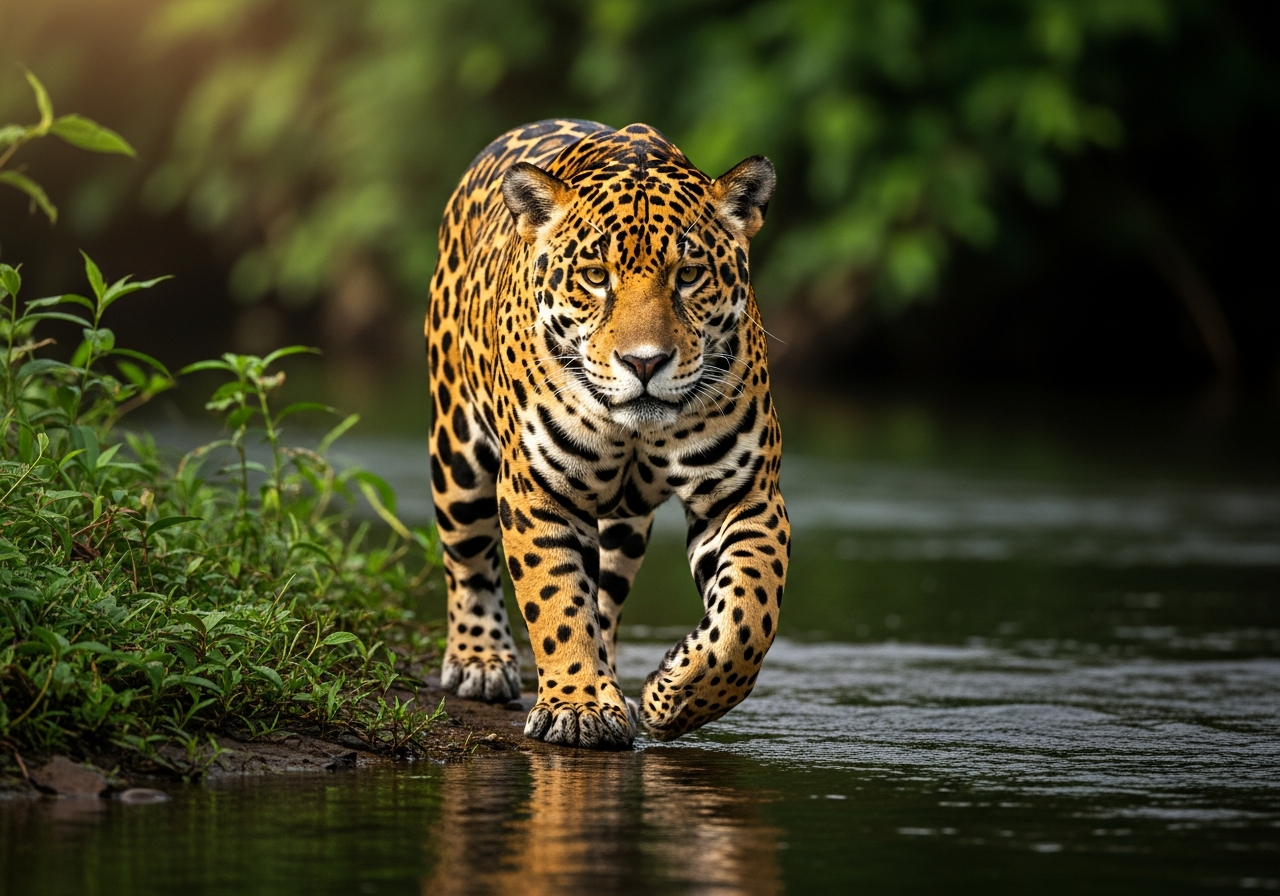
Jaguars are strong swimmers and are far more comfortable in water than most cats. They often hunt along rivers and in wetlands such as the Pantanal, preying on fish, caimans, and turtles, and will readily cross large rivers within their territory.
Sources
Jaguar FAQs
What are key facts about jaguars?
The jaguar is the largest cat in the Americas and the third largest in the world, weighing up to 120 kg (265 lb). Found from Mexico through Central and South America, it has the strongest bite relative to size of any big cat and often kills by piercing the skull. Wild jaguars typically live 12 to 15 years.
What is the scientific name of the jaguar?
Panthera onca — used in research and conservation listings for jaguars.
What do jaguars eat?
Jaguars are described as carnivores, with seasonal and regional variation in Rainforest, wetland, grassland.
Where do jaguars live?
They are associated with Rainforest, wetland, grassland. Local presence depends on food, cover, and human land use.
What is the conservation status of jaguars?
Listed in our guides as Near Threatened. Check the IUCN Red List and national assessments for the latest formal category.