Quick answer
Northern Mockingbirds live in Open woodland, gardens, parks, suburban areas, scrub. Within that range they pick microhabitats that supply cover, food (Omnivore (insects in summer, berries in winter)), water, and breeding sites — and they disappear where those features are lost.
Key takeaway
Northern Mockingbirds live in Open woodland, gardens, parks, suburban areas, scrub. Within that range they pick microhabitats that supply cover, food (Omnivore (insects in summer, berries in winter)), water, and breeding sites — and they disappear where those features are lost.
Northern Mockingbird native habitat
Northern Mockingbirds (Mimus polyglottos) are tied to Open woodland, gardens, parks, suburban areas, scrub. Look for sites that match their diet (Omnivore (insects in summer, berries in winter)) and movement style; seasonal rains or prey shifts can expand or shrink local occupancy.
Microhabitats northern mockingbirds prefer
Cover for resting, access to food, and safe breeding sites decide day-to-day use. Edge habitats can help adaptable populations but fail specialists that need continuous wild land.
How people change Northern Mockingbird range
Farms, suburbs, and roads create opportunity for some individuals and lethal risk for others. Fragmentation without corridors isolates northern mockingbird groups and raises local extinction risk.
Conservation geography for northern mockingbirds
Status in our guides: <strong>Least Concern</strong>. Protecting linked habitat often beats a single fenced reserve. Watch from a distance and never feed wild northern mockingbirds.
Night singing and territorial defence
Mockingbirds are highly territorial and will vigorously defend their area against much larger birds and animals, sometimes dive-bombing cats, dogs, and people who approach their nest. Unmated males sing continuously through the night during breeding season — a behaviour admired by some and a source of sleep complaints from others. Once paired, night singing typically decreases. Their territoriality is intense enough
Appearance and range
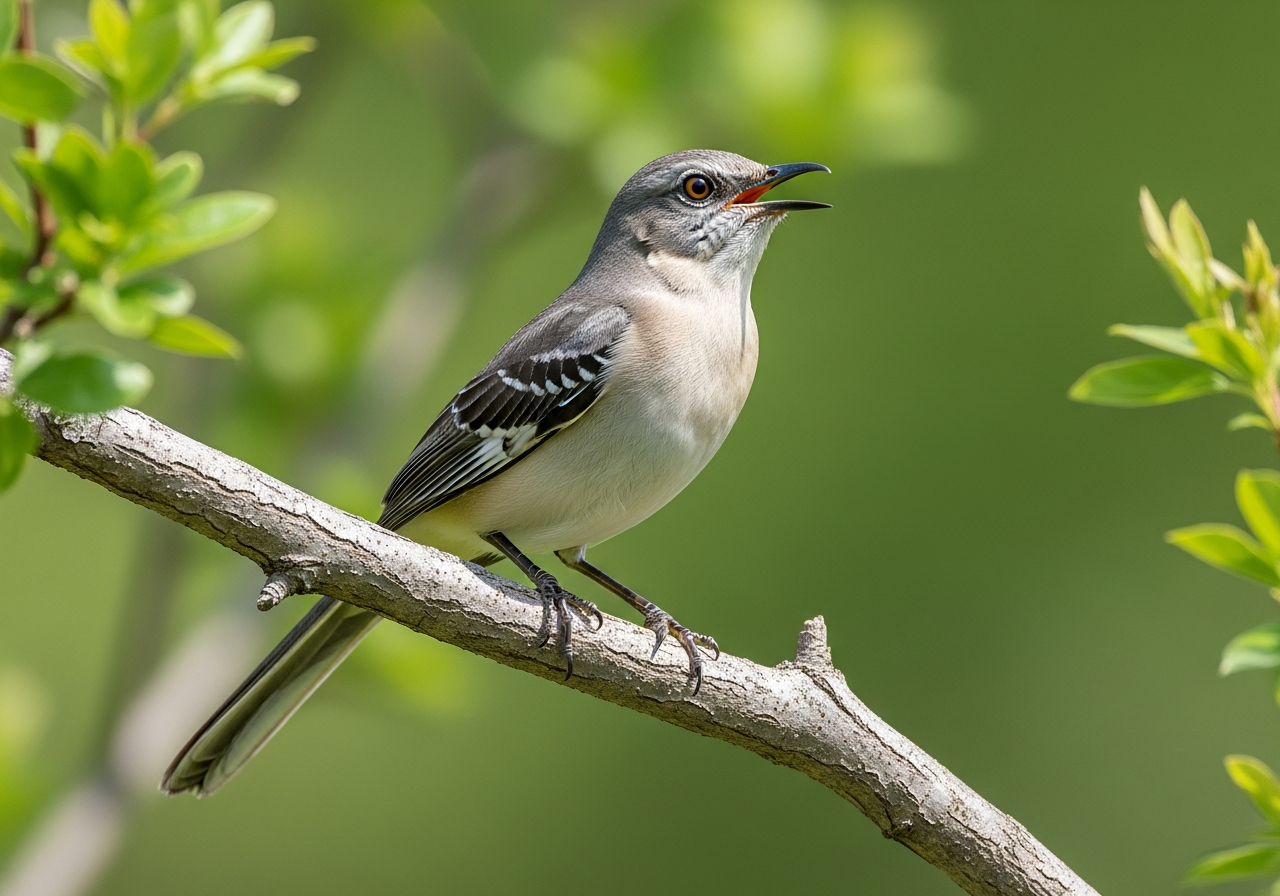
The northern mockingbird is a slender songbird with grey upper parts, whitish underparts, and white patches on its wings that flash conspicuously in flight. It is widespread across the continental United States, southern Canada, Mexico, and the Caribbean, and is a year-round resident in most of its range — it does not make long migrations. It is the official state bird of five US states.
Sources
Northern Mockingbird FAQs
Where do northern mockingbirds live?
Northern Mockingbirds live in Open woodland, gardens, parks, suburban areas, scrub. Within that range they pick microhabitats that supply cover, food (Omnivore (insects in summer, berries in winter)), water, and breeding sites — and they disappear where those features are lost.
What is the scientific name of the northern mockingbird?
Mimus polyglottos — used in research and conservation listings for northern mockingbirds.
What do northern mockingbirds eat?
Northern Mockingbirds eat insects in summer and berries in winter, with seasonal and regional variation in Open woodland, gardens, parks, suburban areas, scrub.
What is the conservation status of northern mockingbirds?
Listed in our guides as Least Concern. Check the IUCN Red List and national assessments for the latest formal category.