Quick answer
Red Pandas (Ailurus fulgens) are listed in our guides as Endangered. That IUCN-style label describes global extinction risk and can differ from national lists — habitat loss and human pressure still decide local survival.
Key takeaway
Red Pandas (Ailurus fulgens) are listed in our guides as Endangered. That IUCN-style label describes global extinction risk and can differ from national lists — habitat loss and human pressure still decide local survival.
Red Panda conservation status
Red Panda (Ailurus fulgens) is recorded here as Endangered. Global categories summarise extinction risk; regional populations can be safer or worse than the headline label.
Threats facing red pandas
Habitat loss around Temperate Himalayan forest, hunting or persecution, climate pressure, and conflict with people are common drivers. Exact ranking of threats varies by region.
Outlook for Red Panda populations
Where monitoring exists, trends track protected-area quality and enforcement. Fragmented groups need corridors and genetic exchange to avoid local extinction.
What actually helps
Support verified conservation programmes, cut demand for illegal wildlife products, and protect habitat. Tourism helps only when operators follow ethical wildlife standards.
Not really a panda
Despite the name and a shared love of bamboo, the red panda is not closely related to the giant panda. It is the sole living species in its own family, Ailuridae, and is more closely related to raccoons, weasels, and skunks. It even has a 'false thumb', an extended wrist bone, for gripping bamboo.
Diet and lifestyle
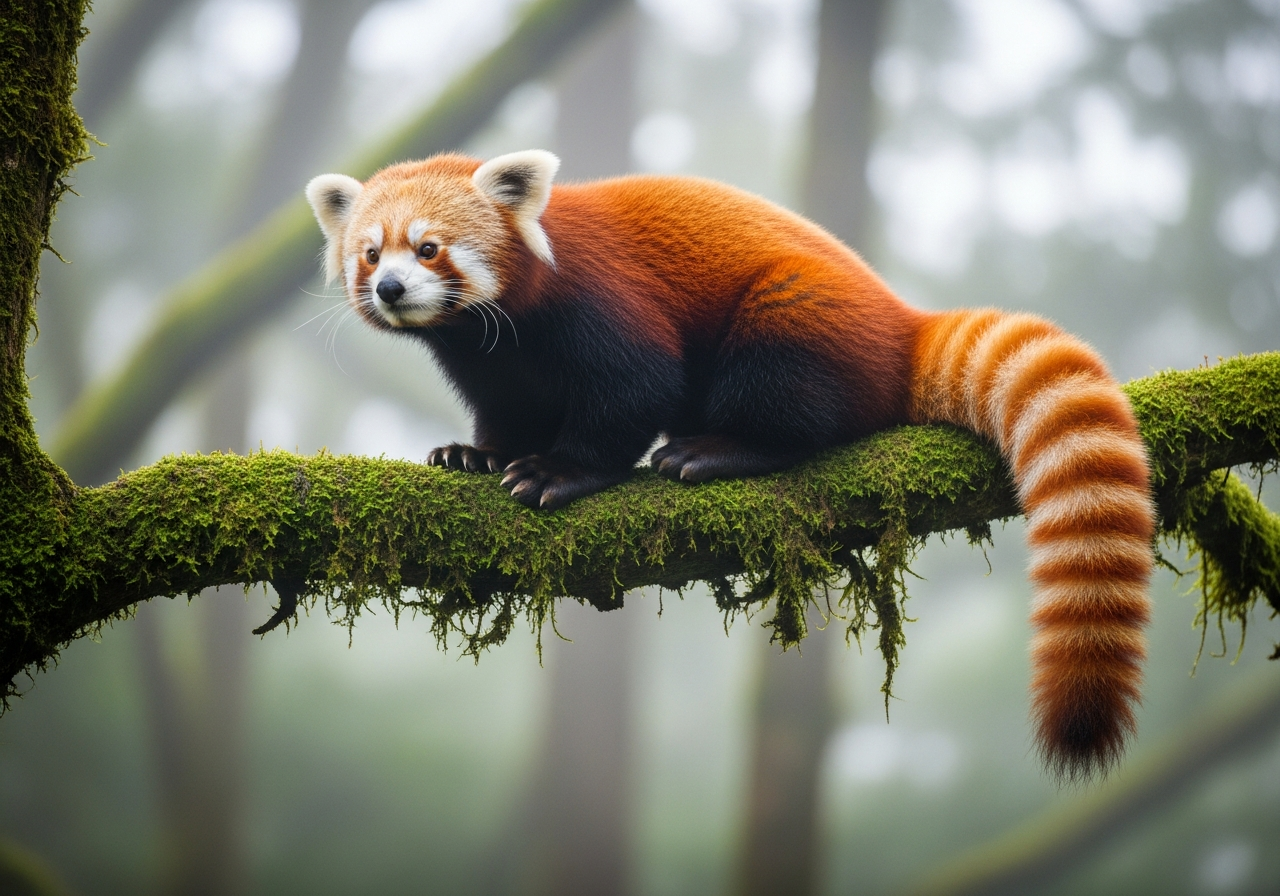
Red pandas spend most of their lives in the trees, where their reddish coats blend with reddish moss and lichen. They are mainly active at dawn and dusk and eat huge amounts of bamboo to make up for how little nutrition they extract from it, supplementing it with fruit, berries, eggs, and insects.
Sources
Red Panda FAQs
Are red pandas endangered?
Red Pandas (Ailurus fulgens) are listed in our guides as Endangered. That IUCN-style label describes global extinction risk and can differ from national lists — habitat loss and human pressure still decide local survival.
What is the scientific name of the red panda?
Ailurus fulgens — used in research and conservation listings for red pandas.
What do red pandas eat?
Red Pandas eat mostly bamboo, with seasonal and regional variation in Temperate Himalayan forest.
Where do red pandas live?
They are associated with Temperate Himalayan forest. Local presence depends on food, cover, and human land use.
What is the conservation status of red pandas?
Listed in our guides as Endangered. Check the IUCN Red List and national assessments for the latest formal category.