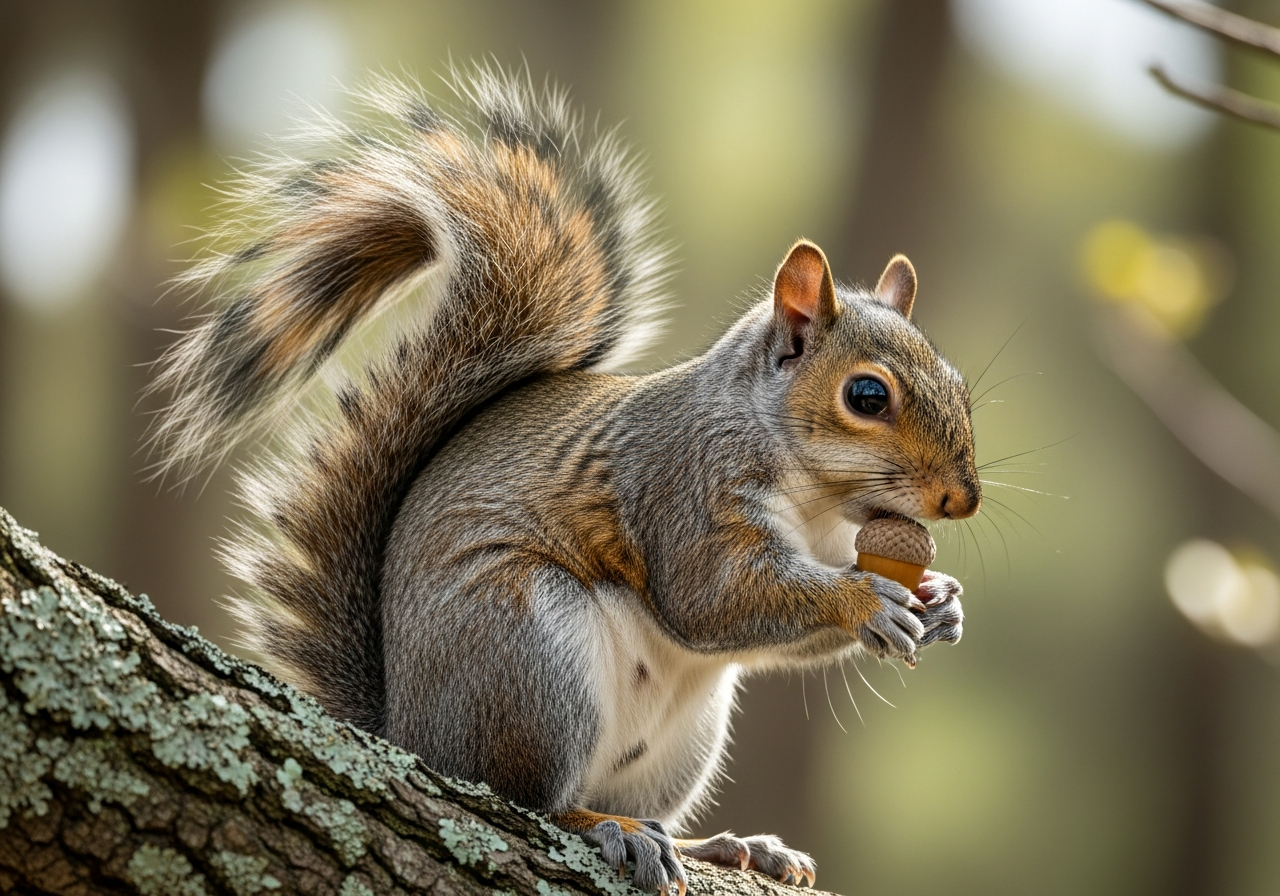
Quick answer
A squirrel can reach about Up to 32 km/h (20 mph) in short bursts. Terrain, motivation, and body condition (400–700 g (0.9–1.5 lb)) all change the number you would measure.
Key takeaway
A squirrel can reach up to about 32 km/h (20 mph) in short bursts. Terrain, motivation, and body condition (400–700 g (0.9–1.5 lb)) all change the number you would measure.
Squirrel top speed
Published estimates put squirrel speed near Up to 32 km/h (20 mph). These are usually peak sprint figures, not cruising speeds held for long distances across Woodlands, parks, and gardens.
Sprint versus endurance
Most animals accelerate hard for capture or escape, then recover. Open ground favours higher recorded speeds; dense cover favours agility over raw pace.
Anatomy behind squirrel speed
Limb proportions, muscle fibre mix, and mass (400–700 g (0.9–1.5 lb)) shape acceleration and top end. Heavier individuals may hit hard but tire sooner.
Reading speed claims
Methods differ (radar, filming, anecdote). Prefer ranges from recent field studies over viral single numbers, and never try to outrun wildlife.
Reproduction and life cycle
Female gray squirrels usually have one or two litters a year, each with two to four young born blind and hairless in a tree nest. The young are weaned at around 10 weeks and become independent soon after. Most squirrels die young, but those that survive their first year may live around six years in the wild. Predators include hawks, owls, foxes, and domestic cats.
Behavior and agility
Squirrels are remarkably acrobatic, leaping between branches and running headfirst down tree trunks thanks to ankle joints that rotate to grip bark. Their long, bushy tails aid balance, act as a rudder during jumps, and serve as a blanket in cold weather. They are active by day and stay alert for predators, flicking their tails and giving sharp calls when alarmed. Gray squirrels build leafy nests called dreys high in
Sources
Squirrel FAQs
How fast is a squirrel?
A squirrel can reach up to about 32 km/h (20 mph) in short bursts. Terrain, motivation, and body condition (400–700 g (0.9–1.5 lb)) all change the number you would measure.
What is the scientific name of the squirrel?
Sciurus carolinensis — used in research and conservation listings for squirrels.
What do squirrels eat?
Squirrels eat mostly nuts, seeds and fruit, with seasonal and regional variation in Woodlands, parks, and gardens.
Where do squirrels live?
They are associated with Woodlands, parks, and gardens. Local presence depends on food, cover, and human land use.
What is the conservation status of squirrels?
Listed in our guides as Least Concern. Check the IUCN Red List and national assessments for the latest formal category.