What Is the Deadliest Spider in the World?
Brazilian wandering spiders and Sydney funnel-web spiders have medically significant venom. Antivenom has made fatalities rare where treatment is available.
Global Animal Guide · June 28, 2026
Quick answer
The Brazilian wandering spider and Sydney funnel-web spider have among the most dangerous spider venoms to humans, though antivenom means confirmed deaths are rare in treated cases.
Last updated: June 2026 — figures reflect widely cited scientific estimates.
The two serious contenders
If “deadliest” means the venom most likely to kill an untreated adult, the title goes to one of two spiders: the Brazilian wandering spiders of the genus Phoneutria, and the Sydney funnel-web, Atrax robustus. Both produce venoms that act directly on the human nervous system rather than merely causing local pain, and both have caused documented human deaths in the era before antivenom existed.
The Sydney funnel-web is the more clear-cut case. Its venom contains a peptide toxin that jams the sodium channels in nerve cells, forcing them to fire repeatedly. The result is a storm of neurotransmitter release: sweating, salivation, muscle twitching, a racing then failing heart, and fluid flooding the lungs. What makes it unusual is a quirk of susceptibility. The toxin is devastating to primates but has comparatively little effect on many other mammals — a dog or a cat can survive a bite that would put a person in intensive care. Humans are, by evolutionary accident, among the worst possible victims of a spider that never evolved to bite us at all.
Brazilian wandering spiders are the other candidate. They are large, fast, and defensive rather than retiring, and they wander at ground level at night instead of sitting in a web, which is exactly the behaviour that puts them in contact with people — in shoes, in laundry, in banana crates. Their venom is a cocktail of neurotoxins that causes intense pain, sweating, irregular heartbeat and, notoriously, prolonged painful erections in men, a side effect that has attracted genuine pharmacological research.
Why antivenom rewrote the ranking
The honest answer to “which spider kills the most people” is: almost none of them, any more. The Sydney funnel-web is the clearest illustration. Before an antivenom was developed and distributed in the early 1980s, funnel-web envenomation was a genuine emergency with a real death toll. Since then, deaths have essentially stopped in Australia despite the spider being common in one of the country’s most densely populated regions. The venom did not change. The medicine did.
This is why venom potency and lethality have come apart. A spider can have the most dangerous venom in the world and kill nobody, provided that bites are recognised, hospitals stock the right vial, and patients arrive in time. Conversely, a far weaker venom could in principle kill more people if it occurred in a region with no antivenom and no transport to a clinic. Geography and health infrastructure now matter more than toxicology.
Spiders as a whole are a minor cause of death worldwide. Snakes such as the inland taipan and king cobra command far more medical attention, and the box jellyfish accounts for more marine fatalities than any spider does on land. By a wide margin, the animal responsible for the most human deaths is the mosquito, which kills through the diseases it carries rather than through any venom of its own.
The medically significant runners-up
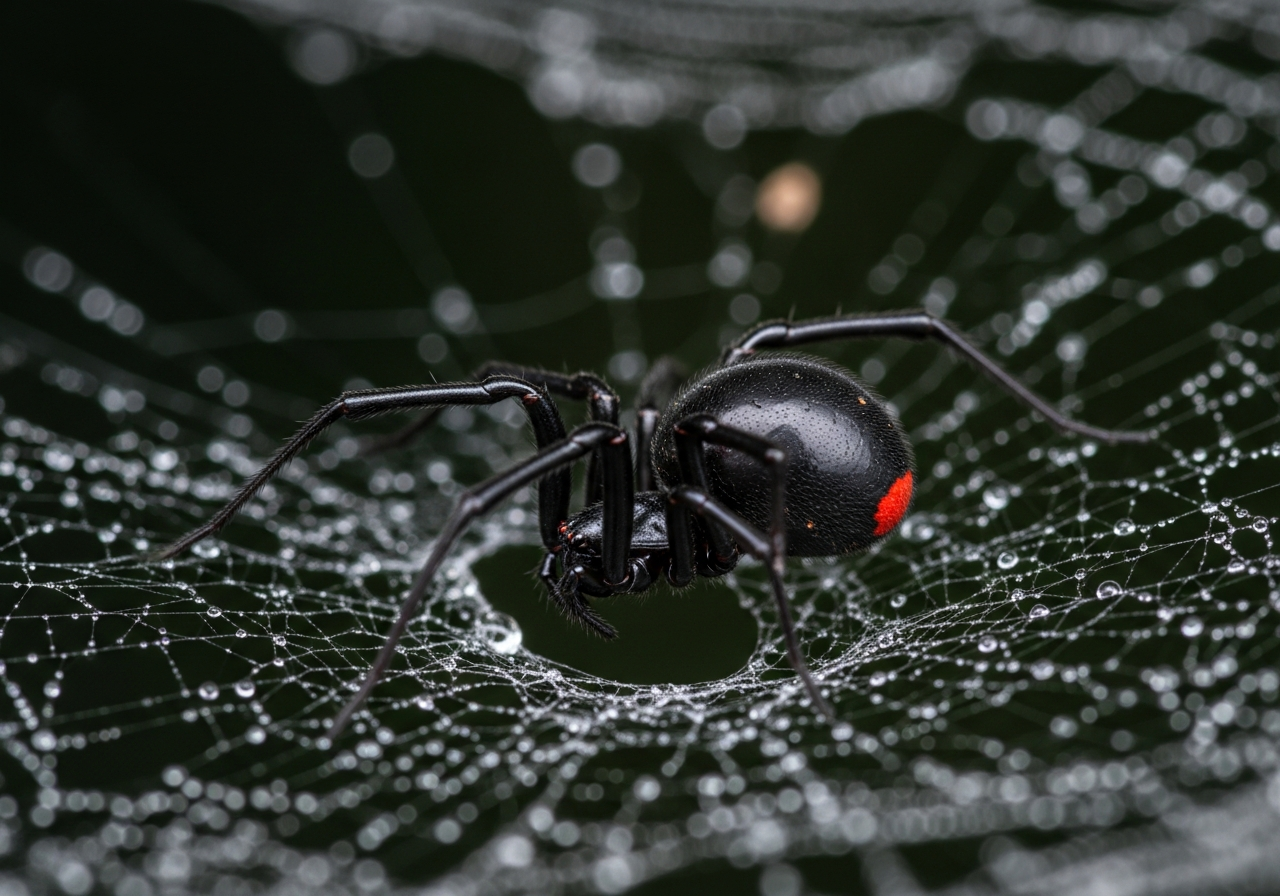
Widow spiders — including the black widow spider of North America and its relatives worldwide — are the most widely encountered dangerous spiders. Their venom is neurotoxic and causes latrodectism: cramping abdominal pain severe enough to be mistaken for appendicitis, sweating, and hypertension. It is genuinely unpleasant and occasionally serious for children, the elderly, and people with heart conditions. It is very rarely fatal in healthy adults, and many bites are “dry” or deliver very little venom.
The brown recluse spider works by a different mechanism entirely. Rather than attacking nerves, its venom contains an enzyme that destroys cell membranes, which can produce a slowly spreading necrotic wound. These lesions can be disfiguring and slow to heal, but systemic reactions are uncommon and deaths are exceptionally rare. Brown recluse bites are also drastically over-diagnosed — a great many wounds blamed on the spider, often far outside its range, turn out to be bacterial infections.
Then there are the spiders with fearsome reputations and unremarkable venom. A tarantula can deliver a bite roughly comparable to a bee sting; its real defence in the American species is a cloud of barbed urticating hairs flicked from the abdomen, which irritate skin and eyes. The giant house spider is startlingly large and completely harmless. Even the jumping spider, a capable visual predator, poses no threat to anything bigger than an insect.
Why LD50 numbers mislead
Most “deadliest spider” lists are ultimately ranking one number: the LD50, the dose that kills half of a test population. That figure is nearly always measured in mice, and extrapolating from a mouse to a human is exactly where the funnel-web example shows the method breaking down — the same venom that barely troubles some mammals is a primate-specific catastrophe.
LD50 also ignores everything that decides real outcomes. How much venom can the spider actually inject? Funnel-webs and widows carry tiny volumes; a big scorpion or a viper delivers far more. Does the spider bite defensively at all? How deep do the fangs reach — many spiders cannot penetrate human skin. Is the biter male or female? In the Sydney funnel-web the usual pattern is reversed: the wandering male is several times more dangerous than the larger female, and males roaming for mates in warm, wet weather cause most serious cases.
What actually reduces risk
Nearly all spider bites are defensive, delivered when a spider is trapped against skin. That makes prevention behavioural rather than technological: shake out shoes and clothing left on the floor in regions where wandering spiders occur, wear gloves when moving woodpiles or reaching into sheds, and check gardening gear. In funnel-web country the standard first aid is a pressure immobilisation bandage and a splint to slow venom movement through the lymphatic system, then transport to hospital — not a tourniquet, not cutting, not suction.
It is also worth keeping the risk in proportion. Spiders are overwhelmingly beneficial, consuming vast numbers of insects, and the vast majority of the roughly fifty thousand described species cannot meaningfully harm a person. Fewer than a dozen genera worldwide are of real medical concern. The deadliest spider in the world is, in practice, a spider that hardly kills anyone — which is the most encouraging superlative in this entire category.
Sources
Related reading: Animal profiles · Fastest animals on Earth · Support wildlife protection
Frequently asked questions
What Is the Deadliest Spider in the World
The Brazilian wandering spider and Sydney funnel-web spider have among the most dangerous spider venoms to humans, though antivenom means confirmed deaths are rare in treated cases.
How do scientists measure this record?
Records come from peer-reviewed studies, GPS tracking, high-speed video, toxicology assays, and acoustic meters — field conditions always add variation.
Can the record holder change?
Yes — new measurements, species reclassification, or better technology can update rankings. Always check whether speed, venom, or size is measured differently.