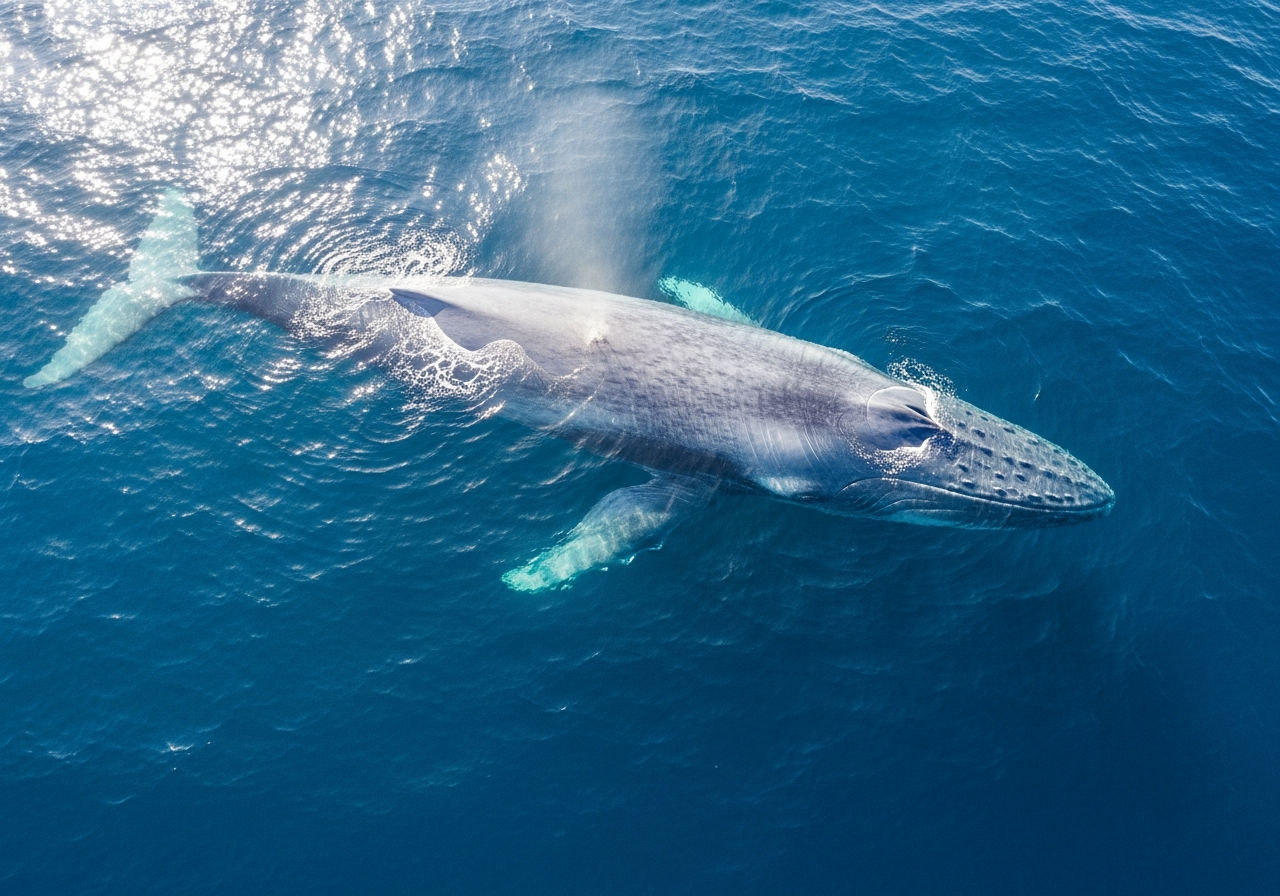
Quick answer
Blue Whales typically weigh around Up to 180 tonnes, with length and height varying by sex and population. Size influences diet (Carnivore (krill)), home range, and predator risk.
Key takeaway
Blue Whales typically weigh around Up to 180 tonnes, with length and height varying by sex and population. Size influences diet (Carnivore (krill)), home range, and predator risk.
Typical Blue Whale size
Adults are often described at Up to 180 tonnes. Guides may list head-body length separately from tail; museum skins and live weights do not always match.
Males, females, and growth
Many species show sexual dimorphism. Juveniles reach adult mass over months to years; nutrition in Open oceans worldwide affects final size within genetic limits.
Why blue whale size matters
Body size shapes diet (Carnivore (krill)), territory size, predator risk, and rough longevity patterns around 80–90 years.
Measuring blue whales
Live weights are hard to take; researchers use morphometrics, cameras, or carcass data. Treat tourist guesses cautiously.
Feeding on krill
Blue whales are filter feeders that strain tiny shrimp-like krill through baleen plates. During the feeding season an adult can eat up to 4 tonnes of krill a day, lunging through dense swarms and gulping enormous volumes of water before pushing it back out through the baleen.
The largest animal ever
Blue whales are bigger than any dinosaur known to science. Their tongue alone can weigh as much as an elephant, and their heart can be the size of a small car. A newborn calf is already around 7 m long and gains roughly 90 kg every day in its first months.
Sources
Blue Whale FAQs
How big is a blue whale?
Blue Whales typically weigh around Up to 180 tonnes, with length and height varying by sex and population. Size influences diet (Carnivore (krill)), home range, and predator risk.
What is the scientific name of the blue whale?
Balaenoptera musculus — used in research and conservation listings for blue whales.
What do blue whales eat?
Blue Whales eat krill, with seasonal and regional variation in Open oceans worldwide.
Where do blue whales live?
They are associated with Open oceans worldwide. Local presence depends on food, cover, and human land use.
What is the conservation status of blue whales?
Listed in our guides as Endangered. Check the IUCN Red List and national assessments for the latest formal category.