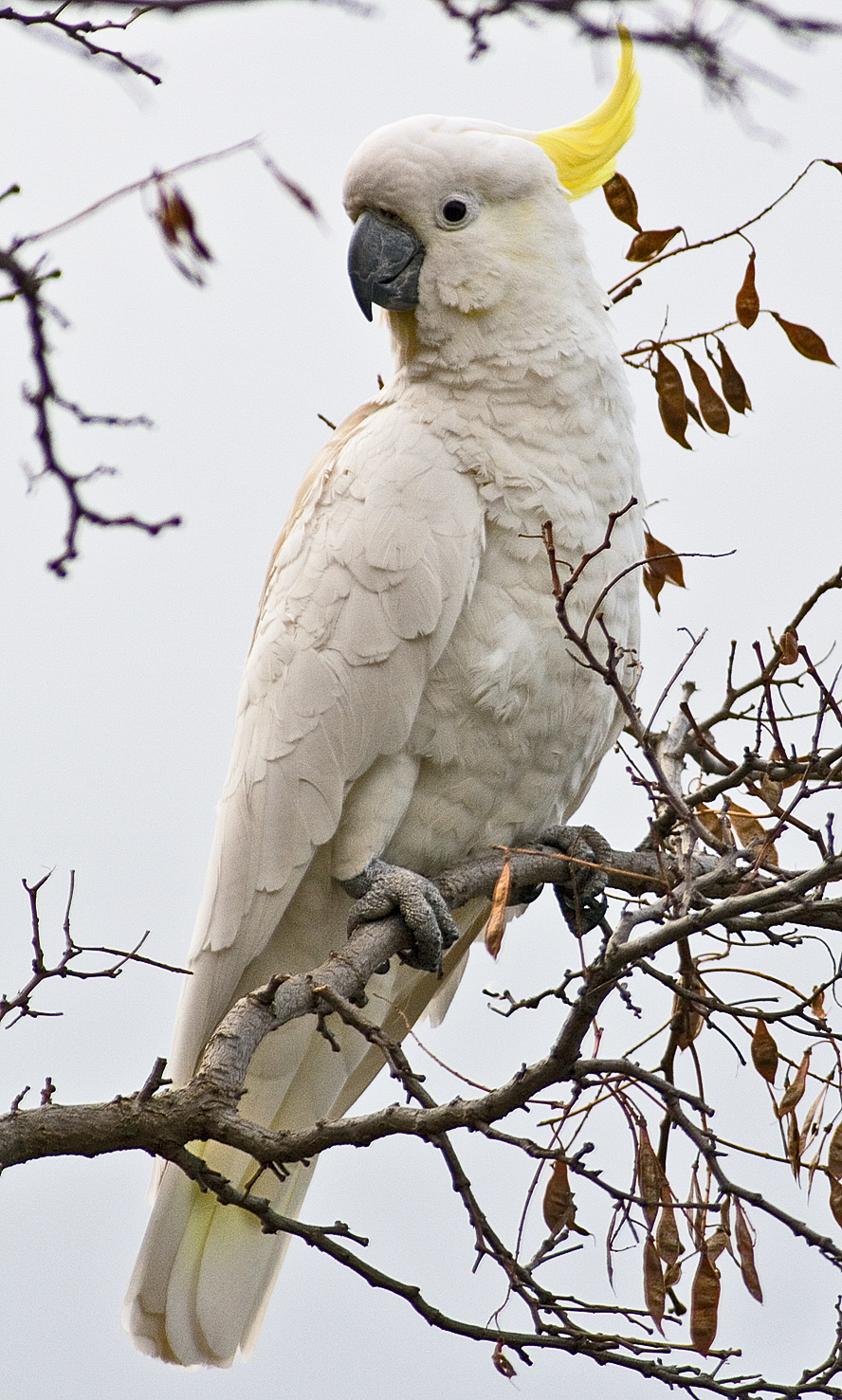
Quick answer
Sulphur-crested Cockatoos live in Woodlands, farmland, and urban parks of Australia and New Guinea. Within that range they pick microhabitats that supply cover, food (Omnivore — seeds, nuts, fruit, roots, and insects), water, and breeding sites — and they disappear where those features are lost.
Key takeaway
Sulphur-crested Cockatoos live in Woodlands, farmland, and urban parks of Australia and New Guinea. Within that range they pick microhabitats that supply cover, food (Omnivore — seeds, nuts, fruit, roots, and insects), water, and breeding sites — and they disappear where those features are lost.
Sulphur-crested Cockatoo native habitat
Sulphur-crested Cockatoos (Cacatua galerita) are tied to Woodlands, farmland, and urban parks of Australia and New Guinea. Look for sites that match their diet (Omnivore — seeds, nuts, fruit, roots, and insects) and movement style; seasonal rains or prey shifts can expand or shrink local occupancy.
Microhabitats sulphur-crested cockatoos prefer
Cover for resting, access to food, and safe breeding sites decide day-to-day use. Edge habitats can help adaptable populations but fail specialists that need continuous wild land.
How people change Sulphur-crested Cockatoo range
Farms, suburbs, and roads create opportunity for some individuals and lethal risk for others. Fragmentation without corridors isolates sulphur-crested cockatoo groups and raises local extinction risk.
Conservation geography for sulphur-crested cockatoos
Status in our guides: <strong>Least Concern</strong>. Protecting linked habitat often beats a single fenced reserve. Watch from a distance and never feed wild sulphur-crested cockatoos.
Intelligence and problem solving
Cockatoos open bin lids, dismantle lawn ornaments, and solve multi-step puzzles in research settings. Wild birds learn to exploit human food sources, becoming familiar sights in Sydney and Canberra suburbs where they chew decking and window frames.
Agricultural conflict
Large flocks damage grain, fruit, and nut crops, leading to culling permits in some Australian states despite Least Concern status. Their intelligence makes deterrence difficult — scare devices often fail after brief habituation.
Sources
Sulphur-crested Cockatoo FAQs
Where do sulphur-crested cockatoos live?
Sulphur-crested Cockatoos live in Woodlands, farmland, and urban parks of Australia and New Guinea. Within that range they pick microhabitats that supply cover, food (Omnivore — seeds, nuts, fruit, roots, and insects), water, and breeding sites — and they disappear where those features are lost.
What is the scientific name of the sulphur-crested cockatoo?
Cacatua galerita — used in research and conservation listings for sulphur-crested cockatoos.
What do sulphur-crested cockatoos eat?
Sulphur-crested Cockatoos eat seeds, nuts, fruit, roots, and insects, with seasonal and regional variation in Woodlands, farmland, and urban parks of Australia and New Guinea.
What is the conservation status of sulphur-crested cockatoos?
Listed in our guides as Least Concern. Check the IUCN Red List and national assessments for the latest formal category.